• Recipe Index
  • Main Course
  • Desserts
  • About
  • Contact
menu icon
go to homepage
  • Recipe Index
  • Main Course
  • Desserts
  • About
  • Contact

search icon
Homepage link
  • Recipe Index
  • Main Course
  • Desserts
  • About
  • Contact

×

Spinach, Feta, and Sun-Dried Tomato Egg Muffins Recipe

December 30, 2025 by Sue Leave a Comment

I absolutely adore making and sharing my Spinach, Feta, and Sun-Dried Tomato Egg Muffins Recipe because it never fails to brighten my mornings or fuel a busy day with vibrant flavors and wholesome goodness. These egg muffins are packed with fresh spinach, tangy feta, and the rich, savory sweetness of sun-dried tomatoes. I love how each bite bursts with flavor while feeling light and satisfying. Whether I’m meal prepping for the week or serving friends over brunch, these muffins always bring smiles and requests for seconds.

Why You'll Love This Spinach, Feta, and Sun-Dried Tomato Egg Muffins Recipe

One of the reasons I keep coming back to this recipe is the incredible flavor combination. The earthy freshness of spinach pairs beautifully with the salty creaminess of feta cheese, and the sun-dried tomatoes add just the right touch of sweet and tangy richness. To me, it’s like a Mediterranean breakfast party in every muffin, and that mix of tastes keeps me excited to eat them morning after morning.

Beyond just the wonderful flavors, I love how easy and fuss-free this recipe is. It requires minimal preparation time and just one bowl to mix everything together, which means less mess and more time to enjoy. Pop them in the oven, and you’re hands-off for a while — perfect for busy mornings or when you want a stress-free meal solution. Plus, they bake evenly and come out perfectly fluffy each time, giving me reliable results I can trust.

I’ve found these egg muffins to be incredibly versatile and perfect for a range of occasions. Whether it’s a casual family breakfast, a make-ahead lunch to grab on the go, or a crowd-pleasing dish for a brunch party, they fit right in. What makes them stand out is that they’re hearty but healthy, colorful but simple, and sophisticated but effortless. Honestly, they’re the kind of recipe I love sharing because they make everyone feel good and satisfied.

Ingredients You'll Need

Two small round egg muffins sit on a white plate with a blue rim placed on a white marbled surface. Each egg muffin has a yellow base mixed with bright green spinach and small pieces of red bell pepper, creating a colorful and fresh look. Beside the egg muffins, there are halves of red cherry tomatoes adding a pop of red color. A flaky light brown piece of pastry or bread is partially visible on the right side of the plate. The lighting is soft, showing the textures of the eggs, vegetables, and pastry clearly. Photo taken with an iphone --ar 4:5 --v 7

All the ingredients used here are simple yet essential — each one adds a unique element to the texture, color, and of course, the taste. From the fresh spinach that adds vibrant green freshness to the creamy tang of feta and the rich, chewy bites of sun-dried tomatoes, these ingredients work together like a dream.

TIP : You'll find the full list of ingredients and measurements in the recipe card below

  • 6 large eggs: The base of the muffins, providing protein and structure.
  • 1 cup fresh spinach, chopped: Adds a fresh, earthy flavor along with a beautiful green color.
  • ½ cup crumbled feta cheese: Gives a creamy texture and a tangy, salty kick.
  • ½ cup sun-dried tomatoes, chopped: Brings a chewy texture and a hint of sweet-savory richness.
  • ¼ cup whole milk (or non-dairy substitute): Keeps the mixture moist and tender.
  • ½ teaspoon salt: Enhances all the flavors; adjust based on your preference.
  • ¼ teaspoon black pepper: Adds a mild spice that gives the muffins a gentle warmth.
  • 1 teaspoon baking powder: Helps the muffins rise to a light, fluffy consistency.

Directions

Step 1: Preheat your oven to 375°F (190°C). Grease a muffin tin generously with non-stick cooking spray to make sure the muffins come out easily.

Step 2: In a large bowl, crack and whisk the eggs vigorously until they become light and frothy — this makes the texture extra fluffy.

Step 3: Add the milk, salt, and black pepper to the eggs, mixing until everything is fully combined. This helps distribute the seasoning evenly throughout the muffins.

Step 4: Gently fold in the chopped spinach, crumbled feta cheese, chopped sun-dried tomatoes, and baking powder. Be careful not to overmix; you want everything well incorporated but still light.

Step 5: Spoon the mixture evenly into the prepared muffin tin cups, filling each about three-quarters full so there’s room for the muffins to rise without overflowing.

Step 6: Bake the muffins in your preheated oven for 20 to 25 minutes. Look for a golden brown top and smell the delicious aroma filling your kitchen as a sure sign they’re ready.

Step 7: Remove the muffin tin from the oven and allow the muffins to cool slightly — just enough so they can be handled but still warm. Carefully pop them out of the tin, and they’re ready to enjoy!

Servings and Timing

This Spinach, Feta, and Sun-Dried Tomato Egg Muffins Recipe makes approximately 12 servings, perfect for a large family breakfast or meal prepping for the week ahead. Prep time is about 10 minutes since it’s mostly mixing ingredients together. The muffins bake for 20 to 25 minutes, making the total time roughly 35 minutes from start to finish. There is just a short resting period after baking to let the muffins cool slightly before serving.

How to Serve This Spinach, Feta, and Sun-Dried Tomato Egg Muffins Recipe

This image shows three small egg muffins placed in a white bowl on a white marbled surface. Each muffin has a yellow, cooked egg base with visible layers of green spinach leaves and red sun-dried tomato bits mixed inside. The texture looks soft yet firm with some light browning on the edges. A woman's hand is holding one muffin up, showing the inside with its colorful layers of green, red, and white. In the background, there are whole brown eggs slightly blurred. Photo taken with an iphone --ar 4:5 --v 7

I love serving these egg muffins warm so that the flavors and textures really shine through with a soft, creamy bite. They pair wonderfully with light accompaniments like a fresh arugula salad or sliced avocado drizzled with lemon juice. For a heartier brunch, I’ll add roasted potatoes or crispy bacon alongside.

When it comes to presentation, sprinkling a little extra crumbled feta or chopped parsley on top immediately brightens the look and adds a fresh pop of color. These muffins are perfect served on a rustic wooden board or colorful plates to bring out their Mediterranean vibe. They also travel well for picnics or packed lunches, and I enjoy them at room temperature right out of the cooler.

For beverages, I often pair this dish with a crisp glass of sparkling water with lemon or a fresh-pressed juice. If it’s a celebratory brunch, a light white wine like Sauvignon Blanc or a sparkling rosé matches the tangy feta and sun-dried tomato notes beautifully. Of course, hot coffee or tea just rounds out the meal perfectly any day of the week.

Variations

I love mixing things up with this recipe based on what I have on hand or to suit different dietary needs. For a dairy-free version, I substitute the feta with a plant-based cheese or simply leave it out, and swap whole milk for almond or oat milk. It still delivers plenty of flavor and moisture.

Sometimes, I like experimenting with other greens—kale or Swiss chard work beautifully and add their unique flavor twist. You can also swap sun-dried tomatoes for roasted red peppers or olives if you prefer a different savory note. For a bit of heat, adding a pinch of crushed red pepper flakes or diced jalapeño turns up the excitement.

If you want to try a different cooking method, these muffins can be made in silicone muffin cups or even baked in small ramekins for a more elegant individual serving. Just keep a close eye during baking, as times might vary slightly.

Storage and Reheating

Storing Leftovers

Once cooled completely, I store any leftover egg muffins in an airtight container in the refrigerator. They keep well for up to 4 days, making them perfect for busy week breakfasts. I prefer glass or BPA-free plastic containers with a tight lid to maintain freshness and avoid any fridge odors leaking in.

Freezing

If I want to keep these for longer, freezing works wonderfully. I wrap each muffin individually in plastic wrap or parchment paper and place them together in a freezer-safe bag. They can be frozen for up to 2 months. When I’m ready to enjoy, I thaw them overnight in the fridge for the best texture.

Reheating

To reheat, I avoid the microwave when possible because it can make the muffins rubbery. Instead, I pop them into a preheated oven at 350°F (175°C) for about 10 minutes or until warmed through. This method restores their slightly crisp exterior and fluffy interior. If I’m in a rush, a quick zap in the microwave for 30-40 seconds works, but I recommend just warming gently to preserve the best texture and flavor.

FAQs

Can I make this Spinach, Feta, and Sun-Dried Tomato Egg Muffins Recipe vegan?

While this recipe relies on eggs and feta cheese, you can create a vegan version by using a chickpea flour batter or a commercial egg replacer and substituting feta with vegan cheese or nutritional yeast for a cheesy flavor. Keep in mind the texture and cooking times may need slight adjustments.

What type of sun-dried tomatoes should I use?

I recommend using oil-packed sun-dried tomatoes for this recipe because they are softer and more flavorful. If you only have dry-packed tomatoes, rehydrate them briefly in warm water or olive oil before chopping and adding them to the mixture.

Can I prepare these egg muffins ahead of time?

Absolutely! These egg muffins are fantastic for make-ahead meals. You can bake them and then refrigerate or freeze for busy mornings. Just reheat as described in the storage section, and they’ll feel freshly made.

Is this recipe gluten-free?

Yes, this recipe is naturally gluten-free as it contains no wheat or gluten ingredients. However, always check labels on items like baking powder to ensure they are gluten-free if you have sensitivities or celiac disease.

Can I add other vegetables or meats to the muffins?

Definitely! I enjoy adding chopped bell peppers, mushrooms, or even cooked sausage or bacon bits to customize the flavors. Just be mindful to adjust moisture levels and cooking times slightly depending on the additions.

Conclusion

I truly hope you give this Spinach, Feta, and Sun-Dried Tomato Egg Muffins Recipe a try because it has become a staple in my kitchen for so many reasons. It’s flavorful, easy to make, and versatile enough for numerous occasions. Sharing these muffins always brings a sense of joy, and I know you’ll love how delicious and satisfying they are every single time.

Creamy Dill Sauce with Hamburger Steaks Recipe

December 30, 2025 by Sue Leave a Comment

I absolutely love making this Creamy Dill Sauce with Hamburger Steaks Recipe because it combines so many comforting flavors into one easy dish that never fails to satisfy. The tender, juicy hamburger steaks paired with a luscious, herb-infused creamy dill sauce deliver a meal that feels both homey and a little sophisticated all at once. It’s a recipe I return to when I want something warm and hearty but still fresh and flavorful. Every time I prepare this, I’m reminded just how perfect simple ingredients can be when brought together thoughtfully.

Why You'll Love This Creamy Dill Sauce with Hamburger Steaks Recipe

From the first bite, you’ll notice that the flavor profile balances rich creaminess with the bright, refreshing notes of dill, making every mouthful feel indulgent without being heavy. I love how the hamburger steaks are tender and packed with savory goodness, and then when coated in that smooth dill sauce, you get a wonderful contrast that keeps your taste buds excited.

One of the things I adore about this recipe is how straightforward it is to prepare. It feels like comfort food that doesn’t require hours in the kitchen or complicated steps. Even if you’re new to making hamburger steaks or sauces, the instructions guide you through each phase with ease, and the results always impress both family and guests.

In my experience, this dish is incredibly versatile. It’s fantastic for cozy weeknight dinners where you want something satisfying but not fussy. I also find it shines during holiday family gatherings or casual weekend meals. What makes it stand out is the creamy dill sauce—it’s a bit unexpected yet so complementary. It turns regular hamburger steaks into something rather special, and I’m always excited to share it with others.

Ingredients You'll Need

The image shows three raw burger patties stacked on top of each other, separated by white parchment paper. Each patty is round and thick, with a rough texture showing small pieces of ground meat in shades of pink and red. The stack sits on a wooden surface that is weathered and rustic. The background is blurry with wooden planks. Photo taken with an iphone --ar 4:5 --v 7

These ingredients come together to create a perfect harmony of textures and flavors. Each one is simple but essential, playing a role in enhancing the juiciness, creaminess, and the vibrant herbal note that makes this recipe memorable.

TIP : You'll find the full list of ingredients and measurements in the recipe card below

  • Ground beef: I prefer 80/20 lean-to-fat ratio for juicy, flavorful hamburgers without drying out.
  • Breadcrumbs: They help bind and keep the hamburger steaks tender.
  • Yellow onion (grated and diced): Fresh onion adds moisture, sweetness, and sharpness to both patties and sauce.
  • Salt & black pepper: Essential seasonings to enhance all the flavors.
  • Heavy cream: This is key to creating the silky, rich texture of the sauce.
  • Egg: Helps hold the patties together beautifully.
  • Olive oil & unsalted butter: Provides the perfect fat combination for searing the steaks while building flavor.
  • Garlic cloves: Adds aromatic depth and balances the richness.
  • All-purpose flour: Used to thicken the sauce for a luscious consistency.
  • Low sodium chicken broth: Adds savory moisture and helps deglaze the pan.
  • Chopped dill: The star herb of the sauce, giving it a fresh and vibrant kick.

Directions

Step 1: Start by grating the onion and placing it in a large bowl. Then add the ground beef, breadcrumbs, salt, black pepper, heavy cream, and egg. I like to mix everything gently with my hands just until combined to keep the patties tender.

Step 2: Divide the meat mixture into four equal portions. Shape each into a ball and then press them down with the palm of your hand or a spatula until they are about ¾ inch (2 cm) thick. Set these aside while you prepare the sauce ingredients.

Step 3: Finely dice the second onion, mince the garlic cloves, and chop the dill. Having these ready helps keep the cooking process smooth.

Step 4: Heat the olive oil and unsalted butter together over medium heat in a large nonstick skillet. Once hot, add the hamburger steaks and cook them for about 4 to 5 minutes on each side until they develop a beautiful brown crust and are cooked through. Transfer them onto a clean plate.

Step 5: Reduce the heat to low, add the diced onion and minced garlic to the skillet, and cook until fragrant, about 2 minutes. Then sprinkle the salt, pepper, and flour over the vegetables, stirring constantly to blend everything.

Step 6: Slowly pour in the chicken broth while scraping up all those delicious browned bits from the bottom of the pan with a wooden spoon. Let it simmer for about 2 minutes to thicken slightly.

Step 7: Add the heavy cream and chopped dill to the skillet. Bring the sauce to a gentle boil then reduce it to a simmer for about 1 to 2 minutes until it thickens. Return the hamburger steaks to the pan and simmer them for another 5 to 6 minutes until heated through and fully cooked inside.

Step 8: Finish by sprinkling more fresh dill and a little freshly grated black pepper on top before serving. This final touch brightens the dish and adds a lovely fresh aroma.

Servings and Timing

This Creamy Dill Sauce with Hamburger Steaks Recipe yields four generous servings, perfect for a hearty family meal or sharing with friends. The prep time takes about 10 minutes, mainly for mixing the patties and chopping, while cooking takes around 20 minutes. Altogether, you’re looking at a total of 30 minutes from start to finish, with no additional resting time needed, which makes this recipe wonderful for busy nights when you want something delicious fast.

How to Serve This Creamy Dill Sauce with Hamburger Steaks Recipe

A white bowl on a white marbled surface holds a dark brown, grilled meat patty partially covered with a creamy light beige sauce that has small green herb flecks, mostly dill. Next to the patty is a scoop of smooth mashed potatoes with a small pool of melted butter and a sprinkling of black pepper and dill on top. A silver spoon rests inside the bowl on the right side. Photo taken with an iphone --ar 4:5 --v 7

When it comes to serving this dish, I love pairing the hamburger steaks with creamy mashed potatoes or buttered egg noodles because both soak up the dill sauce perfectly. Roasted or steamed green vegetables like asparagus or green beans add a fresh, crisp contrast that balances the richness beautifully. For a heartier option, I sometimes serve it with sautéed mushrooms alongside for an earthy touch.

I like to garnish the dish with extra chopped dill and a sprinkle of freshly cracked black pepper right before serving. It makes the plate pop with color and adds an inviting aroma that gets everyone hungry! Serving the steaks warm, straight from the skillet, preserves their juicy texture and keeps the sauce velvety.

In terms of beverages, a chilled glass of crisp white wine like Sauvignon Blanc complements the dill sauce wonderfully, or for a non-alcoholic option, a sparkling water with lemon zest keeps the palate refreshed. This meal fits a fancy dinner or a casual family weekend, making it very adaptable and always crowd-pleasing.

Variations

I love experimenting with this recipe to suit different tastes or dietary needs. For instance, you can swap out the ground beef for ground turkey or chicken if you prefer a lighter option; just make sure to keep an eye on cooking time to preserve moisture. If you want to make this recipe gluten-free, simply use gluten-free breadcrumbs and substitute the all-purpose flour with a gluten-free alternative like rice or oat flour.

If you’re feeling adventurous with flavors, adding a splash of lemon juice or a small amount of Dijon mustard to the creamy dill sauce gives it a zesty boost that brightens the entire dish. For a richer sauce, I sometimes stir in a little grated Parmesan cheese at the end, which brings another layer of savory depth.

For cooking methods, while I usually pan-fry the hamburgers for the best crust, you can also bake the patties in the oven at 400°F (200°C) for about 15-20 minutes before making the sauce on the stovetop. It’s a great hands-off method if you’re multitasking in the kitchen.

Storage and Reheating

Storing Leftovers

If you have leftovers, I recommend storing them in an airtight container and refrigerating promptly. The hamburger steaks and creamy dill sauce will stay fresh for up to 3 days. Keeping the sauce and steaks together ensures the flavors meld beautifully as they rest. Just make sure the container is sealed well to prevent any absorption of other fridge odors.

Freezing

You can freeze this dish, but I find it best to freeze the hamburger steaks and sauce separately, if possible. Pack the steaks in a freezer-safe container or bag, and do the same with the sauce in a separate container. The sauce keeps well for up to 2 months in the freezer. When freezing, leave a little headspace for expansion and make sure everything is fully cooled before sealing to preserve texture and flavor.

Reheating

To reheat, gently warm the sauce on the stovetop over low heat, stirring occasionally to prevent scorching. Add a splash of broth or cream if it’s too thick. Heat the hamburger steaks separately in a skillet until warmed through to avoid overcooking. Avoid microwaving directly as it can make the meat rubbery and separate the sauce’s creaminess. Slow and gentle reheating always brings back the dish’s fresh flavors and creamy texture.

FAQs

Can I use other herbs instead of dill in this recipe?

Absolutely! While dill gives this dish its signature fresh and bright flavor, you could substitute with fresh parsley, tarragon, or chives to create slightly different herbal notes. Just adjust quantities to taste.

Is this recipe suitable for meal prepping?

Yes, this Creamy Dill Sauce with Hamburger Steaks Recipe is fantastic for meal prep. You can prepare the hamburger steaks in advance and store them in the fridge, then reheat with the sauce just before serving. It reheats well without losing quality.

Can I make the sauce dairy-free or vegan?

To make a dairy-free version, try swapping heavy cream with coconut cream or a plant-based cream alternative. For the hamburger steaks, using a plant-based ground meat substitute and an egg replacer can make this recipe vegan-friendly with a few adjustments.

What is the best way to get a crispy crust on the hamburger steaks?

Use a hot skillet with a combination of oil and butter as in the recipe. Don’t overcrowd the pan and avoid moving the steaks too early. Let them cook undisturbed for about 4-5 minutes per side until a deep brown crust forms before flipping.

Can I prepare the hamburger steaks without the sauce?

Definitely! The hamburger steaks themselves are delicious on their own, seasoned and cooked well. The creamy dill sauce is an added touch that elevates the dish but you can serve the patties with other sauces or enjoy them simply grilled or pan-fried.

Conclusion

I genuinely hope you give this Creamy Dill Sauce with Hamburger Steaks Recipe a try—it’s one of those dishes that feels like a warm hug on a plate and yet feels special enough for sharing. The creamy herb sauce mixed with the juicy, flavorful hamburger steaks is a combination I find myself craving again and again, and I can’t wait for you to experience the comfort and joy it brings to your table.

Lemon Parmesan Lettuce Salad Recipe

December 30, 2025 by Sue Leave a Comment

I am absolutely thrilled to share this Lemon Parmesan Lettuce Salad Recipe with you because it has become one of my go-to salads when I want something fresh, zesty, and effortlessly delicious. The bright lemony flavor combined with the sharp, nutty Parmesan and crisp lettuce creates such a refreshing balance that it never fails to brighten up any meal. I love how quick it comes together, yet it feels so special—perfect for both everyday lunches and fancy dinner gatherings. Trust me, once you try this, it will quickly become a favorite in your salad rotation too.

Why You'll Love This Lemon Parmesan Lettuce Salad Recipe

What really excites me about this recipe is the way the flavors just pop. The lemon zest and juice bring an irresistible brightness that lifts the entire salad to a whole new level. The Parmesan adds this creamy, savory depth that matches perfectly with the crisp romaine and tender red leaf lettuce. I find that the crushed red pepper flakes give it a subtle kick, balancing out the acidity and making every bite interesting. It’s a flavor profile that’s vibrant but also comforting—something I crave whenever I want a light yet satisfying dish.

One of my favorite things about making this salad is how incredibly easy it is. I can have it ready in about 5 minutes, making it a fantastic choice for busy weeknights or when unexpected guests arrive. The ingredients are simple and mostly pantry staples, yet they come together to create something that feels gourmet without any fuss. I appreciate recipes that don’t keep me in the kitchen forever but still impress with taste and presentation.

This Lemon Parmesan Lettuce Salad Recipe is so versatile, making it ideal for lots of occasions. I serve it alongside grilled chicken or fish for a quick lunch, but it also shines at family dinners and holiday tables by adding a fresh contrast to heavier dishes. The salad’s lovely texture and lively flavors make it stand out every time. Sharing it with friends always feels like giving them a little burst of sunshine on a plate.

Ingredients You'll Need

A clear glass bowl filled with mixed leafy greens, including bright green and deep purple lettuce leaves, layered roughly with varied sizes and fresh textures. Finely grated white cheese lightly dusts the top, sprinkled evenly over the greens along with small red pepper flakes adding spots of red color. Thin rings of pale onion are scattered sparsely on top. The bowl sits on a white marbled surface. photo taken with an iphone --ar 4:5 --v 7

The magic of this salad comes from a handful of fresh, straightforward ingredients, each playing a crucial role in delivering taste, texture, and visual appeal. Whether it’s the crispness of the lettuce or the tang of fresh lemon, these elements come together in perfect harmony.

TIP : You'll find the full list of ingredients and measurements in the recipe card below

  • Romaine lettuce: Crisp and sturdy, this lettuce adds great crunch and holds up beautifully to the dressing.
  • Red leaf lettuce: Adds a tender, slightly sweet contrast to the romaine, making the salad more interesting in texture.
  • Shallots: Their mild onion flavor adds delicate sharpness without overpowering the salad.
  • Lemons (zested and juiced): The star of the show, providing bright, fresh citrus flavor that wakes up every bite.
  • Extra virgin olive oil: Brings smooth richness and helps marry all the ingredients together.
  • Kosher salt and black pepper: Essential seasonings that enhance the natural flavors of the salad.
  • Crushed red pepper flakes: A little optional heat that adds a subtle zing, perfect if you like a touch of spice.
  • Parmesan cheese: Finely grated for a creamy, savory boost and a lovely contrast to the brightness of the lemon.

Directions

Step 1: Start by chopping your romaine and red leaf lettuce into bite-sized pieces. I like to rinse them thoroughly and use a salad spinner to get them as dry as possible because dry lettuce means your dressing won’t get diluted. If you have a little extra time, wrapping the lettuce in paper towels and popping it in the fridge for a bit really helps it crisp up beautifully.

Step 2: In a large mixing bowl, combine the chopped lettuce with thinly sliced shallots and freshly grated lemon zest. The shallots add that gentle punch, while the zest gives the salad a fragrant citrus pop that I never get tired of.

Step 3: Season the greens with kosher salt and freshly ground black pepper to taste. Then add the juice of the lemons and drizzle the extra virgin olive oil over everything. Gently toss the salad so each leaf is lightly coated with the dressing. This step is all about balance—coating without soaking, keeping the lettuce crisp while delivering bright flavor.

Step 4: Finally, sprinkle on the finely grated Parmesan cheese and, if you like a hint of spice, some crushed red pepper flakes. Give it one last gentle toss to combine and serve immediately. The salad is best enjoyed right away so the lettuce stays crunchy and fresh.

Servings and Timing

This Lemon Parmesan Lettuce Salad Recipe makes about 6 generous servings, perfect for sharing with family or friends. The preparation time is super quick—only about 5 minutes—making it ideal for when you want something fast but flavorful. Since there’s no cooking involved, the cook time is zero, so the total time from start to finish is just 5 minutes. You don’t need any resting or cooling time, although chilling the lettuce briefly before assembling can enhance crispness if you have the time.

How to Serve This Lemon Parmesan Lettuce Salad Recipe

The image shows two white plates on a white marbled surface, each with a small pile of fresh lettuce leaves in different shades of green, including light green and dark green. The leaves have a slightly ruffled texture and are sprinkled with finely grated white cheese and small red chili flakes. On the front plate, a silver fork rests at the bottom left edge, its handle pointing outward. The background plate is slightly out of focus, emphasizing the front plate with the salad. photo taken with an iphone --ar 4:5 --v 7

I love serving this salad alongside grilled or roasted proteins like chicken, salmon, or shrimp; it adds such a lovely brightness that cuts through richer flavors wonderfully. For a vegetarian meal, pairing it with a warm grain bowl or a hearty soup makes the meal balanced and satisfying without feeling heavy. Presentation-wise, I like to serve it in a wide, shallow bowl to showcase the colorful lettuce leaves with a light sprinkle of Parmesan and a few red pepper flakes on top for a pop of color.

Garnishing ideas? Fresh herbs like chopped basil or parsley work beautifully and add an herbal freshness that complements the lemon. A few lemon wedges on the side invite guests to add an extra splash of citrus if they wish. When it comes to beverages, a crisp white wine like Sauvignon Blanc or a sparkling water with lemon works perfectly to echo and enhance the salad's zesty, vibrant flavors.

This salad is fantastic for almost any occasion. I find it perfect for family dinners when I want to add something healthy and quick but also festive enough for holiday spreads and parties. It's best served chilled or at room temperature so the lettuce stays crisp, and I like to plate individual portions or present it family-style for casual gatherings. The fresh, bright flavors always get raves.

Variations

I love to mix things up with this Lemon Parmesan Lettuce Salad Recipe depending on what I have on hand or the mood I’m in. For example, swapping red leaf lettuce for butter lettuce gives the salad a softer, silky texture that's a lovely change. If you're looking for a bit more crunch, adding toasted nuts like pine nuts or walnuts works beautifully without overwhelming the salad.

If dietary restrictions come into play, this salad can be easily modified. To make it vegan, I simply leave out the Parmesan or use a plant-based alternative that melts a little and brings a similar umami flavor. This salad is naturally gluten-free, so it fits nicely into many diets. For a flavor twist, I’ve experimented by adding a teaspoon of honey or maple syrup to the dressing for a slightly sweeter balance that contrasts beautifully with the lemon.

Though I usually serve this salad as is, sometimes I like to roast the lettuce quickly over a hot grill to add a smoky element and slightly wilted texture before tossing with the dressing. It’s a delightfully different take that feels a bit more substantial without losing that signature fresh zing from the lemon and Parmesan.

Storage and Reheating

Storing Leftovers

If you happen to have leftovers, I recommend storing the salad in an airtight container in the refrigerator. Because the lettuce is dressed, it will keep best for up to 1 day before it starts to wilt and get soggy. To help preserve the texture, you can store the dressing separately and toss the salad just before serving, though this salad tastes best freshly made.

Freezing

This Lemon Parmesan Lettuce Salad Recipe is not suitable for freezing. The fresh lettuce will lose its crisp texture and become mushy upon thawing. I’d suggest preparing only what you can enjoy within a day or making the salad fresh each time for the best flavor and crunch.

Reheating

Since this is a fresh salad without any cooked components, reheating isn’t necessary or recommended. If you do have leftovers, I suggest enjoying them cold or at room temperature, but be mindful that the lettuce will lose some of its crispness over time. Making the salad fresh is always the way to go to get that vibrant, crunchy experience.

FAQs

Can I use other types of lettuce in this Lemon Parmesan Lettuce Salad Recipe?

Absolutely! While I recommend romaine and red leaf for their contrasting textures, you can use butter lettuce, green leaf, or even arugula for a peppery kick. Just keep in mind that delicate lettuces like butter might wilt faster with the dressing.

How can I make this salad vegan?

To make this salad vegan, simply omit the Parmesan cheese or substitute it with a vegan cheese alternative. Nutritional yeast is another great option to sprinkle on for a cheesy flavor without dairy.

Is it okay to prepare this salad ahead of time?

Since the salad dressing is very light, it’s best to prepare the components ahead—wash and dry the lettuce and slice the shallots—and combine them just before serving to keep the lettuce crisp. Dressing the salad too far in advance can lead to sogginess.

Can I add protein to make this a complete meal?

Yes, adding grilled chicken, shrimp, or tofu makes this salad a filling main dish. Hard-boiled eggs or crispy bacon bits are also delicious toppings that complement the lemon and Parmesan flavors.

What if I don’t have fresh lemons on hand?

Fresh lemon juice and zest are key for the bright, fresh flavor I love in this salad. If lemons aren’t available, you can substitute with bottled lemon juice but I suggest adding a little lemon zest if possible or a splash of white wine vinegar to keep that tangy balance.

Conclusion

I can’t recommend this Lemon Parmesan Lettuce Salad Recipe enough if you’re looking for a quick, refreshing, and flavorful salad that feels special every time you make it. It’s simple to put together, incredibly versatile, and truly brings a burst of fresh brightness to your meal. Give it a try soon—I’m sure you’ll love how effortlessly it elevates your greens to something unforgettable.

Mouthwatering Roasted Poblano Soup for Ultimate Comfort Recipe

December 30, 2025 by Sue Leave a Comment

I absolutely adore this Mouthwatering Roasted Poblano Soup for Ultimate Comfort Recipe because it captures the perfect balance of smoky, creamy, and subtly spicy flavors that warm me up from the inside out. Whenever I make this soup, the aroma alone fills the kitchen with cozy vibes that instantly lift my spirits. Roasting the poblanos brings out a deep, irresistible smokiness, and blending in the tender potatoes and gentle creaminess of the sauce makes every spoonful purely comforting. I love sharing this dish with friends and family, especially on chilly days or when I want something hearty without too much fuss.

Why You'll Love This Mouthwatering Roasted Poblano Soup for Ultimate Comfort Recipe

One of the things that draws me to this recipe is its unique flavor profile. The roasted poblanos provide that mild smokiness, elevating the soup beyond your typical creamy vegetable blend. Then there’s the subtle kick from red pepper flakes, adding just the right touch of warmth without overpowering the delicate earthiness from the cumin and the sweetness of caramelized onions and celery. It’s truly a symphony of flavors that feels both sophisticated and homey at the same time.

Beyond the incredible taste, I also appreciate how straightforward the preparation is. Roasting the peppers is the most involved step, but it’s so worth it because that charred skin adds complexity and depth. The rest comes together easily on the stovetop, making it a wonderful weeknight meal or an impressive dish for casual dinner guests. It’s that rare recipe that feels comforting and gourmet all at once.

Whenever I serve this soup, it instantly becomes a highlight of the meal. Whether it’s for a cozy family dinner or even a festive gathering, the comforting warmth and beautiful green hue make it stand out on the table. Plus, the creamy texture and smoky flavor profile make it incredibly satisfying—perfect for any occasion when you want to impress without spending hours in the kitchen.

Ingredients You'll Need

The image shows a white pot filled with a creamy yellow soup that has green herbs mixed in throughout. On top of the soup, there is a layer of light beige cooked chunks, which look soft and tender. The pot is placed on a white marbled surface, and a woman's hand is holding a black spoon that scoops some of the cooked chunks in the center of the pot. The soup surface has a smooth texture with little bubbles, and the herbs add a speckled green color across the yellow base. photo taken with an iphone --ar 4:5 --v 7

The beauty of this recipe is in its simplicity. Each ingredient is essential to creating layers of flavor and adding texture or richness that rounds out the dish perfectly. From the roasted poblanos that provide smoky notes, to the baby gold potatoes that bring a creamy body, every component plays a key role.

TIP : You'll find the full list of ingredients and measurements in the recipe card below

  • Olive Oil: Essential for roasting the poblanos to bring out their smoky flavor.
  • Poblano Peppers: Provide that mild smokiness that defines this soup’s character.
  • Unsalted Butter: Adds a rich, creamy base to sauté the vegetables gently.
  • White Onion: Gives sweetness and depth when cooked down.
  • Celery: Contributes a subtle aromatic crunch that balances the creaminess.
  • Baby Gold Potatoes: Create natural thickening and a velvety texture.
  • Garlic: Offers a savory warmth that amplifies every other ingredient.
  • Ground Cumin: Infuses an earthy spice that pairs beautifully with the poblanos.
  • Red Pepper Flakes: Add a gentle heat that lifts the soup without overpowering.
  • Kosher Salt and Black Pepper: Essential for seasoning layers of flavor.
  • Lower-Sodium Chicken Broth: Forms the flavorful cooking liquid, allowing the flavors to meld.
  • Boneless Skinless Chicken Breasts: Provide protein and hearty substance to the dish.
  • Heavy Cream: Delivers lush creaminess to balance the smoky and spicy notes.
  • Cilantro: Adds fresh brightness as a finishing touch.

Directions

Step 1: Preheat your oven to 450°F (232°C). Slice the poblano peppers in half lengthwise, then drizzle them with olive oil. Lay the peppers cut-side down on a baking sheet lined with parchment paper, and roast for about 20 minutes until their skins are blistered and charred in spots.

Step 2: Remove the roasted poblanos from the oven and let them cool enough to handle. Peel off the skins carefully to avoid bitterness, chop the peppers into smaller pieces, and set aside for later use.

Step 3: In a large stockpot, melt the unsalted butter over medium heat. Add the diced onions, celery, and baby gold potatoes, stirring occasionally as they soften and turn translucent—this will take about 9 to 10 minutes.

Step 4: Add the minced garlic, ground cumin, red pepper flakes, kosher salt, and black pepper to the pot with the softened vegetables. Stir and sauté for about one minute until the spices release their fragrance.

Step 5: Pour in the lower-sodium chicken broth, then stir in the chopped roasted poblano peppers. Raise the heat and bring the mixture to a boil, allowing the flavors to mingle beautifully.

Step 6: Gently add the chicken breast chunks into the boiling soup. Lower the heat to a simmer and cover the pot. Let the chicken cook until tender and cooked through, about 10 minutes. Then, remove the chicken, let it rest briefly, and chop or shred into bite-sized pieces.

Step 7: Use an immersion blender to blend the soup right in the pot. Blend until you reach your preferred consistency—whether silky smooth or lightly chunky.

Step 8: Return the chopped chicken to the blended soup, stirring to combine everything evenly. Pour in the heavy cream and simmer for another 5 minutes on low heat just to warm through without boiling.

Step 9: Ladle the piping hot Roasted Poblano Soup into bowls. Garnish with minced fresh cilantro and your choice of additional toppings like crispy tortilla strips, ripe avocado slices, or a sprinkle of cheese for extra indulgence.

Servings and Timing

This recipe yields about 6 generous servings, perfect for sharing with family or saving leftovers for the next day. The prep time is roughly 15 minutes, mostly spent chopping and prepping ingredients. Actual cooking time takes about 30 minutes, including roasting and simmering the soup. Altogether, you’re looking at approximately 45 minutes from start to finish. There is no required resting time; it’s best served fresh for maximum flavor and warmth.

How to Serve This Mouthwatering Roasted Poblano Soup for Ultimate Comfort Recipe

A white bowl filled with a creamy light yellow soup with visible pieces of soft chicken and spinach leaves. The soup surface is sprinkled with red chili flakes and small green herb bits. A silver spoon rests on the right side inside the bowl, placed on a white marbled surface. Photo taken with an iphone --ar 4:5 --v 7

When I serve this soup, I like to complement its smoky creaminess with fresh, crunchy sides. A crisp green salad with citrus vinaigrette or a plate of warm, crusty bread makes for a perfect balance of textures. I also love sprinkling crispy tortilla strips on top to add a fun crunch that contrasts beautifully with the smooth soup.

For garnishes, fresh cilantro is a must in my book. It cuts through the richness and brightens each bite. You can also add diced avocado for extra creaminess or a little crumbled queso fresco for a tangy finish. Presentation-wise, I serve it in wide, shallow bowls to showcase the inviting green color and encourage savoring every spoonful slowly.

This soup pairs wonderfully with chilled white wines like Sauvignon Blanc or a light, citrusy beer if you prefer a cold beverage. For cozy nights, I enjoy it with a warm herbal tea or a sparkling water with lime. It’s ideal for weeknight dinners, casual get-togethers, or any afternoon when you just want to indulge in something comforting and satisfying. I always serve it hot, as the warmth truly enhances all of those indulgent flavors.

Variations

One of the great things about this Mouthwatering Roasted Poblano Soup for Ultimate Comfort Recipe is how easy it is to customize. If you want a vegetarian or vegan version, just swap out the chicken broth for vegetable broth, omit the chicken, and use coconut oil in place of butter. You can also stir in roasted chickpeas or black beans for added protein.

If you like more heat, I recommend substituting one poblano for a jalapeño or a serrano pepper to bring a sharper spice edge. On the other hand, if you prefer milder flavors, use fewer red pepper flakes or leave them out entirely. You can also experiment with different herbs like fresh parsley instead of cilantro for a different fresh note.

For a lighter version, swap the heavy cream for full-fat coconut milk or oat milk, which still gives a creamy texture but with a subtle twist. And if you want a quicker meal, using pre-cooked rotisserie chicken is a fantastic shortcut that doesn’t sacrifice flavor. I’ve also tried roasting the vegetables on the stovetop for an even smokier taste, which adds great depth when you’re feeling adventurous.

Storage and Reheating

Storing Leftovers

I always store leftover soup in airtight containers to keep it fresh for up to 4 days in the refrigerator. Glass containers with tight-fitting lids work best to preserve the flavors and prevent any fridge odors from sneaking in. Make sure the soup has cooled to room temperature before sealing and refrigerating for optimal freshness.

Freezing

This soup freezes beautifully, which is perfect if you want to make a big batch ahead of time. I pour it into freezer-safe containers or heavy-duty zip-top bags, leaving some room for expansion. It can be frozen for up to 3 months. To thaw, I recommend moving it to the refrigerator the night before, letting it defrost slowly for the best texture and flavor retention.

Reheating

When reheating, I prefer using a stovetop over the microwave to gently warm the soup without breaking down the cream or changing the texture. Stir frequently over medium-low heat until heated through, adding a splash of broth or water if it becomes too thick. Avoid boiling the soup during reheating to preserve the delicate flavors and creamy texture that make it so comforting.

FAQs

Can I make this soup ahead of time?

Absolutely! This soup actually tastes even better the next day once the flavors have had time to meld. Prepare and assemble up to a day before, then reheat gently before serving.

What can I use if I don’t have fresh poblano peppers?

If fresh poblano peppers aren’t available, you can use canned roasted green chilies as a substitute, though the flavor will be less smoky. Alternatively, jalapeños can add more heat, or you can try roasted bell peppers for mild sweetness.

Is this soup gluten-free?

Yes, this soup is naturally gluten-free as it contains no wheat-based ingredients. Just be sure to check your chicken broth if using store-bought to confirm it’s labeled gluten-free.

Can I make this soup vegan?

Definitely! Replace the chicken broth with vegetable broth, use coconut oil instead of butter, and swap heavy cream for full-fat coconut milk or oat milk. Skip the chicken or add plant-based protein like beans or tofu.

How spicy is this soup? Can I adjust the heat?

The soup has a mild to moderate heat level thanks to the roasted poblanos and red pepper flakes. You can easily control the spice by reducing or omitting the red pepper flakes or by choosing milder peppers. For more heat, add extra chili flakes or hot sauce to taste.

Conclusion

I genuinely hope you’ll give this Mouthwatering Roasted Poblano Soup for Ultimate Comfort Recipe a try because it’s one of those dishes that feels like a warm hug in a bowl. It’s comforting, flavorful, and surprisingly simple to make, perfect for treating yourself or impressing loved ones with minimal stress. Every time I make it, I’m reminded how a few humble ingredients can come together to create something memorable and deeply satisfying. So grab those poblanos and get roasting—you won’t regret it!

Orange Cranberry Shortbread Cookies Recipe

December 30, 2025 by Sue Leave a Comment

I absolutely adore these Orange Cranberry Shortbread Cookies Recipe because they strike the perfect balance between buttery richness and bright, fruity zest. Every time I bake these cookies, the warm aroma of fresh orange zest and tangy cranberries fills my kitchen, instantly lifting my spirits. The tender crumb melts in my mouth, while the subtle citrus notes dance beautifully with the sweetness of the glaze. It’s truly one of my favorite go-to recipes when I want to treat myself or surprise friends with a delightful homemade gift.

Why You'll Love This Orange Cranberry Shortbread Cookies Recipe

What I find most magical about this Orange Cranberry Shortbread Cookies Recipe is its flavor profile—it combines the buttery softness of classic shortbread with the fresh, zesty kick of orange zest and the lovely tartness of cranberries. The cranberries aren’t overwhelming; they add little pops of brightness that perfectly complement the cookie’s mellow sweetness. This balance makes these cookies refreshingly different from traditional shortbread and incredibly addictive.

I’m also a fan because this recipe is surprisingly easy to prepare. The ingredients are simple, and the process is straightforward, but it still feels like you’re crafting something special and sophisticated. I love that it doesn’t require fancy tools or complicated steps, so it’s perfect for both novice bakers and seasoned pros looking to whip up something quick yet impressive.

These cookies shine at all sorts of gatherings—from holiday parties and afternoon tea with friends to casual family get-togethers where a little homemade treat goes a long way. What really makes them stand out to me is how adaptable they are; whether you want to add a personal touch with a glazed drizzle or pair them with your favorite hot drink, they never fail to impress. I always feel like these cookies bring a festive, cozy touch to any occasion.

Ingredients You'll Need

The image shows a close-up of a woman's hand holding two stick-shaped cookies. Each cookie is half-coated in smooth, light pink icing; one cookie has small dried rose petals embedded in the icing, while the other has thin pink drizzle lines over the icing. The uncoated lower halves of the cookies are golden brown with small red specks. In the background, there is a small white bowl filled with other cookies, all arranged on a white marbled surface with scattered dried rose petals. Photo taken with an iphone --ar 4:5 --v 7

The beauty of this recipe lies in its simplicity. Each ingredient plays an important role in creating the perfect texture, flavor, and aroma. I love that you don’t need a long grocery list—just a handful of staples that come together effortlessly.

TIP : You'll find the full list of ingredients and measurements in the recipe card below

  • All-purpose flour: The base of these cookies that gives them structure and that classic shortbread tenderness.
  • Granulated sugar: Adds just the right amount of sweetness without overpowering the flavor.
  • Cornstarch: This secret weapon helps create an irresistibly tender, melt-in-your-mouth texture.
  • Table salt: Balances the sweetness and enhances all the flavors beautifully.
  • Unsalted butter: Cold, cubed butter lends rich flavor and flaky texture.
  • Fresh cranberries: Finely chopped, they bring bursts of tartness and a lovely pop of red color.
  • Orange zest: Provides a fresh citrus lift that makes these cookies uniquely bright and fragrant.
  • Powdered sugar: Used for the glaze to add smooth sweetness and a glossy finish.
  • Orange juice: The glaze’s liquid component, delivering a fresh citrus tang to complete the taste experience.

Directions

Step 1: In a large mixing bowl fitted with a paddle attachment, whisk together the flour, granulated sugar, cornstarch, and salt until evenly combined. This dry foundation is essential for perfect cookies.

Step 2: Add the cold, cubed butter to the bowl. Mix on low speed for about 3 minutes until the mixture resembles damp sand and clumps together when pressed. This step is crucial to get that classic shortbread crumbly texture.

Step 3: Gently fold in the finely chopped cranberries and fresh orange zest by hand, ensuring they’re evenly distributed without breaking the berries down too much.

Step 4: Transfer the dough onto a sheet of parchment paper or a silicone baking mat. Knead it a few times until smooth, then place another sheet of parchment on top and roll the dough into a tight 4x12-inch rectangle. This shape helps create uniform cookie sticks.

Step 5: Pop the dough into the freezer for 20 minutes to firm up—this step prevents spread and keeps the cookies nice and sturdy during baking.

Step 6: While the dough chills, preheat your oven to 325°F (160°C). Once ready, slice the dough into 24 sticks and arrange them on a baking sheet lined with a silicone mat or parchment paper.

Step 7: Bake the cookies for about 20 minutes or until the edges start to turn a light golden brown. Keep an eye on them; you want that delicate crispness without any burning.

Step 8: When you take the cookies out, they might look a bit misshapen—that’s totally normal! To fix this, quickly squeeze each stick gently from both sides using two offset spatulas or bench scrapers to shape them neatly while still warm.

Step 9: Transfer the cookies to a wire rack and allow them to cool completely. Cooling ensures they hold their shape and achieve the perfect crumbly texture.

Step 10: Meanwhile, prepare the orange glaze by combining powdered sugar and orange juice in a small bowl until smooth with no lumps. Spoon the glaze into a pastry bag or squeeze bottle to drizzle artistically over the cooled cookies.

Step 11: Let the glaze set before serving or storing so it hardens slightly for that lovely sweet finish with a little citrus zing.

Servings and Timing

This recipe yields 24 delicious Orange Cranberry Shortbread Cookies, perfect for sharing or gifting. The prep time is about 15 minutes, mainly for mixing and shaping the dough, while freezing adds a 20-minute pause. Baking the cookies takes roughly 20 minutes. Altogether, you can expect around 50 minutes from start to finish, including cooling and glazing. The resting and freezing steps are vital for texture, so don’t rush those parts unless you’re in a serious hurry. These cookies keep well, making them great to prepare ahead of time for parties or cozy afternoons.

How to Serve This Orange Cranberry Shortbread Cookies Recipe

Inside a red tin lined with brown paper, there are several light beige rectangular cookies with small red berry pieces baked into them. Each cookie is decorated with thin white zigzag lines of icing on the top surface. The tin is set on a white marbled surface, partially covered by a white cloth with brown holiday-themed patterns. The tin lid has a window showing part of a green Christmas tree with yellow and red decorations. photo taken with an iphone --ar 4:5 --v 7

I love serving these cookies with a variety of drinks because their bright and buttery flavors pair wonderfully with both hot and cold beverages. For a classic touch, I often enjoy them alongside a steaming cup of Earl Grey tea or freshly brewed coffee—perfect for a cozy mid-morning or afternoon snack. If I’m celebrating during the holidays, I might pair them with a sparkling orange-infused cocktail or softly chilled prosecco to complement the citrus notes.

Garnishing can be simple yet elegant. I sometimes add an extra dusting of powdered sugar on top or a thin swirl of additional orange glaze for a pretty presentation. When serving a crowd, arranging these cookies on a festive platter with sprigs of fresh rosemary or edible flowers can instantly elevate the display and make guests feel special. I always encourage enjoying them at room temperature so the crumbly texture and intricate flavors really shine through.

These cookies are ideal for many occasions, whether it’s a holiday cookie exchange, a casual family gathering, or just an indulgent weekday treat. I find slicing them into sticks makes portioning easy and inviting—perfect for little hands or sharing around a coffee table. No matter how you serve them, these shortbread cookies never fail to bring smiles and happy compliments!

Variations

One of the things I appreciate most about the Orange Cranberry Shortbread Cookies Recipe is how easy it is to customize. For example, if you want to swap ingredients, dried cranberries work well if fresh ones aren’t available—just soak them briefly in hot water to soften before chopping. And if you’re looking for a gluten-free option, I’ve had success substituting the all-purpose flour with a 1:1 gluten-free baking blend, which still yields tender cookies.

For those following a vegan lifestyle, I recommend using vegan butter or coconut oil chilled and cubed instead of regular butter. The texture is slightly different but still deliciously buttery and crumbly. You can even experiment with adding orange extract or a teaspoon of vanilla to the glaze for a flavor twist.

On the flavor front, you might try swapping orange zest and juice for lemon or lime to create a bright citrus variation. Another fun idea I’ve tried is mixing in chopped toasted pistachios or substituting the powdered sugar glaze for a drizzle of melted white chocolate. Baking-wise, if you want to try a softer cookie, slightly underbake by a couple of minutes and let them cool completely for a chewier texture that still holds its shape.

Storage and Reheating

Storing Leftovers

I always store leftover cookies in an airtight container at room temperature to keep them crisp and fresh. I find using a tin or a sturdy container lined with parchment paper works best to avoid any smushing. Stored this way, the cookies stay at their best for up to one week, perfect if you want to snack on them gradually without compromising flavor or texture.

Freezing

These cookies freeze very well, which is great for making them ahead of busy holidays or special occasions. To freeze, I place baked and cooled cookies in a single layer on a baking sheet until frozen solid, then transfer them to a resealable freezer bag or airtight container separated by parchment paper. They’ll keep fresh and flavorful in the freezer for up to three months. When you’re ready to enjoy, let them thaw at room temperature, and they’ll taste just as lovely as freshly baked.

Reheating

I recommend gently warming the cookies in a low oven (about 300°F) for 5 minutes if you want to restore that just-baked warmth and softness. Avoid microwaving, as this can make them soggy or too soft. Slightly warmed cookies bring out the buttery flavor and crisp edges beautifully, just like fresh from the oven. Plus, a quick refresh before serving makes them feel extra special.

FAQs

Can I use dried cranberries instead of fresh?

Absolutely! If you don’t have fresh cranberries, dried ones are a great alternative. I suggest soaking them in warm water for 5 to 10 minutes to soften before chopping and mixing into the dough. This helps prevent dryness and keeps the cookies moist.

Is it necessary to freeze the dough before baking?

Freezing the dough is an important step that helps firm it up, making slicing much easier and preventing the cookies from spreading too much during baking. If you skip this, the cookies could lose their shape and become flat, so I definitely recommend chilling the dough for the best results.

How should I adjust baking time if making smaller or larger cookies?

If you make smaller cookies, reduce the baking time by about 4 to 5 minutes and watch closely to avoid over-baking. Larger cookies may require an extra 3 to 5 minutes. The key is to bake until the edges are lightly golden rather than fully browned.

Can I make the orange glaze ahead of time?

You can prepare the glaze in advance and store it in an airtight container in the refrigerator for up to 2 days. Just give it a good stir before drizzling. If it thickens too much, add a few drops of orange juice to loosen it back up.

Are these cookies suitable for gifting?

Definitely! These Orange Cranberry Shortbread Cookies make thoughtful, beautiful gifts. Package them in decorative tins or cellophane bags tied with a bright ribbon, and they’re ready to wow friends and family. The festive orange and red colors always feel special and celebratory.

Conclusion

I hope you feel as excited as I do to try this Orange Cranberry Shortbread Cookies Recipe. It’s a beautiful combination of simple ingredients and delightful flavors that come together to create something truly special. Whether you’re baking for friends, family, or just treating yourself, these cookies brighten any moment with their lovely citrus and berry notes. Trust me—you’re going to love every buttery, tangy bite!

Cottage Cheese and Spinach Crustless Quiche Recipe

December 28, 2025 by Sue Leave a Comment

I absolutely love making this Cottage Cheese and Spinach Crustless Quiche Recipe whenever I want something hearty, wholesome, and bursting with flavor without the fuss of a traditional crust. It’s one of those dishes that feels both healthy and indulgent at the same time. The creamy cottage cheese pairs perfectly with the fresh spinach and a hint of seasoning, creating a savory custard that’s light yet satisfying. I find it’s incredibly versatile, perfect for breakfast, brunch, or even a simple weeknight dinner, and every time I slice into it, I get a warm, comforting feeling that makes me smile.

Why You'll Love This Cottage Cheese and Spinach Crustless Quiche Recipe

From the first time I made this recipe, I knew it was something special. The flavor is vibrant yet balanced — the mild tanginess of the cottage cheese blends so well with the fresh spinach and sweet bell peppers, while the Italian seasoning and garlic powder elevate the taste just enough to keep things interesting. What I particularly adore is how the eggs and cheese create a luscious, silky texture that feels decadent without being heavy.

This recipe also wins big for ease of preparation. I love that there’s no crust to fuss over, which means less time prepping and more time enjoying. Tossing the ingredients together is straightforward, and the sauté step brings out the natural sweetness of the veggies. For me, it’s the perfect balance of simple ingredients coming together beautifully, making it ideal for both busy mornings and relaxed weekend brunches.

I often serve this quiche at family gatherings or casual get-togethers because it always pleases a crowd and can be made ahead of time. It stands out from other quiches because it’s crustless — which means fewer carbs but all the flavor — and the cottage cheese adds a unique moistness that feels more wholesome than cream-heavy alternatives. Honestly, once you try this recipe, it’s hard not to make it a regular in your rotation.

Ingredients You'll Need

A round pizza is shown with visible slices cut into it, placed on a clear glass plate on a white marbled surface. The pizza has a golden brown melted cheese layer on top with some spots slightly darker from baking. Below the cheese, there are bits of green leafy vegetables spread evenly. The pizza crust is thin and light brown, visible around the edges. The cheese looks soft and slightly bubbly, covering the whole pizza surface. Photo taken with an iphone --ar 4:5 --v 7

What I really enjoy about this quiche is how simple yet essential every ingredient is — each one plays a key role in building the perfect texture, flavor, and color of the finished dish.

TIP : You'll find the full list of ingredients and measurements in the recipe card below

  • Olive oil: adds richness and helps soften the vegetables perfectly during sautéing.
  • Small onion, diced: brings a gentle sweetness that complements the savory eggs.
  • Half a bell pepper, diced: adds a subtle crunch and pop of color.
  • Fresh baby spinach, chopped: for that vibrant green color and fresh, earthy flavor.
  • Cottage cheese: the star ingredient that provides moisture and creaminess without heaviness.
  • Large eggs: create the custardy base that holds everything together.
  • Shredded cheddar cheese: adds a melty, savory note with a hint of sharpness.
  • Milk: lightens the texture and helps the quiche set smoothly.
  • Garlic powder and Italian seasoning: essential for a layer of aromatic, herbaceous flavor that brightens the dish.

Directions

Step 1: First, preheat your oven to 350°F (175°C). This ensures it’s at the perfect temperature by the time your mixture is ready to bake.

Step 2: Heat the olive oil in a non-stick skillet over medium heat. Add the diced onion and bell pepper, stirring occasionally for about 3 to 4 minutes until they become soft and fragrant. Then add the chopped spinach and cook for another 2 to 3 minutes until it wilts down nicely. Don’t forget to season with garlic powder, salt, and pepper to get those flavors really popping.

Step 3: In a large mixing bowl, whisk together the eggs, milk, and cottage cheese until smooth. Next, stir in the Italian seasoning along with a pinch of salt and pepper. This mixture will form the creamy base of your quiche.

Step 4: Gently fold in the sautéed vegetables and shredded cheddar cheese until everything is evenly combined. The mixture should look inviting — full of color with pockets of melted cheese.

Step 5: Grease your baking dish with a little olive oil or cooking spray to prevent sticking. Pour the quiche mixture evenly into the dish, smoothing the top with a spatula for an even bake.

Step 6: Bake in your preheated oven for 40 to 45 minutes. You’ll know it’s done when the top turns a beautiful golden brown and the center is firm to the touch, no longer jiggly.

Step 7: Allow the quiche to cool for 5 to 10 minutes before slicing. This little rest helps it set perfectly and makes serving easier.

Servings and Timing

This Cottage Cheese and Spinach Crustless Quiche Recipe makes about 8 generous servings — perfect for feeding a family or sharing with friends. Prep time is pleasantly quick, around 10 minutes since most ingredients just need chopping and whisking. Cooking time takes about 40 to 45 minutes, depending on your oven, with a cooling period of 5 to 10 minutes before slicing. So all in all, you’re looking at just under an hour from start to finish, which I find incredibly manageable for such a gratifying dish.

How to Serve This Cottage Cheese and Spinach Crustless Quiche Recipe

A thick, round quiche with a golden-brown crust sits on a wooden board against a white marbled background. The quiche is filled with a creamy mixture that has visible green spinach bits spread evenly throughout. One large slice has been removed, revealing the smooth, moist interior filled with spinach and cheese, while the rest of the quiche remains whole and slightly puffed. The top layer is browned and slightly textured, showing a blend of melted cheese and spinach. A woman's hand is gently holding the board near the quiche. Photo taken with an iphone --ar 4:5 --v 7

When I serve this quiche, I love pairing it with light, fresh sides that complement its creamy texture. A crisp garden salad with a lemon vinaigrette or some roasted cherry tomatoes on the side really elevate the meal. For a brunch spread, I sometimes add fresh fruit like melon or berries, which adds a sweet balance to the savory quiche.

When it comes to presentation, a sprinkle of fresh chopped herbs like parsley or chives on top just before serving adds a beautiful burst of color and a fresh aroma that always impresses guests. I often serve it warm straight from the oven, but I’ve found it’s just as delicious at room temperature, making it flexible for potlucks or picnics.

For beverages, this quiche pairs wonderfully with a crisp white wine such as Sauvignon Blanc or a lightly sparkling water infused with citrus. On a cozy breakfast day, a good-quality coffee or green tea complements it perfectly. It’s a versatile dish that fits beautifully into so many meal occasions — from casual family dinners and weekend brunches to more festive holiday tables.

Variations

I love experimenting with this recipe to keep it fresh and exciting. One of my favorite twists is swapping the cheddar cheese for a mixture of feta and mozzarella for a tangier, Mediterranean vibe. If you want to keep things vegetarian but add more protein, try incorporating some cooked mushrooms or sun-dried tomatoes in the veggie mix for a deeper flavor.

If you’re looking for dietary modifications, this recipe is naturally gluten-free, which makes it a safer choice for those with gluten sensitivities. For a vegan version, you could experiment by using silken tofu blended with a little nutritional yeast instead of eggs and cottage cheese, although the texture will be different. I’ve also made small portions in muffin tins which bake faster and are perfect for grab-and-go breakfasts.

Another cooking option I enjoy is using a slow cooker to make this crustless quiche. It requires less active cooking time and keeps the custard super moist. Just adjust the timing and keep an eye on it so it doesn’t overcook.

Storage and Reheating

Storing Leftovers

When I have leftovers, I transfer the quiche slices into an airtight container and refrigerate them. It keeps really well for up to 3 to 4 days. I always make sure to let it cool completely before storing to prevent any condensation that might make the quiche soggy.

Freezing

This Cottage Cheese and Spinach Crustless Quiche Recipe freezes beautifully. I like to cut it into individual portions, wrap each slice tightly in plastic wrap, and then place them in a freezer-safe bag or container. It stays great in the freezer for up to 2 months. When I’m ready to enjoy one, I thaw it overnight in the fridge for best results.

Reheating

To reheat, I prefer warming slices in the oven at 325°F for about 10 to 15 minutes. This method brings back the gentle crispness on top and keeps the interior creamy without drying out. You can also microwave it, but I recommend doing so at medium power in short bursts to avoid rubberiness. Avoid reheating straight from frozen to preserve that wonderful texture.

FAQs

Can I use frozen spinach instead of fresh?

Absolutely! Just make sure to thaw and squeeze out as much liquid as possible from the frozen spinach before adding it to the recipe. This prevents excess moisture from making the quiche watery.

Is this recipe suitable for meal prep?

Yes! This quiche keeps well in the refrigerator and even freezes nicely, making it a fantastic option for meal prepping breakfasts, lunches, or light dinners throughout the week.

Can I add meat to this crustless quiche?

Definitely! Adding cooked bacon, ham, or sausage is a delicious way to boost the protein content and add smoky flavors. Just be sure to cook the meat fully before mixing it in.

What can I substitute for cottage cheese if I don’t have any?

You can use ricotta cheese or even plain Greek yogurt for a similar texture and tang. Both will maintain the creamy consistency but alter the flavor slightly. Experiment to find your favorite!

How do I know when the quiche is fully cooked?

The quiche is done when the top is golden brown and the center is set and no longer jiggles when you gently shake the pan. Inserting a toothpick or knife in the center should come out clean or with just a few moist crumbs.

Conclusion

I hope you’re as excited as I am to try this Cottage Cheese and Spinach Crustless Quiche Recipe! It’s one of those dishes that feels like a warm hug in every bite—simple, wholesome, and full of flavor. Whether you’re feeding a crowd or just enjoying a quiet meal, I promise this recipe will become a cherished favorite that you’ll return to again and again. Give it a go, and I’d love to hear how it turns out for you!

Easy Greek Nachos Recipe

December 28, 2025 by Sue Leave a Comment

I absolutely love sharing this Easy Greek Nachos Recipe with friends and family because it brings together all my favorite Mediterranean flavors in one fun, shareable dish. It’s a brilliant twist on traditional nachos, swapping out tortilla chips for crispy pita wedges loaded with creamy hummus, tangy feta, fresh veggies, and a zesty homemade tzatziki that adds so much brightness. Whenever I make this, it’s an instant crowd-pleaser that feels both comforting and exciting.

Why You'll Love This Easy Greek Nachos Recipe

What really makes this recipe stand out for me is the balance of flavors and textures. The warm, crunchy pita chips provide the perfect base for the creamy, garlicky tzatziki and the salty, tangy feta. Every bite feels like a little celebration of the Mediterranean sunshine. I love that it doesn’t rely on heavy sauces or processed ingredients, so it feels fresh and wholesome while still satisfying that craving for something savory and indulgent.

Another reason I adore this Easy Greek Nachos Recipe is how effortlessly it comes together. The ingredients are simple and easy to find, and there’s minimal cooking involved besides baking the pita chips. This means I can whip it up quickly on a weeknight or have it ready for guests without any stress. Plus, the layering technique makes it fun to assemble together if you want to get everyone involved in the kitchen.

Whether I’m hosting a casual get-together, looking for a lively appetizer, or just craving a flavorful snack, this recipe fits the bill perfectly. It’s light enough to serve alongside a big Greek salad or bold enough to be enjoyed on its own with a glass of chilled white wine. Honestly, every time I make it, I’m reminded why this has become a staple in my recipe collection.

Ingredients You'll Need

A white rectangular dish holds a layered nacho-style dish starting with a bottom layer of yellow crispy chips. On top are scattered pieces of light brown cooked ground meat. Fresh diced vegetables, including bright red tomatoes, green cucumbers, and bits of purple onions, are spread evenly across the meat. Dollops of white creamy sauce with visible herbs are placed on top, and green mint leaves add a fresh touch around the dish. The dish sits on a colorful plaid cloth with red, green, and beige stripes, over a white marbled textured surface. photo taken with an iphone --ar 4:5 --v 7

The ingredients for this Easy Greek Nachos Recipe are wonderfully straightforward, yet each one plays an important role in building those authentic Mediterranean flavors and textures. From the crispy pita wedges to the creamy tzatziki and salty feta, every component contributes something special to the final dish.

TIP : You'll find the full list of ingredients and measurements in the recipe card below

  • Pita bread: This is the crunchy base that replaces traditional chips, giving hearty texture and a slight chewiness.
  • Cumin: Adds a warm, earthy spice to the pita chips that complements the Mediterranean flavor profile.
  • Hummus: Provides a smooth, creamy layer packed with savory chickpea goodness.
  • Feta cheese: Crumbly and tangy, feta adds saltiness and richness in every bite.
  • Kalamata olives: Their briny, slightly fruity flavor is essential for authentic Greek taste.
  • Cherry tomatoes: Fresh, juicy bursts that add sweetness and vibrant color.
  • Pepperoncinis: Bring a mild heat and tangy crunch that livens up the dish.
  • Red onion: Adds sharpness and a pleasant crisp texture.
  • Flat leaf parsley: Fresh herbaceous note that brightens the dish visually and flavor-wise.
  • Garlic: Essential for the zesty homemade tzatziki and overall Mediterranean punch.
  • Lemon juice: Adds brightness and balances out richness with acidity.
  • White wine vinegar: Enhances the tangy layers in the tzatziki.
  • Extra virgin olive oil: Gives richness and smooth mouthfeel, plus a beautiful finish.
  • Plain Greek yogurt: The cooling base of tzatziki, creamy and packed with protein.
  • Cucumber: Fresh, crunchy, and juicy element in the tzatziki, mellowing out the garlic.
  • Salt and pepper: To season everything perfectly and bring out the natural flavors.

Directions

Step 1: Start by preparing the tzatziki. Cut the cucumber in half lengthwise and scoop out the seeds with a spoon. Then coarsely grate the cucumber using a box grater or pulse it a few times in a food processor.

Step 2: Wrap the grated cucumber in paper towels or a clean kitchen towel, and squeeze firmly to remove excess moisture. This step is crucial to avoid watery tzatziki.

Step 3: In a bowl, combine the drained cucumber with the minced garlic, lemon juice, white wine vinegar, extra virgin olive oil, Greek yogurt, and salt and pepper to taste. Mix everything well, then cover and set aside for at least 20 minutes so the flavors can meld together beautifully.

Step 4: While waiting, preheat your oven to 350 degrees Fahrenheit (175 degrees Celsius) and prepare the pita chips. Cut your pita bread into wedges (about 8 per pita) and arrange them evenly on a baking sheet.

Step 5: Season the pita wedges with cumin, salt, and pepper, then drizzle generously with olive oil. Toss gently to coat the pieces evenly.

Step 6: Bake the pita chips in the preheated oven for 10 to 12 minutes until they turn crisp and golden. Keep an eye on them so they don’t burn.

Step 7: Remove the chips from the oven and place on a large serving platter. Now it’s time to build the nachos!

Step 8: Start by spreading dollops of hummus over the pita chips, then spoon the tzatziki sauce on top. Scatter small cubes of feta cheese, chopped Kalamata olives, halved cherry tomatoes, sliced pepperoncinis, chopped red onion, and freshly chopped flat leaf parsley generously over everything.

Step 9: Serve immediately while the pita chips are still warm and crunchy for the best texture contrast.

Servings and Timing

This Easy Greek Nachos Recipe makes about 4 generous servings, perfect for sharing as an appetizer or light meal. The total prep time is roughly 15 minutes—mostly active prep and assembling. Baking the pita chips takes about 10 to 12 minutes, and you’ll want to allow the tzatziki to rest for at least 20 minutes so the flavors develop fully. Altogether, plan for approximately 30 minutes from start to finish, which makes this recipe a quick and satisfying option for busy days or last-minute entertaining.

How to Serve This Easy Greek Nachos Recipe

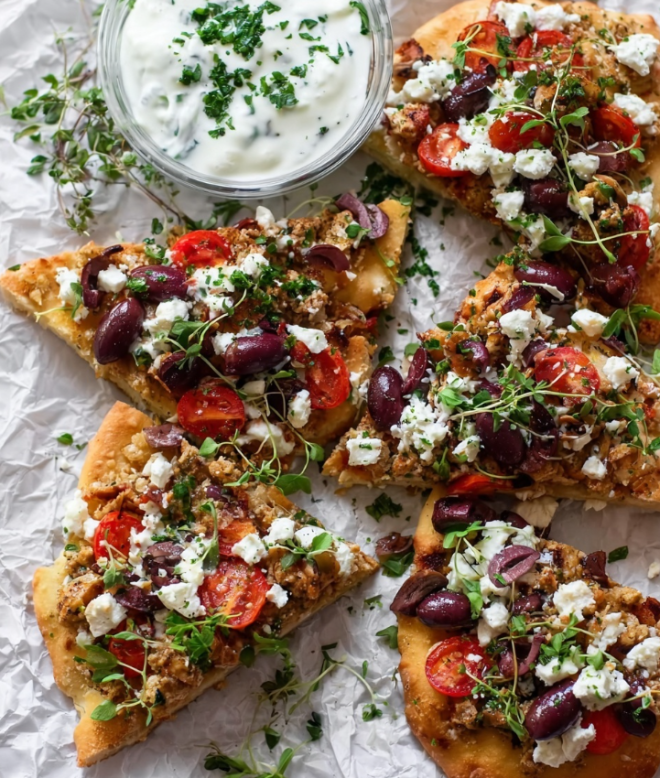
The image shows several triangular slices of Greek flatbread arranged on crumpled white paper over a white marbled surface. Each flatbread slice has a golden-brown base and is topped with layers starting with crumbled light beige meat, bright red tomato slices, and white crumbled feta cheese. On top, there are dark purple olive pieces spread across, along with scattered small green herb leaves and sprouts, adding color and freshness. To the side, there is a clear bowl with creamy white tzatziki sauce garnished with finely chopped green herbs. The setting is bright and fresh with a rustic and wholesome vibe. Photo taken with an iphone --ar 4:5 --v 7

When it comes to serving, I like to keep things vibrant and casual. This dish is fantastic served right off the platter at room temperature or slightly warm so the pita chips retain their crunch. I often pair it with a bright, crisp Greek salad on the side to boost that fresh vegetable component. For a full Mediterranean feast, grilled chicken or lamb skewers go beautifully alongside.

Presentation-wise, piling everything high on a large platter garnished with extra chopped parsley and a drizzle of olive oil makes it feel celebratory and inviting. I also love sprinkling a little extra crumbled feta or a few whole olives on top just before serving—it makes the dish pop visually and adds bursts of flavor as you dig in.

As for beverages, chilled white wines like a Sauvignon Blanc or a dry Rosé pair splendidly with the richness and tang of this dish. If you’re looking for something non-alcoholic, sparkling water with a splash of lemon or a fruity iced tea complements the Mediterranean flavors nicely. This recipe is brilliantly versatile, making it perfect for casual family dinners, lively game nights, or summer parties where people can graze and mingle while enjoying the bold, fresh flavors.

Variations

I love how flexible this Easy Greek Nachos Recipe is. One of my favorite variations is swapping the pita chips for gluten-free pita or even sturdy corn tortilla chips to keep it gluten-free without losing crunch. For a vegan twist, you can skip the feta and use a salty vegan cheese alternative or add extra olives and roasted chickpeas for protein and flavor.

If you want to experiment with different flavor profiles, try adding a drizzle of spicy harissa or a sprinkle of za’atar over the pita chips before baking for an extra aromatic touch. You could also swap out the pepperoncinis for pickled jalapeños if you prefer more heat. For something heartier, layering in some grilled lamb meat or seasoned ground beef Greek-style creates a nacho platter that’s perfect for game day or a casual weekend dinner.

Lastly, if you’re short on time, you can buy pre-made tzatziki or hummus, but I promise the homemade tzatziki really elevates the entire dish with its fresh, balanced flavors. In the summer, I sometimes serve the components separately so guests can build their own nachos exactly how they like them, which always results in great smiles and happy taste buds.

Storage and Reheating

Storing Leftovers

If you happen to have leftovers, I recommend storing the components separately for best results. Keep the pita chips in an airtight container at room temperature to preserve their crunch for up to 2 days. Store the hummus, tzatziki, and toppings like feta, olives, and veggies in sealed containers in the refrigerator for up to 3 days. Mixing everything back together when you’re ready to eat works best to avoid sogginess.

Freezing

Generally, I don’t freeze this Easy Greek Nachos Recipe because the fresh ingredients and pita chips don’t freeze well—the pita loses crunch and the fresh veggies get watery upon thawing. However, you can freeze the tzatziki separately in an airtight container for up to 2 months, although its texture may change slightly after thawing. Defrost in the fridge overnight and stir well before serving.

Reheating

To revive leftover pita chips, I like to heat them in a preheated oven at 325 degrees Fahrenheit for about 5 minutes to restore their crispness. Avoid microwaving since that makes them chewy. The tzatziki, hummus, and toppings should be served cold or at room temperature for the best flavor and texture. If you stored them separately, assemble the nachos fresh just before eating to enjoy that crave-worthy contrast of crisp and creamy every time.

FAQs

Can I use store-bought pita chips instead of making my own?

Absolutely! Using store-bought pita chips is a great shortcut and saves time. Just look for ones that have a nice crunch and aren’t overly salty so you can still taste all the other fresh ingredients in the nachos.

Is this Easy Greek Nachos Recipe suitable for vegetarians?

Yes, this recipe is fully vegetarian and packed with plant-based ingredients like hummus, olives, and fresh veggies. If you want to keep it vegan, simply substitute the feta and Greek yogurt with vegan alternatives.

How can I make the tzatziki sauce ahead of time?

You can prepare the tzatziki sauce up to 2 days in advance. Make sure to drain the cucumber well to keep it from becoming watery. Store it in an airtight container in the refrigerator and stir before serving for the best flavor.

What makes these Greek nachos different from traditional nachos?

The main difference is in the base—using crispy pita wedges instead of tortilla chips gives the dish a Mediterranean twist. Instead of cheese sauce and salsa, this recipe features creamy hummus, fresh tzatziki, tangy feta, and a bounty of fresh vegetables and olives for authentic Greek flavors.

Can I add protein to make this a full meal?

Definitely! Adding grilled chicken, lamb kebabs, or even roasted chickpeas makes this dish more substantial and perfect as a main course. I love layering in some seasoned ground beef for a heartier take on this Easy Greek Nachos Recipe.

Conclusion

I hope you’re as excited as I am to try this Easy Greek Nachos Recipe because it truly brings an explosion of flavors and textures that’s impossible not to love. It’s simple, quick, and endlessly fun to make, whether you’re treating yourself or feeding a crowd. Trust me, once you’ve tasted the crispy pita chips loaded with creamy hummus, fresh tzatziki, feta, and vibrant veggies, this will quickly become one of your go-to recipes whenever you want something deliciously different and utterly satisfying.

Coconut Chicken Rice Bowl: A Tropical Twist in 20 Minutes Recipe

December 28, 2025 by Sue Leave a Comment

I absolutely love sharing this Coconut Chicken Rice Bowl: A Tropical Twist in 20 Minutes Recipe because it brings such a bright, exotic flavor to the table without any complicated cooking steps. The creamy coconut milk combined with tender chicken and a hint of zesty lime creates a perfect harmony that feels like a mini tropical getaway right in my kitchen. It’s quick, comforting, and packed with vibrant flavors that make me reach for seconds every time.

Why You'll Love This Coconut Chicken Rice Bowl: A Tropical Twist in 20 Minutes Recipe

When I first tasted this Coconut Chicken Rice Bowl, the combination of creamy coconut milk with the savory notes of chicken and a splash of lime instantly won me over. The sauce has this gentle sweetness with just the right amount of tang and umami from the soy sauce, and the garlic and ginger provide a fragrant warmth that rounds out every bite beautifully. I find myself craving this bowl when I want something cozy but still fresh and exciting.

What makes this recipe really stand out for me is how incredibly simple it is to prepare. You can whip it up in just about 20 minutes, which is a lifesaver on those busy weeknights when I don’t want to compromise on flavor. The ingredients are straightforward, easy to find, and come together quickly in one skillet — no need for fancy equipment or long prep times.

I love serving this dish as a casual family dinner or when friends drop by unexpectedly. It’s versatile enough to feel special but familiar enough to please everyone, from kids to grown-ups. Plus, it’s an ideal weeknight meal when you want to escape to tropical flavors without leaving your home kitchen.

Ingredients You'll Need

A white bowl holds four raw chicken fillets arranged close together, covering the bowl's surface; the chicken fillets are pale pink with a shiny, smooth texture. To the right side of the bowl on a white marbled surface, two lemon halves with bright yellow flesh and three peeled garlic cloves are placed, adding color contrast to the scene. The overall setting is bright with soft natural light, highlighting the freshness of the ingredients photo taken with an iphone --ar 4:5 --v 7

This recipe relies on a handful of essential ingredients that each bring their own special touch to the Coconut Chicken Rice Bowl: A Tropical Twist in 20 Minutes Recipe. From the creamy coconut milk adding richness to the punchy ginger and garlic creating depth, each component plays a vital role in the magic of this dish’s flavor and texture.

TIP : You'll find the full list of ingredients and measurements in the recipe card below

  • Boneless, skinless chicken breasts: This lean protein cooks quickly and soaks up the sauce beautifully; you can also swap for shrimp, tofu, or chickpeas if you want.
  • Coconut milk: It gives the dish that creamy, tropical character; light coconut milk works well if you prefer a lighter dish.
  • Soy sauce: Adds savory umami depth; tamari is a great gluten-free option.
  • Cooked rice: I use jasmine or basmati for fragrant, fluffy grains but brown rice works nicely too for extra fiber.
  • Vegetable oil (or coconut oil): Perfect for sautéing chicken and aromatics while adding a subtle hint of sweetness.
  • Garlic, minced: Brings a punch of flavor that melds perfectly with ginger.
  • Grated ginger: Adds warmth and a slight zest that makes the sauce pop.
  • Lime juice: Fresh lime juice brightens the whole dish with a refreshing citrus kick.
  • Salt and pepper: Essential seasonings to balance and enhance the flavors.
  • Fresh cilantro or green onions: For a vibrant, herbaceous garnish that lifts the entire bowl visually and taste-wise.

Directions

Step 1: Heat 2 tablespoons of vegetable or coconut oil in a large skillet over medium heat. This is the base that ensures your chicken cooks evenly and develops a nice golden sear.

Step 2: Add diced boneless, skinless chicken breasts to the skillet and season with salt and pepper. Sauté for about 5 to 7 minutes, stirring occasionally, until the chicken is browned on the outside and cooked completely through.

Step 3: Once the chicken is cooked, stir in the minced garlic and grated ginger. Cook for an additional minute, allowing the fragrant aromatics to release their flavors without burning.

Step 4: Pour in the can of coconut milk, 2 tablespoons of soy sauce, and 1 teaspoon of fresh lime juice. Stir everything together and let it simmer gently for 5 to 7 minutes. During this time, the sauce thickens and flavors deepen, coating the chicken with that luscious tropical creaminess.

Step 5: While the sauce simmers, prepare your cooked rice according to package instructions if you don’t have leftovers ready. Jasmine rice is my personal favorite here for its delicate aroma.

Step 6: Serve the creamy chicken mixture spooned generously over the warm rice. Garnish with chopped fresh cilantro or sliced green onions for that pop of color and freshness that makes the bowl irresistibly inviting.

Servings and Timing

This Coconut Chicken Rice Bowl: A Tropical Twist in 20 Minutes Recipe generously serves 4 people, making it perfect for a small family dinner or meal prepping for the week. The prep time is minimal, about 5 minutes to chop and gather ingredients, while the cook time is roughly 20 minutes, resulting in a total time of approximately 25 minutes from start to finish. There’s no resting time needed, so you can dig in right away while the flavors are fresh and vibrant.

How to Serve This Coconut Chicken Rice Bowl: A Tropical Twist in 20 Minutes Recipe

A bowl with three main layers: at the bottom, there is fluffy white rice filling about half the bowl, soft and slightly separated grains; next to the rice, sliced cucumber pieces, light green with smooth texture, arranged neatly; the top layer covers the remaining half with orange creamy chicken pieces, cooked with slight charring on some, mixed with small chopped green herbs sprinkled on top. The bowl is white, resting on a white marbled surface. Photo taken with an iphone --ar 4:5 --v 7

I love serving this Coconut Chicken Rice Bowl piping hot to really enjoy the creamy coconut sauce at its best. It pairs beautifully with crisp, fresh side salads—like a cucumber and mango salad tossed with lime juice—or steamed greens such as bok choy or broccoli for some added crunch and color. The contrasts in texture make every bite exciting.

For presentation, I always like to sprinkle a handful of fresh cilantro or green onions on top to brighten the plate. Adding a few lime wedges on the side lets everyone adjust the tanginess to their liking. If I want to impress guests, I sometimes serve this meal in pretty deep bowls layered with a bit of toasted coconut flakes for extra tropical flair.

To complement the tropical vibe, I often recommend pairing this dish with chilled white wines like a Sauvignon Blanc or a dry Riesling, which have crisp acidity that cuts through the creamy sauce. For non-alcoholic options, a sparkling limeade or iced green tea with a slice of lime keeps things refreshing. This meal is fantastic for casual weeknights but also shines at holiday dinners or relaxed dinner parties when you want to offer something exotic yet approachable.

Variations

One of my favorite things about this Coconut Chicken Rice Bowl recipe is how easy it is to customize to suit different tastes and dietary needs. If you want to make it vegetarian or vegan, swapping the chicken for firm tofu or hearty chickpeas works wonderfully. Just give them some extra time to soak up the sauce or pan-fry tofu for a crisp texture.

If you’re gluten-free, simply using tamari instead of soy sauce keeps the recipe safe without sacrificing flavor. For an extra flavor boost, I sometimes add a pinch of red chili flakes or a splash of fish sauce if I’m feeling adventurous and want a more complex, Southeast Asian vibe.

For a different cooking method, you can prepare the chicken and sauce in a slow cooker on low for 3 to 4 hours for even more tender meat and richer flavors. Or toss everything together and bake it in the oven covered, which allows the coconut sauce to meld beautifully with the chicken. These tweaks make this dish flexible and always delicious!

Storage and Reheating

Storing Leftovers

I always store leftovers of this Coconut Chicken Rice Bowl in airtight containers to keep everything fresh. The sauce stays creamy and the chicken tender for up to 3 to 4 days in the refrigerator. I recommend separating the chicken mixture from the cooked rice if possible to maintain the best texture when reheating.

Freezing

This dish freezes quite well, which is great if you want to stash some for busy days. I portion the chicken and coconut sauce into freezer-safe containers or heavy-duty bags and freeze for up to 2 months. Rice can be frozen separately or freshly cooked after thawing for better texture. Just thaw overnight in the fridge before reheating.

Reheating

The best way to reheat this meal is gently on the stove over low-medium heat, stirring often to prevent the sauce from separating. Adding a splash of water or coconut milk helps bring back the creamy consistency if it looks a bit thick. Avoid microwaving on high to prevent drying out the chicken and uneven heating. When reheated carefully, the flavors stay vibrant and the texture remains satisfying.

FAQs

Can I use other proteins besides chicken in this recipe?

Absolutely! Shrimp, tofu, or chickpeas make fantastic alternatives. Just adjust cooking times accordingly—shrimp cooks very quickly, while chickpeas just need to be warmed through. Tofu benefits from pan-frying first to add extra texture and flavor.

Is this recipe suitable for a gluten-free diet?

Yes, it can be easily made gluten-free by substituting regular soy sauce with tamari, which is a gluten-free soy sauce variant. Be sure to check all labels to avoid hidden gluten ingredients. The rest of the ingredients are naturally gluten-free.

Can I prepare this recipe ahead of time?

Definitely! You can cook the chicken and sauce in advance and store it refrigerated for a couple of days. When you’re ready to eat, simply reheat gently on the stove. This makes for a fantastic quick meal on busy days.

What type of rice works best for this dish?

I recommend fragrant jasmine or basmati rice for their light texture and aromatic qualities that complement the coconut sauce perfectly. However, brown rice is a wholesome choice if you want more fiber and a nuttier flavor.

How can I make this recipe spicier if I like heat?

Adding red chili flakes during cooking or a drizzle of sriracha before serving adds lovely heat. Fresh chopped bird’s eye chilies or a splash of hot sauce mix well without overpowering the tropical flavors. I always start with a little and adjust to taste.

Conclusion

I truly hope you enjoy making and eating this Coconut Chicken Rice Bowl: A Tropical Twist in 20 Minutes Recipe as much as I do. It’s one of those dishes that feels like a little vacation in your own kitchen, bringing warmth, comfort, and vibrant tropical flavors straight to your plate with minimal effort. Trust me, once you have this in your recipe rotation, it’ll quickly become a favorite go-to meal for any day of the week!

Quick Bok Choy with Garlic and Ginger Recipe

December 28, 2025 by Sue Leave a Comment

I absolutely love how simple and satisfying this Quick Bok Choy with Garlic and Ginger Recipe is. It’s one of those dishes that comes together in a flash but still delivers on fresh, vibrant flavors that brighten up any meal. The crisp-tender bok choy combined with the fragrant garlic and zesty ginger creates a wonderful balance that feels both comforting and light. I often rely on this recipe when I want something healthy, flavorful, and ready in minutes without sacrificing taste.

Why You'll Love This Quick Bok Choy with Garlic and Ginger Recipe

What makes this recipe really stand out to me is the incredible flavor combo. The garlic and ginger provide that warm, aromatic punch that wakes up your taste buds, while the soy sauce adds a subtle saltiness that perfectly complements the natural sweetness of the bok choy. Every bite is a burst of freshness with just enough savory depth to keep it interesting.

Another reason I adore this dish is how effortlessly it comes together. Seriously, just 10 minutes and you’re done! I love recipes like this for busy weeknights or when I need a healthy side that doesn’t require a million ingredients or complicated steps. The searing step adds just a touch of caramelization on the cut sides of the bok choy, which I think elevates the dish beyond basic steamed veggies.

To me, this Quick Bok Choy with Garlic and Ginger Recipe fits perfectly into so many occasions—whether it’s a quick lunch, a tasty side for a family dinner, or even as part of a vibrant Asian-inspired feast when friends come over. It’s such a versatile staple that I never get tired of making it, and I’m constantly recommending it to everyone who appreciates a fresh, flavorful vegetable dish.

Ingredients You'll Need

A white pan sits on a white marbled surface, containing four pieces of bok choy arranged in a rough circle. Each bok choy has pale green thick stalks at the bottom and bright green leafy tops that are slightly wilted. The pan also has small bits of garlic scattered around the bok choy. A silver handle extends from the pan toward the bottom left corner, with a black cooking device partly visible underneath the pan on the right side. The light shines softly from above, highlighting the fresh texture and colors of the bok choy. photo taken with an iphone --ar 4:5 --v 7

The ingredients for this dish are wonderfully simple yet essential in creating its layered flavors and textures. Each element plays a distinct role, from the crispness of the baby bok choy to the aromatic freshness of the ginger and garlic that infuse every bite.

TIP : You'll find the full list of ingredients and measurements in the recipe card below

  • Canola oil: A neutral oil that withstands high heat, perfect for quick searing without overpowering flavors.
  • Fresh ginger: Adds a zesty, peppery warmth essential for that bright ginger kick.
  • Garlic: Brings a rich, savory foundation that pairs beautifully with ginger.
  • Baby bok choy: Tender and crisp, this green veggie soaks up flavors while offering a satisfying crunch.
  • Salt and black pepper (or red pepper flakes): Seasoning essentials to enhance natural flavors and add just a hint of heat.
  • Low sodium soy sauce: Adds a delicate umami depth without making the dish too salty.
  • Sesame oil (optional): A fragrant finish that introduces subtle nuttiness and complexity.

Directions

Step 1: Heat the canola oil in a large skillet over medium-high heat. You want the oil hot enough to sizzle but not smoking, setting the stage for a quick, flavorful sauté.

Step 2: Add the minced ginger and garlic to the pan, stirring constantly for 30 seconds to 1 minute until fragrant. This short cooking time ensures the aromatics don’t burn but release their maximum flavor.

Step 3: Place the baby bok choy cut side down in the skillet. Let them sear undisturbed for about 2 minutes so the cut edges get a lovely golden-brown color and develop a subtle caramelization.

Step 4: Flip each piece of bok choy over carefully. At this point, sprinkle lightly with salt and pepper, or red pepper flakes if you like a bit of heat. Pour in the low sodium soy sauce around the bok choy, then use tongs to gently turn the greens in the sauce, ensuring even coating. Reduce the heat to medium-low.

Step 5: Cover the pan tightly with a lid and cook for 3 to 4 minutes. The steaming effect softens the bok choy perfectly while retaining some crispness. If you notice the pan drying out too quickly before the bok choy is tender, add a splash of water or broth to keep things moist.

Step 6: Once the greens are tender and the flavors melded, drizzle with a teaspoon of sesame oil if you’re using it. This adds an extra layer of fragrance and richness. Serve immediately while warm and fresh.

Servings and Timing

This Quick Bok Choy with Garlic and Ginger Recipe serves 4 people generously as a side dish. The prep time is practically zero since you just need to slice the bok choy and mince the aromatics—around 3 minutes tops. Cooking time is about 7 minutes, making the total time roughly 10 minutes from start to finish. There’s no resting or cooling time needed—this dish is best enjoyed immediately while it’s hot and tender-crisp.

How to Serve This Quick Bok Choy with Garlic and Ginger Recipe

The dish shows several pieces of cooked bok choy arranged on a white plate, placed on a white marbled surface. Each bok choy piece has a thick pale green base with slightly charred and caramelized edges, with dark green leafy tops that appear soft and cooked with some parts slightly wilted. White sesame seeds are sprinkled over the bok choy, adding texture, along with small bits of red chili flakes. Near the right edge, a pair of wooden chopsticks is holding one piece of bok choy. The overall look is shiny with a light glaze, indicating some sauce or oil coating. Photo taken with an iphone --ar 4:5 --v 7

I love serving this bok choy alongside a variety of mains because it pairs wonderfully with so many flavors. For a complete Asian-inspired meal, try it with jasmine rice and grilled or pan-seared chicken, tofu, or shrimp. The garlicky ginger sauce on the bok choy really complements delicate protein beautifully.

When it comes to presentation, I like to plate the bok choy pieces neatly in a shallow dish, making sure to spoon any remaining pan juices over the top for extra flavor. A light sprinkle of toasted sesame seeds or a few chopped green onions can make the dish pop visually and add texture.

For beverages, I find a crisp, light white wine like a Sauvignon Blanc or a chilled jasmine tea balances the dish wonderfully, cutting through the savory notes. This dish is fantastic for weeknight dinners, casual gatherings, or even as a colorful addition to holiday spreads since it’s healthy, quick, and always a crowd-pleaser. Serve it hot or warm to capture the freshest flavors and maintain that perfect crunch.

Variations

I’m a big fan of playing around with this recipe because it’s so flexible. If you want to switch up the greens, try baby napa cabbage or even Swiss chard—they both work nicely and bring their own textures and flavors. I also sometimes add a splash of rice vinegar or a squeeze of fresh lime juice at the end for an extra tangy brightness.

If you have dietary preferences, this recipe easily adapts to vegan or gluten-free needs. Just make sure your soy sauce is gluten-free or switch it out for tamari. For a richer flavor, you can add a handful of sliced shiitake mushrooms or toss in some crushed red pepper flakes for heat. I sometimes stir in a teaspoon of honey or maple syrup to add a touch of sweetness and balance the ginger’s zing.

For an alternative cooking method, if you’re short on stove space, you could quickly blanch the bok choy and then toss it with sautéed garlic and ginger mixed with the soy sauce. While it won’t have that seared edge, it’s still super fresh and tasty.

Storage and Reheating

Storing Leftovers

If you have any leftovers (which is rare in my house!), they store nicely in an airtight container in the fridge for up to 2 days. I recommend using a shallow container to keep the bok choy from getting soggy. Make sure the veggies have cooled to room temperature before sealing to avoid condensation buildup.

Freezing

I don’t usually freeze bok choy cooked this way because it tends to become watery and lose its crisp texture once thawed. If you want to preserve it longer, I’d suggest freezing the bok choy raw separately and then cooking fresh with garlic and ginger when you’re ready to eat.

Reheating

When reheating, the best method is a quick sauté in a hot pan or a brief microwave burst with a lid to keep moisture in. Avoid overheating, which can turn the bok choy limp and release too much water. Adding a splash of soy sauce or a quick drizzle of sesame oil after reheating freshens the flavors nicely.

FAQs

Can I use regular green cabbage instead of bok choy?

You can, but the texture and flavor will be different. Bok choy offers a delicate, slightly sweet crunch with tender stalks, while cabbage is denser and takes longer to cook. If you substitute, slice cabbage thinly and adjust cooking time to ensure tenderness without overcooking.

Is sesame oil necessary in this recipe?

Sesame oil is optional but highly recommended for its nutty aroma and flavor that adds complexity to the dish. If you don’t have any, the recipe still tastes fantastic without it.

Can I make this dish spicy?

Absolutely! I love adding red pepper flakes or a dash of chili oil during the sautéing step for a nice kick. Start with a small amount and adjust to your heat preference.

How do I clean bok choy properly?

Bok choy can trap dirt between its stalks, so I like to rinse each half under cold running water, fanning the leaves gently. For baby bok choy, slicing them in half lengthwise before washing makes cleaning easier.

What should I serve with this dish for a complete meal?

This wok-style bok choy pairs perfectly with steamed rice, noodles, grilled proteins like chicken or tofu, or even as a crisp vegetable side alongside dumplings or stir-fries. Its lightness balances richer mains beautifully.

Conclusion

If you’re looking for a quick, easy way to elevate your vegetable game, this Quick Bok Choy with Garlic and Ginger Recipe is a must-try. It’s flavorful, healthy, and wonderfully satisfying, and it will absolutely become one of your go-to side dishes when you want something fresh and delicious in no time. I can’t wait for you to try it and see how quickly it wins you over!

Creamy Chicken Congee Recipe for Instant Pot and Stovetop Recipe

December 28, 2025 by Sue Leave a Comment

```html

I absolutely love a comforting bowl of congee, and this Creamy Chicken Congee Recipe for Instant Pot and Stovetop Recipe is one of my all-time favorites. It’s warm, soothing, and so flavorful with tender chicken, fragrant ginger, and that luscious creamy texture you crave on a chilly day or anytime you want soothing nourishment. Whether I’m using the Instant Pot for convenience or simmering it on the stovetop for that slow-cooked charm, this dish always feels like a hug in a bowl, perfect to share with family or to enjoy by myself.

Why You'll Love This Creamy Chicken Congee Recipe for Instant Pot and Stovetop Recipe

What really excites me about this Creamy Chicken Congee Recipe for Instant Pot and Stovetop Recipe is how amazingly rich and comforting the flavor is without being heavy. The combination of short grain rice cooked to perfection, the gentle aroma of ginger, and the subtle umami from the chicken broth creates a base that feels both delicate and nourishing. Topping it off with tender chicken tossed in Shaoxing wine and sesame oil brings a depth and warmth I find truly irresistible.

Another thing I adore about this recipe is how straightforward it is. You don’t need a ton of fancy ingredients or complicated steps. The Instant Pot version is a total game-changer when time is tight—I love how it rapidly transforms simple ingredients into this creamy perfection. But, the stovetop method is just as lovely, especially when I want to linger in the kitchen and let the congee gently thicken to a velvety texture that’s simply mesmerizing.

This recipe is perfect for so many occasions. It’s my go-to when family is feeling under the weather, but also when I want something special yet simple for dinner that doesn’t demand too much effort. It’s hearty enough to satisfy, yet soothing enough to comfort, and that’s what makes it stand out. When I make this congee, I feel like I’m sharing a piece of warmth and care through every bowl.

Ingredients You'll Need

The image shows a close-up of a large metal pot filled with light brown broth and white rice grains floating in it. A metal ladle is scooping up some of the rice and broth mixture, showing the soft, slightly clumpy texture of the rice. The pot is placed on a stove with black burners visible in the background, and the ladle handle extends out to the right side. The overall scene has a warm and simple cooking vibe, with a white marbled surface underneath the pot. photo taken with an iphone --ar 4:5 --v 7

Every ingredient in this recipe plays such a crucial role in building the perfect balance of flavor, texture, and aroma. From the delicate short grain rice that breaks down into creamy softness, to the freshly sliced ginger that adds just the right zing, each component is essential for creating this comforting dish.

TIP : You'll find the full list of ingredients and measurements in the recipe card below

  • Chicken breast or thigh: Thinly sliced for quick cooking and tender bites that melt in your mouth.
  • Shaoxing wine: Adds a fragrant, slightly sweet depth to both the broth and the marinated chicken.
  • Salt: Essential for seasoning to enhance the natural flavors in the dish.
  • Cornstarch: Helps create a smooth coating on the chicken, sealing in juiciness.
  • Short grain white rice: The key to that creamy, softly broken-down texture that defines great congee.
  • Chicken broth: Provides savory richness that infuses every spoonful with comfort.
  • Ginger slices: Infuses the broth with warmth and a subtle zing to balance the creaminess.
  • Green onions: Freshly sliced, they add a burst of color and a mild onion flavor.
  • Chicken bouillon or additional salt: To adjust seasoning perfectly to your taste.
  • Toasted sesame oil: Finishing touch for that exquisite nutty aroma and silky texture.

Directions

Step 1: Start by rinsing the rice gently in a medium-sized bowl filled with water. Using your fingers, stir the rice softly and drain the water. Repeat this rinse one to two more times until the water runs clearer, then drain well. This removes excess starch and helps create a smoother congee texture.

Step 2: For the Instant Pot method, combine the rinsed rice, chicken broth, Shaoxing wine, and ginger slices inside the pot. Seal the lid and set the pressure cooker to high for 15 minutes. After cooking, allow it to naturally release pressure for at least 10 minutes before opening. This slow release prevents clogging from the starchy congee inside the valve and ensures everything finishes perfectly.

Step 3: If you prefer stovetop, combine the rinsed rice, chicken broth, and extra water in a large pot. Bring to a gentle simmer over medium-high heat, then reduce heat to low. Partially cover the pot, leaving a small gap to let steam escape evenly and prevent boil-overs. Simmer slowly for about 30 minutes, stirring frequently near the end as the congee thickens into that signature creamy consistency.

Step 4: While the congee cooks, prepare the chicken by tossing the thinly sliced pieces with Shaoxing wine, salt, and cornstarch in a medium bowl. Coat evenly and let it marinate briefly—this tenderizes the meat and infuses extra flavor.

Step 5: Once the congee is cooked to your desired creaminess, add the marinated chicken, sliced green onions, and chicken bouillon (or salt) to the pot. If using the Instant Pot, switch to the sauté function; stovetop should be over medium heat. Stir constantly to separate the chicken pieces, cooking just until they turn white, about 2 minutes. Avoid overcooking to keep the chicken tender.

Step 6: Finally, stir in the toasted sesame oil for a fragrant finish. Taste and adjust salt if needed. Serve the congee piping hot, ladled into small bowls to savor every creamy, flavorful spoonful.

Servings and Timing

This recipe makes about 4 hearty servings, perfect for sharing or enjoying leftovers. Prep time takes around 10 minutes, mostly rinsing and marinating the chicken. Cook time varies depending on method: approximately 20 minutes with the Instant Pot plus pressure release, or about 30 minutes simmering on the stovetop. Total time ranges from 40 to 50 minutes, making it a wonderfully satisfying meal that fits well into busy days or relaxed weekends. There’s no additional resting time needed, so it’s ready to enjoy as soon as it finishes cooking.

How to Serve This Creamy Chicken Congee Recipe for Instant Pot and Stovetop Recipe

The image shows two white bowls filled with a creamy rice porridge topped with small pieces of tender chicken and sprinkled with finely chopped green onions. Each bowl has a spoon resting inside, partially submerged in the thick, light beige porridge with visible grains of rice and soft chicken chunks. The bowls are placed on a white marbled surface, layered with a wooden board underneath one of the bowls. To the left, there is a small white bowl with more chopped green onions and a small white container with a blue floral pattern. A small wooden bowl with coarse salt and a spoon is also on the surface. A woman's hand is gently holding a blue cloth napkin near the bottom right corner. Photo taken with an iphone --ar 4:5 --v 7

I love serving this congee hot and steaming, nestled in simple ceramic bowls that make the creamy texture and delicate colors stand out. For garnishing, I often sprinkle extra fresh green onions, a drizzle of chili oil, or even a sprinkle of toasted sesame seeds to add pops of flavor and texture. Sometimes a wedge of lime or a dash of soy sauce adds a personalized tang or saltiness, depending on what I’m craving.

This dish pairs beautifully with subtle side dishes like pickled vegetables or lightly sautéed greens to balance the richness with acidity and crunch. For drinks, I enjoy a hot jasmine tea or a light, refreshing white wine like a Riesling, which complements the gentle flavors without overpowering them. It's such a versatile dish that I find myself serving it for cozy family dinners, during cold evenings, or even as a gentle start to a weekend brunch.

Portion sizes feel just right when served in smaller bowls so everyone can comfortably savor multiple spoonfuls and even return for seconds. I always recommend serving it warm to hot to fully enjoy the comforting texture and aroma. It never fails to bring a sense of home and calm to any meal.

Variations

One of my favorite aspects of this Creamy Chicken Congee Recipe for Instant Pot and Stovetop Recipe is how easy it is to customize. For example, if you want to play with proteins, shredded rotisserie chicken or even diced tofu work wonderfully for a twist. When I want to make it gluten-free, I simply ensure that the chicken broth and Shaoxing wine I use are certified gluten-free, or swap in tamari for flavoring.

If you’re interested in making a vegetarian or vegan version, I recommend using vegetable broth and substituting the chicken with jelly ear mushrooms or cubed firm tofu marinated in soy sauce and cornstarch. The texture adjustment adds earthiness while keeping that silky congee feel. Adding mushrooms or corn also gives a lovely texture change if you want to experiment with flavors.

Another way I sometimes vary the recipe is by swapping Shaoxing wine for dry sherry or white cooking wine, depending on what’s available in my pantry. For added richness, I might stir in a beaten egg at the end, which cooks gently in the hot porridge and adds a beautiful silky effect. These little changes keep the recipe exciting and adaptable to whatever mood or ingredients I have on hand.

Storage and Reheating

Storing Leftovers

I always store leftover congee in airtight containers to keep it fresh and avoid absorbing fridge odors. Glass containers work best because they don’t stain or hold smells. The congee will keep well in the refrigerator for up to 3 days. Before storing, make sure it has cooled completely but hasn’t been left out at room temperature for too long to maintain safety and quality.

Freezing

Freezing congee is possible, but I personally prefer to freeze it in single-serving portions in freezer-safe containers or heavy-duty freezer bags. When frozen, it’s best used within 1 to 2 months for optimal flavor and texture. Keep in mind the rice texture might become softer after freezing and thawing, so I usually reserve frozen portions for quick meals rather than first-time serving presentations.

Reheating

To reheat, I gently warm congee on the stovetop over low heat, stirring often and adding a splash of water or broth to restore the creamy consistency if it’s thickened too much. Microwave reheating works too, but I stop every 30-45 seconds to stir and prevent hotspots. Avoid overheating, which can cause the chicken to toughen or the rice to dry out. When done right, it tastes almost as fresh and comforting as the first serving.

FAQs

Can I use brown rice instead of white rice for this recipe?

Brown rice can be used, but it will significantly increase the cooking time and change the texture of the congee. Brown rice is chewier and won’t break down as easily, so if you want a creamy congee with brown rice, you might need to soak it overnight and simmer much longer to achieve the right softness.

Is it necessary to use Shaoxing wine in the recipe?

Shaoxing wine adds a distinctive depth and subtle sweetness that really enhances the chicken and broth flavors. However, if you don’t have it, dry sherry or even mirin are good substitutes. If you prefer to avoid alcohol, you can omit it; the congee will still be delicious, just slightly less complex in flavor.

Can I make this recipe vegetarian or vegan?

Absolutely! Swap the chicken broth for vegetable broth and replace the chicken with firm tofu, mushrooms, or other plant-based protein. Use tamari or soy sauce instead of Shaoxing wine for flavoring, and you’ll have a comforting vegan-friendly congee that’s just as satisfying.

How thick should the congee be? Can I adjust its consistency?

I like my congee creamy and somewhat thick, but not too heavy. You can adjust the consistency easily by adding more water or broth during cooking or reheating to thin it out, or letting it simmer longer to thicken. Stirring frequently during cooking helps control the texture and prevent sticking.

What are good garnishes to serve with this congee?

Fresh green onions, cilantro, crispy fried shallots, toasted sesame seeds, or a drizzle of chili oil make fantastic garnishes. These add brightness, contrasting textures, and inviting aromas to elevate your congee experience.

Conclusion

I hope you feel inspired to try this Creamy Chicken Congee Recipe for Instant Pot and Stovetop Recipe because it’s truly a heartwarming dish that brings comfort and delight in every spoonful. Whether you need a nourishing meal after a long day or a delicious way to care for your loved ones, this recipe is an effortless way to create something special. Trust me—it’ll quickly become a favorite in your cooking rotation, just like it is in mine!

```

Iced Oatmeal Cookies Recipe

December 28, 2025 by Sue Leave a Comment

I have always been a fan of cozy, nostalgic desserts, and this Iced Oatmeal Cookies Recipe has a special place in my heart. Each bite perfectly combines the warm spices of cinnamon and nutmeg with the hearty chewiness of oats and a delightful sugary glaze on top. I find it to be such a comforting treat that’s both simple to make and irresistibly delicious. Whenever I bake these, my kitchen fills with the most inviting aromas, and I can’t help but share them with friends and family right away!

Why You'll Love This Iced Oatmeal Cookies Recipe

What really excites me about this recipe is the balanced flavor profile—there’s just the right touch of sweetness, blended with the depth of warm spices and oats that give it a wonderful texture. I love how the cinnamon and nutmeg gently come through, making these cookies feel like a warm hug on chilly days. Every cookie has that satisfying chew, thanks to the oats, and the sugary glaze adds a smooth, sweet finish that’s hard to resist.

From my experience, this recipe is incredibly straightforward, even if you’re pressed for time or not a seasoned baker. The ingredients are pantry staples, and the steps flow naturally, so I never feel overwhelmed when pulling these together. Plus, the glaze is super simple to whip up but instantly elevates the finished cookies, adding a fun, glossy touch that looks and tastes special.

I always think these cookies are perfect for a variety of occasions, whether it’s an everyday snack with afternoon tea, a crowd-pleaser at holiday parties, or a sweet surprise to pack in lunchboxes. What makes them stand out is their nostalgic charm paired with the fresh twist of the icing that adds just enough pizzazz without being over the top. I promise, once you try this Iced Oatmeal Cookies Recipe, you’ll want to make them a regular in your baking rotation!

Ingredients You'll Need

A stack of seven oatmeal cookies is shown close-up, each cookie round and flat with a rough, crumbly texture. The cookies are a light brown color with visible bits of oats throughout. They are neatly piled one on top of the other on a silver metal cooling rack with a grid pattern. The background is blurred dark, making the light cookies stand out. The surface under the rack is a white marbled texture photo taken with an iphone --ar 4:5 --v 7

The magic in this Iced Oatmeal Cookies Recipe comes down to a simple but thoughtful collection of ingredients. Each one plays a crucial role in shaping the cookie’s flavor, texture, and perfect golden color. These are ingredients you likely already have on hand, which makes baking these a breeze!

TIP : You'll find the full list of ingredients and measurements in the recipe card below

  • Shortening: Provides a tender crumb and classic cookie texture that’s slightly different from butter.
  • Brown sugar: Adds rich molasses flavor and moistness to the cookies.
  • Sugar: Balances sweetness and helps achieve golden color during baking.
  • Water: Keeps the dough moist and helps blend the ingredients smoothly.
  • Vanilla extract: Enhances the sweetness and complements the spices beautifully.
  • All-purpose flour: The foundation of the cookie that gives structure without toughness.
  • Baking soda: Offers just the right lift to keep cookies soft and chewy.
  • Salt: Balances sweetness and intensifies all the flavors.
  • Nutmeg and cinnamon: Bring warm, aromatic notes that make these cookies unmistakably comforting.
  • Oats: Give a satisfying chew and wholesome texture, whether you use quick or old-fashioned oats.
  • Milk and powdered sugar: Combine to create the sweet, shiny glaze that finishes the cookies perfectly.

Directions

Step 1: In a large bowl, cream together the shortening, brown sugar, and sugar until the mixture is light and fluffy. This usually takes about 2-3 minutes with a hand or stand mixer. The creaming step helps create a tender, airy cookie texture that I love.

Step 2: Beat in the water and vanilla extract, mixing just until combined. This helps hydrate the dough so it comes together smoothly without becoming too sticky.

Step 3: In a separate bowl, whisk together the all-purpose flour, baking soda, salt, nutmeg, and cinnamon. Gradually add this dry mixture to the creamed ingredients, stirring gently to combine. Then fold in the oats carefully so they’re evenly distributed without overmixing the dough.

Step 4: Use a medium cookie scoop or spoon to drop dollops of dough onto greased baking sheets, spacing them about 2 inches apart to allow for spreading.

Step 5: Bake the cookies in a preheated oven at 350°F (175°C) for 10-12 minutes, or until the edges turn a lovely golden brown. When you pull them out, let the cookies stand on the baking sheet for about 2 minutes before transferring to a wire rack to cool completely.

Step 6: While the cookies cool, mix the glaze by stirring together milk and sifted powdered sugar. Add water, one teaspoon at a time, until you reach a smooth, slightly runny consistency that’s perfect for dipping.

Step 7: Quickly dip the top of each cooled cookie into the glaze, allowing any excess to drip off. Place them back on the wire rack to let the glaze set, which usually takes around 15-20 minutes.

Servings and Timing

This recipe yields about 24 delicious Iced Oatmeal Cookies, which is perfect for sharing or enjoying over several days. The prep time is roughly 10 minutes, making it quick to pull all the ingredients together, and the baking time clocks in at about 10 to 12 minutes. Including cooling and glazing, the total time you’ll spend in the kitchen is around 22 minutes. No long waiting around for these, which I really appreciate when I’m craving a quick homemade treat!

How to Serve This Iced Oatmeal Cookies Recipe

A woman's hand is holding a round, golden-brown crispy piece of food above a clear glass bowl filled with a thick white sauce. The sauce drips slowly from the bottom of the crispy piece back into the bowl. The bowl is placed on a white marbled surface, and in the background, more similar golden-brown pieces rest on a tray. Photo taken with an iphone --ar 4:5 --v 7

I love serving these cookies as a sweet surprise with hot tea or rich coffee, where the warmth pairs so nicely with the spices and glaze. For a fun twist, I sometimes plate them with fresh fruit like apples or pears, which add a crisp contrast to the chewy texture of the cookie.

Presentation-wise, I like arranging a few cookies on a pretty platter and dusting them lightly with a pinch of cinnamon or a tiny drizzle of extra glaze to make them look bakery-worthy. For parties or holidays, stacking them neatly on a tiered serving tray always impresses guests. If I’m serving them at an informal family gathering, I keep it simple and place them in a bowl or basket alongside some milk or cocoa.

These iced oatmeal cookies taste best at room temperature when the glaze is set but still soft to the bite. They also hold up well if slightly chilled, which makes them a great option for summer entertaining or if you want to prepare them ahead of time. I find that part of their charm is being easy to enjoy any time — whether as an after-dinner treat, a packed lunch dessert, or a cozy nighttime snack.

Variations

Over the years, I’ve played around with this Iced Oatmeal Cookies Recipe to suit different tastes and dietary needs, and it’s surprisingly flexible! For a gluten-free twist, you can swap the all-purpose flour for a gluten-free blend and use certified gluten-free oats. The texture remains terrific, and everyone still loves them.

If you want to make the cookies vegan, I’ve had success replacing shortening with coconut oil and using a plant-based milk in the glaze. Just be sure to check your powdered sugar, as some brands use bone char for whitening. The flavor stays just as warm and comforting, which is what matters most to me.

To mix up the flavor, I sometimes add chopped nuts like walnuts or pecans for extra crunch, or toss in raisins or dried cranberries for a chewy sweetness. And for a different cooking method, these can be gently pan-fried in a non-stick skillet on low heat to get a soft, almost pancake-like cookie that’s delicious with a drizzle of glaze on top.

Storage and Reheating

Storing Leftovers

When I have leftovers, I store the iced oatmeal cookies in an airtight container at room temperature. They keep well for about 4-5 days without losing their chewy texture or glaze shine. I like using containers with a tight seal to avoid any exposure to air that can dry them out. If you live in a humid environment, a cool, dry spot is best to maintain that perfect texture.

Freezing

If I want to keep these cookies longer, freezing works wonderfully. I freeze them unfrosted on a parchment-lined tray first so they don’t stick together. Once frozen solid, I transfer them to a freezer-safe bag or container and they keep for up to 3 months. When I’m ready to enjoy them, I thaw them at room temperature and then dip or drizzle the glaze freshly for that just-baked feel.

Reheating

To warm up leftover cookies, I gently heat them in a low-temperature oven (about 300°F) for 5 minutes, which softens them without melting the glaze too much. I avoid microwaving because it can make the glaze too runny and the texture slightly rubbery. Reheating this way brings back the “fresh out of the oven” warmth and aroma I adore.

FAQs

Can I use butter instead of shortening in this recipe?

Yes, you can substitute butter for shortening, but keep in mind it may produce a slightly different texture and flavor. Butter gives a richer taste and can make the cookies a bit crisper around the edges, which many people enjoy. Just use the same amount and cream it well with the sugars.

Is it okay to use old-fashioned oats instead of quick oats?

Definitely! The recipe works well with both old-fashioned and quick cooking oats. Old-fashioned oats give a heartier chew and a bit more texture, while quick oats blend more smoothly. I prefer old-fashioned for that classic oatmeal cookie feel.

How thick should the glaze be for dipping?

The glaze should be smooth but not too runny—think a consistency where it coats the back of a spoon and drips slowly. If it’s too thick, add a teaspoon of water at a time to thin it out; if too thin, add more powdered sugar. The right glaze consistency helps it stick nicely without pooling or sliding off the cookies.

Can I prepare the cookie dough ahead of time?

Yes! You can refrigerate the dough for up to 24 hours before baking. Chilling it helps the flavors meld and can reduce spreading during baking, resulting in thicker cookies. Just let the dough sit at room temperature a few minutes before scooping so it’s easier to handle.

What’s the best way to prevent the glaze from cracking?

Applying the glaze while the cookies are at room temperature and not too cold helps prevent cracking. Also, avoid dipping frozen cookies directly into the glaze, as the temperature difference can cause the glaze to crack. Allow the glaze to set naturally at room temperature for the smoothest finish.

Conclusion

I truly hope you enjoy making and savoring this Iced Oatmeal Cookies Recipe as much as I do. There’s something so heartwarming about baking these cookies and sharing them with loved ones, whether it’s a cozy afternoon treat or a festive dessert. Give this recipe a try—you might just find yourself reaching for it again and again when you want that perfect balance of spicy, sweet, and chewy in a cookie. Happy baking!

Easy Sweet Cinnamon Twists for Any Occasion Recipe

December 28, 2025 by Sue Leave a Comment

I absolutely love sharing this Easy Sweet Cinnamon Twists for Any Occasion Recipe because it combines simplicity and irresistible flavor in a way that always delights everyone around me. The warm, sweet cinnamon scent fills my kitchen as these golden twists bake to perfection, and I know I'm about to enjoy a treat that's perfect whether it's a cozy breakfast, an afternoon snack, or a festive dessert. These twists are wonderfully crisp on the outside, tender inside, and simple enough to whip up without fuss, making them a true favorite in my recipe collection.

Why You'll Love This Easy Sweet Cinnamon Twists for Any Occasion Recipe

What really makes this recipe stand out for me is the perfect harmony of flavors and textures: the buttery puff pastry crisps beautifully while the cinnamon-sugar coating melts into a caramelized crust that hits just the right sweetness. Every bite feels like comfort wrapped in a flaky, delicate twist. I especially appreciate how the cinnamon's warm spice lifts the simple ingredients into something truly special.

Ease of preparation is another huge win with this recipe. I get why it's called an "easy" recipe—using pre-made puff pastry means I skip all the complicated dough making, which saves me time and energy without sacrificing taste. The steps flow quickly, and there’s something so satisfying about twisting and shaping the strips before popping them into the oven to do their magic.

These cinnamon twists are perfect for so many occasions. Whether I'm hosting a brunch, bringing a sweet surprise to a potluck, or looking for an easy after-dinner treat, these twists are always a hit. They look charming on any platter and their delightful flavor makes them perfect for celebrations or just a casual snack with a cup of tea or coffee. I honestly can’t recommend this Easy Sweet Cinnamon Twists for Any Occasion Recipe enough if you want a delicious, fuss-free pastry that feels special every time.

Ingredients You'll Need

The image shows eight twisted pastries arranged neatly in two rows on a white baking tray lined with white parchment paper. Each pastry has a golden brown color with visible layers of dough twisted to show a slight shine and a light dusting of flour or sugar. The texture looks soft and flaky, with the twists adding a sense of depth and dimension. The background is a white marbled surface. Photo taken with an iphone --ar 4:5 --v 7

This recipe is wonderfully straightforward, requiring just a handful of everyday ingredients, each playing an essential role in achieving that perfect cinnamon twist flavor and texture. From the flaky puff pastry to the fragrant ground cinnamon, every element contributes to the final irresistible treat.

TIP : You'll find the full list of ingredients and measurements in the recipe card below

  • Puff Pastry: I always use pre-made frozen puff pastry as it’s flaky and buttery, creating the perfect base for these twists.
  • Granulated Sugar: Sweetness is key here, and I sometimes swap in coconut sugar for a more natural option with a subtle caramel flavor.
  • Ground Cinnamon: Freshly ground cinnamon adds a vibrant, aromatic warmth that’s essential to the recipe’s character.
  • Butter (melted): Brushing this on helps the sugar and cinnamon adhere while adding a rich, golden crisp on baking.
  • Egg (for egg wash): This wash gives the twists a beautiful glossy finish, though I use non-dairy milk for vegan variations.
  • Powdered Sugar (optional): A light dusting after baking adds a delicate sweetness and lovely presentation touch.

Directions

Step 1: Begin by preheating your oven to 400°F (200°C) and prepare a baking sheet by lining it with parchment paper to prevent sticking and ensure even baking.

Step 2: Take your defrosted puff pastry and roll it gently on a floured surface until it’s about ⅛ inch thick — this ensures your twists will be perfectly flaky and crisp.

Step 3: In a small bowl, combine your granulated sugar and ground cinnamon thoroughly, creating that wonderful sweet-spicy mixture that’s going to coat the pastry.

Step 4: Brush the rolled-out pastry evenly with melted butter; this helps the cinnamon-sugar stick and creates that beautiful golden-brown crust.

Step 5: Sprinkle the cinnamon-sugar mixture generously over the buttered surface, making sure every inch is covered for maximum flavor.

Step 6: Slice the pastry into 1-inch wide strips with a sharp knife or pizza cutter, then twist each strip multiple times to create those iconic cinnamon twists.

Step 7: Arrange the twists neatly on your lined baking sheet and brush each one with an egg wash to promote color and shine. For vegan options, I swap in a bit of non-dairy milk here instead.

Step 8: Bake the twists in your preheated oven for 15 to 20 minutes, keeping a close eye as they puff up and turn a beautiful golden brown.

Step 9: Once baked, let them cool slightly on a wire rack before dusting with powdered sugar to add a pretty and sweet finishing touch.

Servings and Timing

This Easy Sweet Cinnamon Twists for Any Occasion Recipe makes about 8 delightful servings — perfect for sharing with family or friends. The prep time is really short, about 10-15 minutes, since the puff pastry does most of the heavy lifting for you. Baking takes roughly 15 to 20 minutes, and I like to allow a few minutes for cooling before serving, so the total time lands around 30 minutes. This makes it an ideal recipe for when you want something fresh and impressive without spending hours in the kitchen.

How to Serve This Easy Sweet Cinnamon Twists for Any Occasion Recipe

The image shows long, golden brown breadsticks with a crispy, slightly twisted texture. Some breadsticks stand upright inside a white ceramic pitcher, while others lay flat on a white plate in the foreground and on a cooling rack in the background. A red cloth is draped casually next to the pitcher, and the whole scene is set on a white marbled surface. The lighting highlights the crispy crust and the soft inside of the breadsticks, creating a warm and inviting look. photo taken with an iphone --ar 4:5 --v 7

When it comes to serving these cinnamon twists, I love offering them warm. The slight warmth brings out the buttery, cinnamon sugar flavor and keeps the pastry delightfully tender. For a casual breakfast or snack, they’re fantastic on their own with a hot cup of coffee or chai tea, perfectly balancing the spices with a comforting drink.

For more festive presentations, I often serve these twists alongside fresh fruit or a dollop of whipped cream to add freshness and texture contrast. Garnishing with a light dusting of powdered sugar immediately before serving adds a little snowy look that makes them instantly feel special. For gatherings or a brunch spread, stacking them on a decorative plate lined with a pretty napkin elevates their visual appeal.

If you want to pair these with beverages, I enjoy a sweet dessert wine or a spiced mulled cider when serving at holiday parties. On warmer days, a sparkling apple cider or vanilla latte complements the flavors beautifully. The twists’ versatility in pairing, plating, and serving temperature truly makes them a go-to for any occasion I want to impress or simply enjoy a little sweetness.

Variations

Over time, I’ve experimented by swapping out ingredients for different dietary needs or flavor twists. For example, using margarine or coconut oil instead of butter makes this recipe dairy-free, while skipping the egg wash or using non-dairy milk keeps it vegan-friendly without compromising that golden finish. You can even sprinkle a bit of nutmeg or cardamom into the sugar mixture for an exciting flavor variation that adds a little holiday flair.

If you’re interested in a gluten-free version, I’ve found some excellent pre-made gluten-free puff pastries on the market that bake just as well, keeping the texture light and flaky. For something a bit more indulgent, spreading a thin layer of cream cheese or Nutella underneath the cinnamon sugar before cutting the strips creates a rich, gooey surprise inside each twist.

Cooking methods can be adapted too if you prefer: I’ve even tried baking these twists on a pizza stone for a little extra crisp, or air frying them for a faster, equally lovely result. These variations mean you can always make this recipe fit whatever mood, occasion, or dietary need you’re aiming for.

Storage and Reheating

Storing Leftovers

If you have any leftover cinnamon twists (which is rare in my house!), I recommend storing them in an airtight container at room temperature. They stay fresh and crisp for up to 2 days if kept properly sealed. I avoid refrigeration since it tends to dry the pastry out, but if that’s your only option, be sure to bring them back to room temperature before enjoying again for the best texture.

Freezing

You can absolutely freeze these twists if you want to save some for later. After they’ve cooled completely, I wrap each twist individually in plastic wrap and then place them in a zip-top freezer bag to prevent freezer burn. Properly stored, they keep well for up to one month. When you’re ready to indulge, simply thaw them at room temperature or gently warm them in the oven to recapture that fresh-baked magic.

Reheating

To reheat, I always prefer the oven or a toaster oven set to 350°F (175°C) for about 5-7 minutes. This brings back their crispiness and warms the cinnamon-sugar coating without drying the pastry. I avoid microwaving because it tends to make puff pastry soggy and chewy, which ruins the delicate texture I love so much. A light dusting of powdered sugar after reheating instantly freshens up both the look and flavor.

FAQs

Can I make these cinnamon twists ahead of time?

Definitely! I like to prepare the twists up until the baking step, then refrigerate the unbaked strips for a few hours before baking. This way, you can have fresh twists whenever you want without the last-minute hassle. Just add a few extra minutes to the baking time if they’re chilled.

What if I don’t have puff pastry? Can I use another kind of dough?

Puff pastry’s unique flakiness is key to this recipe, but if you don’t have any, you could try phyllo dough or even crescent roll dough. Keep in mind, the texture and puff might differ, but the cinnamon-sugar flavor will still shine through beautifully.

How can I make this recipe vegan?

To make these twists vegan, substitute the butter with margarine or coconut oil and skip the egg wash, replacing it with a bit of almond milk or another plant-based milk brushed over the twists. The flavor and texture remain deliciously satisfying.

Is it possible to make these twists less sweet?

Yes! You can reduce the granulated sugar amount or skip the powdered sugar dusting to tone down the sweetness. The cinnamon flavor provides warmth and spice that balances well even with less sugar.

Can these cinnamon twists be flavored differently?

Absolutely! Beyond cinnamon, I love mixing in a pinch of nutmeg, cardamom, or even a little cocoa powder. You could also experiment with savory versions, using herbs and cheese instead of sugar and cinnamon for a tasty snack twist.

Conclusion

I truly hope you give this Easy Sweet Cinnamon Twists for Any Occasion Recipe a try because it’s one of those treats that feels special yet never complicated. The mix of buttery, flaky pastry and fragrant cinnamon sugar always brings smiles to the table, no matter the setting. Whether you’re baking for guests or just treating yourself, these twists warm my heart and always remind me that the simplest ingredients can create the most joyful experiences.

Louisiana Remoulade Sauce Recipe

December 28, 2025 by Sue Leave a Comment

I absolutely love sharing this Louisiana Remoulade Sauce Recipe because it brings such a vibrant, zesty flair to so many dishes. I discovered how this spicy, creamy sauce with a special Creole kick can transform simple fish or crab cakes into a Southern feast bursting with flavor. It’s incredibly easy to make, uses straightforward ingredients, and instantly adds a touch of soulful charm to every bite. Whenever I make this sauce, I’m reminded of fun gatherings with friends and family where everyone keeps reaching for more.

Why You'll Love This Louisiana Remoulade Sauce Recipe

What makes this Louisiana Remoulade Sauce Recipe stand out for me is the perfect balance of creamy mayonnaise and bold, spicy accents from horseradish and Creole seasoning. The mustard’s tang and the touch of Worcestershire sauce create a complex flavor profile that’s punchy but never overwhelming. Every time I dip a crispy crab cake or drizzle it over grilled shrimp, it feels like a little celebration of Southern cuisine that adds an irresistible depth to the meal.

Another reason I adore this recipe is how quick and simple it is to put together. You just whisk all the ingredients in one bowl, and after allowing it to rest in the fridge for a bit, the flavors marry beautifully. It doesn’t demand hours or fancy techniques, making it a great weeknight staple or an easy addition for last-minute gatherings. I love having this sauce ready in my fridge because it instantly elevates whatever I’m serving.

When I think about occasions for serving this Louisiana Remoulade Sauce, the possibilities feel endless. It’s perfect for summer cookouts, casual dinners, or even elegant seafood platters during the holidays. I’ve served it chilled alongside crudité and grilled meats, and it always impresses guests with its unique, vibrant taste. Honestly, once you try it, you’ll find yourself reaching for this sauce again and again.

Ingredients You'll Need

A clear glass measuring cup holds seven visible layers of ingredients arranged in small piles without mixing: bright red ketchup, white creamy sauce, light brown grainy mustard, green chopped herbs, dark green dried parsley, black pepper flakes, and a layer of finely chopped fresh chives. A silver spoon rests inside the cup on the right side. The cup sits on a round wooden coaster over a white marbled surface covered partially by a blue and white striped cloth. Around it are whole garlic bulb, wooden bowls with lemon wedges, white creamy sauce, and small wooden spice dish holding yellow seeds, green herbs, and red powder. Two silver spoons lay on the cloth near the measuring cup. Photo taken with an iphone --ar 4:5 --v 7

Each ingredient in this Louisiana Remoulade Sauce is simple but essential, combining to create the right blend of creaminess, tang, and spice that defines the dish. From the creamy mayonnaise that forms the base, to the piquant horseradish, and the zesty Creole seasoning that brings that unmistakable Louisiana flair—every element plays its part in building texture, color, and bold flavor.

TIP : You'll find the full list of ingredients and measurements in the recipe card below

  • Real mayonnaise: I always use real mayo for that rich, creamy base that makes everything smooth.
  • Whole grain mustard: Adds a delightful tang and texture that layers the flavor beautifully.
  • Prepared horseradish: This is the secret spicy punch that delivers just the right heat.
  • Ketchup: Brings subtle sweetness and a hint of tomato depth to balance spices.
  • Lemon juice: Fresh lemon juice brightens the sauce and lifts all the flavors.
  • Dried parsley: Adds that classic herbaceous aroma and a pop of color.
  • Dried snipped chives: A mild onion flavor that adds complexity without overpowering.
  • All-purpose Creole seasoning: The heart of this sauce’s Louisiana identity, mixing spices like paprika, garlic, and herbs.
  • Minced garlic: Fresh and pungent, garlic rounds out the sauce with depth.
  • Worcestershire sauce: Adds savory umami and a slight tang for complexity.
  • Sugar (optional): Just a touch to tame any harsh edges and bring harmony.

Directions

Step 1: Grab a small bowl or a large measuring cup to keep things easy for mixing, and set it on your countertop.

Step 2: Add ⅔ cup of real mayonnaise into the bowl, making sure it’s creamy and fresh for the smoothest texture.

Step 3: Next, measure and add 4 tablespoons of whole grain mustard, then 2 tablespoons of prepared horseradish. These give the sauce its signature tang and heat.

Step 4: Stir in 1 tablespoon of ketchup and 2 teaspoons of fresh lemon juice to brighten the whole mixture.

Step 5: Sprinkle in 2 teaspoons of dried parsley, 2 teaspoons of dried snipped chives, and 2 teaspoons of all-purpose Creole seasoning to load the sauce with bold herb and spice flavors.

Step 6: Mince 1 teaspoon of garlic finely, then add it to the bowl along with 1 teaspoon of Worcestershire sauce for that extra layer of umami.

Step 7: If you prefer a hint of sweetness, add ½ teaspoon of sugar to balance the tang and spice perfectly.

Step 8: Whisk everything together thoroughly until the sauce is smooth and all the ingredients are evenly incorporated.

Step 9: For best results, cover the sauce and refrigerate for at least 30 minutes to let the flavors marry and develop. I usually wait up to an hour before serving, but it’s delicious even right away!

Servings and Timing

This Louisiana Remoulade Sauce Recipe yields about 1 ⅓ cups of sauce, enough for 6 to 8 servings depending on how generous you are with the dipping or drizzling. The prep time is incredibly short—around 10 minutes—since it just involves mixing the ingredients. There’s no cooking time at all, but for the best flavor, I recommend chilling it for 30 minutes to 1 hour, so the total time from start to table is about 40 to 70 minutes.

How to Serve This Louisiana Remoulade Sauce Recipe

A close-up view of a small, round, dark wooden bowl filled with a creamy, light beige dipping sauce speckled with green herbs and reddish spices, resting on a white marbled surface. A woman's hand is dipping a pink and white shrimp with visible seasoning into the sauce. Around the bowl, there are a few crispy, golden-brown potato chips and some blurred fried food items in the background, along with a bright yellow lemon. Two silver spoons are placed on a white and blue striped cloth beside the bowl. Photo taken with an iphone --ar 4:5 --v 7

One of my favorite ways to serve this Louisiana Remoulade Sauce is alongside fried or grilled shrimp and crab cakes. It adds that piquant creaminess which perfectly complements the crispy, savory seafood. If you’re having a burger night, this sauce makes a fantastic spicy spread that elevates plain patties to something extraordinary. I also love pairing it with fresh veggies like celery, bell peppers, or cucumbers for a refreshing contrast.

Presentation-wise, serving it chilled in a small bowl or ramekin with a sprinkling of chopped fresh parsley or chives on top makes it look as inviting as it tastes. I like to place portion-sized dollops onto a seafood platter arranged with lemon wedges and rustic bread to complete the spread. This not only looks beautiful but encourages your guests to dig in and enjoy.

For beverages, I personally enjoy pairing this sauce with a crisp white wine like Sauvignon Blanc or a light, citrusy cocktail such as a classic gin and tonic. Non-alcoholic options like iced tea with a splash of lemon or sparkling water with fresh mint also work wonderfully. This sauce really shines at family dinners, summer parties, or whenever you want to add a little Southern charm to your meal. And serving it chilled or at room temperature keeps it fresh and flavorful.

Variations

I love experimenting with this sauce to tailor it to different tastes and dietary needs. For example, if you want a little more heat, adding a dash of cayenne pepper or a teaspoon of hot sauce really kicks up the spice without overshadowing the other flavors. Alternatively, swapping out whole grain mustard for Dijon gives it a smoother, slightly less textured profile that I find perfect if you prefer a milder taste.

If you’re accommodating dietary restrictions, this Louisiana Remoulade Sauce Recipe is fairly adaptable. Using vegan mayonnaise instead of real mayo creates a delicious vegan version without losing the essential creaminess. Just make sure your Worcestershire sauce is vegan-friendly or omit it entirely and add a bit more Creole seasoning for that punch. For gluten-free needs, this recipe fits perfectly as all the ingredients I use can be found gluten-free, just watch your Creole seasoning label to be sure.

For a twist, sometimes I add fresh chopped herbs like cilantro or basil for a summer-fresh variation, or roast the garlic before mincing it to create a sweeter, milder garlic flavor. You can also adjust the texture by blending the sauce slightly if you prefer a smoother finish. No matter how you tweak it, it’s always incredible.

Storage and Reheating

Storing Leftovers

When I have leftover Louisiana Remoulade Sauce, I store it in an airtight container or a glass jar with a tight lid. Keeping it refrigerated is essential, and I find it stays fresh and flavorful for up to 5 days. Just be sure to give it a good stir before using since some separation can occur as it sits.

Freezing

I generally don't recommend freezing this remoulade sauce because mayonnaise-based sauces can separate and lose their creamy texture after thawing. However, if you need to freeze it, transfer the sauce to a freezer-safe container, leave some space for expansion, and freeze it for no longer than one month. Thaw it slowly in the refrigerator and whisk well before serving, though the texture might not be quite the same as fresh.

Reheating

This Louisiana Remoulade Sauce is best served cold or at room temperature, so reheating isn’t necessary. If you do want a warmer sauce, gently bring it to room temperature by leaving it out for 15 to 20 minutes rather than applying heat. Heating mayonnaise-based sauces usually breaks down the texture and flavors, so I avoid microwaving or heating on the stove.

FAQs

Can I make Louisiana Remoulade Sauce ahead of time?

Absolutely! In fact, I recommend making it at least 30 minutes to an hour before serving. This resting time in the fridge really helps the flavors meld together beautifully, enhancing the depth and balance of the sauce.

What dishes go best with Louisiana Remoulade Sauce?

This sauce is incredibly versatile. I love it with seafood like shrimp, crab cakes, and fried catfish, but it also pairs wonderfully with grilled chicken, roasted vegetables, or even as a spicy spread on sandwiches and burgers.

How spicy is this sauce? Can I adjust the heat level?

The heat is moderate, mainly coming from the horseradish and Creole seasoning, but you can easily adjust it by adding more or less horseradish or seasoning according to your taste. For a milder sauce, reduce the horseradish and omit any extra cayenne or hot sauce.

Is this sauce gluten-free?

Yes, as long as you use gluten-free Creole seasoning and Worcestershire sauce, this Louisiana Remoulade Sauce Recipe is naturally gluten-free, making it a safe and flavorful choice for those avoiding gluten.

Can I use fresh herbs instead of dried?

You can! Fresh parsley and chives will lend a brighter, more vibrant herb flavor to the sauce. I’d recommend using about three times the amount of fresh herbs compared to dried, since fresh herbs are less concentrated.

Conclusion

Trying out this Louisiana Remoulade Sauce Recipe has always been a delight for me, and I hope it brings as much joy and flavor to your table as it does to mine. Its bold, zesty kick combined with creamy richness makes it a culinary treasure that’s simple yet unforgettable. I can’t wait for you to whip up a batch and watch your favorite dishes transform with this authentic Southern classic!

Sheet Pan Chicken Pitas with Herby Ranch Recipe

December 28, 2025 by Sue Leave a Comment

I absolutely love sharing this Sheet Pan Chicken Pitas with Herby Ranch Recipe because it’s one of those meals that feels like a total win every time I make it. Juicy, spice-kissed chicken roasted to perfection, combined with a creamy, fresh herby ranch slaw and buttery avocado all tucked inside warm, soft pitas—what's not to love? This dish is vibrant, satisfying, and incredibly easy to prepare, making it one of my go-to recipes when I want something delicious but hassle-free.

Why You'll Love This Sheet Pan Chicken Pitas with Herby Ranch Recipe

What really sets this recipe apart for me is how the flavors come together in such a perfect harmony. The smoked paprika and cayenne give the chicken a smoky, mildly spicy kick that’s balanced beautifully by the cooling, herb-packed ranch slaw. The addition of lemon slices while roasting adds a subtle brightness that lifts the entire dish. I’m telling you, every bite is bursting with layers of flavor that feel fresh but also comforting.

Besides tasting amazing, the ease of making this recipe is a huge selling point. All the chicken roasts on one sheet pan, which means less cleanup and more time to relax or prep other parts of your meal. Meanwhile, the slaw comes together in minutes with simple ingredients that I almost always have on hand. This kind of recipe is a dream for busy weeknights when I want something flavorful without spending hours in the kitchen.

I also find that this dish is incredibly versatile, perfect for any occasion. It’s casual enough for a family dinner or a quick lunch but also stunning enough to serve guests. Plus, assembling each pita just before serving lets everyone customize their meal with extra toppings, which is always a hit in my house. Honestly, this Sheet Pan Chicken Pitas with Herby Ranch Recipe has become a staple I turn to again and again.

Ingredients You'll Need

The image shows a close-up of a tray filled with cooked chicken pieces and sliced yellow potatoes, all coated in a shiny, orange-brown sauce that looks thick and rich. The chicken chunks are medium-sized, with a slightly rough texture, while the potato slices are smooth and soft-looking, mingled evenly among the chicken. A silver spoon is dipping into the sauce on the right side, adding a bit of shine. The tray has small edges and is placed on a white marbled surface. The colors are warm with orange and golden tones dominating, making the dish look savory and well-cooked. Photo taken with an iphone --ar 4:5 --v 7

The beauty of this recipe lies in its simple but essential ingredients. Each element contributes something special to the overall taste, texture, and look of the dish—from the smoky spices that coat the chicken to the fresh herbs that make the slaw come alive and the creamy avocado that adds richness.

TIP : You'll find the full list of ingredients and measurements in the recipe card below

  • Boneless, skinless chicken breasts: Cut into 1-inch pieces to ensure they cook evenly and stay juicy.
  • Brown sugar: Adds a subtle sweetness that caramelizes beautifully on the chicken.
  • Smoked paprika: Gives the chicken a deep, smoky flavor that's absolutely addicting.
  • Garlic and onion powders: These pantry staples provide a savory base that enhances the spices.
  • Cayenne pepper: Just enough for a gentle kick without overpowering the dish.
  • Kosher salt: Essential for bringing all the flavors together perfectly.
  • Olive oil: Helps the spices stick to the chicken and keeps everything moist.
  • Lemon slices: Roasted alongside the chicken, they infuse the meat with a bright citrus note.
  • Plain yogurt (or non-dairy alternative): Forms the creamy base of the herby ranch slaw.
  • Fresh dill, parsley, and chives: These herbs make the slaw fragrant and vibrant.
  • Lemon juice: Adds freshness and balances the richness of the slaw.
  • Green cabbage: Shredded for a crisp, crunchy texture in the slaw.
  • Pitas: Soft and warm, perfect for wrapping all those delicious fillings.
  • Ripe avocado: Cubed to add creaminess and a buttery texture that completes the pitas.

Directions

Step 1: Preheat your oven to 425ºF. This high heat is key to getting that caramelized exterior on the chicken pieces.

Step 2: In a large bowl, toss the chicken pieces with brown sugar, smoked paprika, garlic powder, onion powder, cayenne pepper, kosher salt, and olive oil. Add the lemon slices and mix everything well so the chicken is evenly coated with the spice mixture.

Step 3: Spread the chicken and lemon slices out on a sheet pan in a single layer. Give yourself space on the pan so they roast rather than steam.

Step 4: Roast the chicken for 15 minutes, then give everything a good toss to ensure even cooking. Return to the oven and roast for another 4 to 7 minutes, watching closely until the chicken develops a lovely caramelized, slightly crispy edge and is cooked through.

Step 5: While the chicken roasts, prepare the herby ranch slaw. In a bowl, whisk together plain yogurt, freshly chopped dill, parsley, chives, lemon juice, olive oil, and salt to taste.

Step 6: Fold the shredded green cabbage into the dressing and let the slaw rest for 10 to 15 minutes. This resting step is important because it softens the cabbage slightly and allows flavors to meld beautifully.

Step 7: Warm your pitas until they’re soft and pliable, either in the oven for a few minutes or wrapped in foil.

Step 8: Assemble the pitas by layering the slaw, roasted chicken, and cubed avocado inside each one. Serve immediately while everything is warm and fresh for the best flavor experience.

Servings and Timing

This recipe makes about 3 generous servings, perfect for a small family dinner or a couple plus leftovers for lunch. Prep time is around 10 minutes, which is quick for a fresh dish like this. The chicken roasts for approximately 20 to 22 minutes total, and the slaw needs about 10 to 15 minutes to rest and develop the best texture. Altogether you’re looking at just about 35 to 37 minutes from start to finish, which is speedy for such a flavorful meal!

How to Serve This Sheet Pan Chicken Pitas with Herby Ranch Recipe

The image shows two soft, folded flatbreads filled with golden-brown grilled chicken pieces that are slightly charred with a textured, crispy outer layer. Beneath the chicken, there is a layer of shredded pale green cabbage that looks fresh and crunchy, adding contrast to the warm tones of the chicken. The flatbreads have light brown grill marks and appear soft and pliable, gently wrapping around the filling. These wraps are arranged on a white plate against a white marbled surface. The photo taken with an iphone --ar 4:5 --v 7

When I serve these pitas, I love pairing them with light, crisp sides to keep the meal balanced and vibrant. A fresh cucumber and tomato salad with a simple vinaigrette or roasted sweet potato wedges are among my favorite accompaniments. The herbaceous slaw makes the dish feel bright and lively, so something like a chilled lemony quinoa salad also works beautifully.

Presentation-wise, I like to arrange the pitas open-faced on a large platter so everyone can see all those colorful layers. A scattering of extra fresh herbs on top adds a pop of green and makes the whole spread feel even more inviting. If I’m serving guests, I sometimes add a small bowl of extra ranch or a drizzle of hot sauce on the side for added flavor customization.

As for drinks, a crisp white wine like Sauvignon Blanc or a dry rosé complements the citrus and herb flavors wonderfully. For non-alcoholic options, sparkling water with a splash of lemon or a refreshing iced green tea pairs nicely. Whether it’s a casual weeknight meal or a relaxed weekend lunch, I find these pitas taste best served warm but not too hot—just cozy enough to enjoy every bite.

Variations

One of the things I love about this Sheet Pan Chicken Pitas with Herby Ranch Recipe is how easy it is to adapt. If you prefer, swapping chicken breasts for thighs adds a bit more juiciness and flavor due to the higher fat content—this variation feels extra indulgent and satisfying. For a vegetarian twist, I’ve experimented with roasting spiced cauliflower or chickpeas while keeping the slaw and avocado the same, which makes a fun meatless version.

Dietary needs can be easily accommodated, too. Using gluten-free pitas lets anyone with gluten sensitivity enjoy the meal without compromise. And the creamy ranch slaw can be made vegan by choosing dairy-free yogurt alternatives like coconut or almond-based yogurts—just make sure they’re plain and unsweetened to maintain that tangy, herby flavor profile. You could even try swapping the herbs in the slaw for other fresh options like cilantro or basil to give the dish a different herbal twist.

If you don’t want to roast the chicken in the oven, pan-searing the spiced pieces on the stovetop is a good alternative—just make sure to get a nice caramelized crust on them to replicate that caramelization from roasting. You could also grill the chicken pieces for a smoky summer vibe. No matter the method, the core flavors of the dish stay vibrant and delicious.

Storage and Reheating

Storing Leftovers

I always recommend storing leftover chicken and slaw separately in airtight containers to preserve the best texture and freshness. The roasted chicken keeps well in the refrigerator for up to 3 days, and so does the herby ranch slaw. Keeping them apart prevents the slaw from getting soggy and the chicken from drying out.

Freezing

This recipe doesn’t freeze as well as some because the slaw contains fresh herbs and yogurt, which may separate or become watery after thawing. However, you can freeze the cooked chicken pieces by themselves in a freezer-safe container or bag for up to 2 months. When ready to eat, thaw the chicken in the refrigerator overnight before reheating and assembling your pitas with fresh slaw and avocado.

Reheating

The best way to reheat the chicken is in a hot skillet or under the broiler for just a few minutes until warmed through and slightly crisped back to life. Avoid microwaving if you can, as that tends to make the chicken tough or rubbery. The slaw is best served cold or at room temperature, so just add it fresh when assembling your later pitas. Fresh avocado on the side will always elevate leftovers!

FAQs

Can I use chicken thighs instead of breasts for this recipe?

Absolutely! Chicken thighs work beautifully in this recipe and tend to stay juicier thanks to their higher fat content. Just cut them into the same size pieces as breasts to ensure they cook evenly, and watch the timing closely as thighs can sometimes take a minute or two longer to cook through.

What can I use if I don’t have smoked paprika?

If smoked paprika isn’t on hand, you can substitute with regular paprika plus a tiny pinch of ground cumin for smokiness. Another option is to add a dash of chipotle chili powder if you want a smoky and spicy flavor, but go easy on it to keep things balanced.

Is there a way to make the slaw dairy-free?

Yes! Simply swap the plain yogurt for a dairy-free alternative like unsweetened coconut, almond, or soy yogurt. Be sure to select one that’s plain and not flavored or sweetened so the slaw stays tangy and herbaceous.

Can I prep parts of this recipe ahead of time?

Definitely. You can prepare the spice mix and chop the chicken the night before and keep it refrigerated. The slaw can be made a few hours ahead and stored chilled—just give it a quick stir before assembling. The only thing I recommend doing last-minute is warming the pitas and assembling the pitas fresh to keep them soft and delicious.

What’s the best way to warm the pitas?

I prefer warming pitas wrapped in foil in a 350ºF oven for about 5 minutes. This method makes them soft and pliable without drying them out. You can also warm them briefly in a dry skillet on the stove, flipping a few times until warm, which gives a bit of a toasty edge if you like.

Conclusion

I genuinely hope you give this Sheet Pan Chicken Pitas with Herby Ranch Recipe a try soon. It’s just one of those meals that feels special but comes together so effortlessly. I love how the fresh herbs, warm spices, and creamy textures blend into a satisfying dish that everyone can’t stop talking about. Whether it’s for a busy weeknight dinner or a casual weekend lunch with friends, this recipe is a delicious winner in my book—and I can’t wait to hear what you think of it!

Mediterranean White Bean Soup Recipe

December 28, 2025 by Sue Leave a Comment

I absolutely love making this Mediterranean White Bean Soup Recipe whenever I want a comforting yet fresh meal that fills my kitchen with incredible aromas. It’s one of those dishes that feels wholesome and nourishing but still bright and vibrant, perfectly blending hearty beans with fresh vegetables and Mediterranean herbs. The way the feta and Parmesan cheeses melt into the warm broth creates a creamy tanginess that I find simply irresistible, making this soup my go-to for cozy nights or sharing with friends over casual gatherings.

Why You'll Love This Mediterranean White Bean Soup Recipe

What truly excites me about this soup is its wonderful flavor harmony. The sweetness from the sautéed carrots and bell pepper mingles beautifully with the earthy beans and the subtle zing of fresh lemon juice. The herbs like thyme and oregano add a fragrant depth that transports me straight to sun-soaked Mediterranean shores. It’s a bowl full of comfort and brightness at the same time, and every spoonful feels like a little escape.

From a prep standpoint, I appreciate how straightforward this recipe is. The ingredients are simple and easy to find, and the steps flow naturally without any complicated techniques. Plus, it all comes together in about 45 minutes, which makes it perfect for busy weeknights when I want something nourishing without spending forever in the kitchen. The fact that I can make it in one pot means fewer dishes to wash up — a huge win in my book!

I also find this soup incredibly versatile when it comes to serving occasions. Whether I’m making a casual family dinner or entertaining guests, it fits right in. It has enough substance to satisfy but is light enough to leave room for a yummy dessert. And because it’s naturally gluten-free and can be easily adjusted to be vegan, it’s one of those dishes I feel confident bringing to any table.

Ingredients You'll Need

The image shows three different views of a large silver pot with two handles, sitting on a white marbled surface. In the first view (top left), white beans are added to a rich, deep red-orange sauce inside the pot. In the second view (top right), a woman's hand sprinkles grated white cheese over the thick, bubbling red sauce. In the third view (bottom), the pot holds a vibrant orange-red stew with small bubbles on the surface, topped with bright green chopped herbs scattered mainly in the center. The pot rests on a wooden board with a blue cloth nearby. Photo taken with an iphone --ar 4:5 --v 7

Every ingredient in this Mediterranean White Bean Soup Recipe plays a crucial role, whether it's building layers of flavor, adding texture, or brightening the dish with color. The list looks simple, but I find each component essential for achieving the perfect balance that makes this soup so special.

TIP : You'll find the full list of ingredients and measurements in the recipe card below

  • Extra virgin olive oil: This is your base for sautéing and infuses the soup with that fruity, Mediterranean touch.
  • Yellow onion: Adds sweetness and depth as it softens without browning.
  • Potato: Gives the soup a subtle creaminess and heartiness without overwhelming the flavors.
  • Celery: Brings aromatic freshness and a gentle crunch.
  • Carrots: Add natural sweetness and lovely orange color.
  • Red bell pepper: Offers bright flavor and vibrant red hue.
  • Garlic: Gives that unmistakable pungent warmth and complexity.
  • Dried oregano: Classic Mediterranean herb that complements the beans beautifully.
  • Ground coriander: Introduces a mild citrusy note that elevates the soup.
  • Mild red pepper flakes (Aleppo-style): Adds just a touch of heat and a smoky undertone without being overpowering.
  • Salt: Essential for drawing out and balancing all the other flavors.
  • Crushed tomatoes: Bring acidity and sweetness, forming a luscious base for the broth.
  • Canned white beans: Protein-packed and creamy, they provide the main body of the soup.
  • Low-sodium vegetable broth: Lightly flavored liquid that makes the mixture hearty without becoming too salty.
  • Fresh thyme: Earthy and slightly minty, it's a subtle but critical herb.
  • Feta cheese: Adds a salty creaminess that makes each spoonful feel indulgent.
  • Parmesan cheese: A nutty, savory finish that lifts the entire soup.
  • Fresh parsley: Brightens the dish visually and adds a fresh, herbal note.
  • Lemon juice: A bright splash of acidity that balances the richness and makes the flavors pop.
  • Cornstarch (optional): Helps thicken the broth if you prefer a heartier texture.

Directions

Step 1: Heat the olive oil in a large Dutch oven over medium-high heat. Once shimmering, add the chopped yellow onion and sauté for about 2 minutes, stirring regularly, until it softens but hasn’t browned. This gentle cooking releases the onion’s natural sweetness.

Step 2: Add the diced potato, chopped celery, carrots, and red bell pepper to the pot. Cook for around 5 minutes, stirring occasionally, until the vegetables begin to soften but still maintain a little bite. This step builds the hearty vegetable base.

Step 3: Stir in the grated garlic, dried oregano, ground coriander, red pepper flakes, and salt. Cook for an additional 1 to 2 minutes while tossing frequently to release the spices’ aromas. You’ll notice a beautiful fragrant boost here.

Step 4: Pour in the crushed tomatoes, drained white beans, vegetable broth, and add the fresh thyme sprigs. Increase the heat to bring the soup to a boil, then reduce to medium-low. Cover and let it simmer gently for about 20 minutes, or until the vegetables are tender and all the flavors have come together in harmony.

Step 5: Remove the thyme sprigs, then stir in the crumbled feta cheese, grated Parmesan, chopped parsley, and lemon juice. Taste the soup and adjust salt or pepper as needed. This finishing touch brightens and enriches the soup beautifully.

Step 6 (optional): If you prefer a thicker soup, whisk the cornstarch into half a cup of cooled soup in a small bowl until smooth. Slowly stir this slurry back into the pot and cook over medium heat, stirring often, for about 5 minutes until slightly thickened.

Step 7: Turn off the heat. Ladle the soup into bowls and garnish with extra parsley, a drizzle of olive oil, and a sprinkle of red pepper flakes if you like a little extra kick. Serve immediately while warm and comforting.

Servings and Timing

This Mediterranean White Bean Soup Recipe yields about 6 generous servings, making it perfect for sharing with family or friends. The prep time is approximately 10 minutes, mostly chopping and gathering ingredients. Cooking time runs about 35 minutes, including simmering the soup to meld the flavors perfectly. Altogether, from start to finish, you should expect around 45 minutes. There is no resting time required, and it’s best enjoyed fresh and warm off the stove.

How to Serve This Mediterranean White Bean Soup Recipe

The image shows three white bowls filled with a rich, orange-red soup containing visible white beans, small bits of herbs, and some crumbled white cheese on top, placed on a white marbled surface. The soup has a chunky texture with pieces of vegetables and herbs mixed throughout. Near the bowls, there is a white plate holding several slices of multigrain bread topped with some seeds, arranged side-by-side. The colors are warm, with the soup's vibrant orange and red tones contrasting with the white bowls and marbled surface. photo taken with an iphone --ar 4:5 --v 7

When I serve this soup, I love pairing it with a crusty baguette or warm pita bread to soak up all that delicious broth. For a heartier meal, I sometimes add a mixed green salad tossed with lemon vinaigrette to keep the Mediterranean theme flowing. Freshly ground black pepper and a little extra crumbled feta on top always add a nice final touch.

Presentation-wise, I like to ladle the soup into shallow bowls, which spreads out the vegetables and beans attractively. A sprinkle of chopped parsley and a quick drizzle of good-quality olive oil just before serving not only adds color but also a lovely fruity contrast. If I’m feeling fancy, a few thin lemon slices on the side or a small pinch of Aleppo pepper really elevate the look and flavor.

For beverages, this soup pairs beautifully with a crisp, chilled white wine like Sauvignon Blanc or a refreshing sparkling water with lemon slices. If you’re serving it for casual weeknights, a light herbal tea or even a cold iced tea works wonderfully. I find it’s best enjoyed hot or warm, which brings out the delicious, comforting notes—though if you’re feeling adventurous, I’ve heard it can work room temperature too when entertaining on warmer days.

Variations

One of the things I love about this Mediterranean White Bean Soup Recipe is how adaptable it is. If you prefer, you can swap the white beans for chickpeas or butter beans for a different texture and slightly different taste. I’ve also made it using sweet potatoes instead of regular potatoes, which gives a lovely sweetness and richer color.

If you’re catering to vegan preferences, simply omit the feta and Parmesan cheeses and finish the soup with a splash of good-quality olive oil or a squeeze of extra lemon juice to keep the brightness alive. Using nutritional yeast instead of Parmesan is a handy way to get that cheesy depth without any dairy.

For a flavor twist, I sometimes add smoked paprika or a touch of cumin to give it a smoky or earthy note. Slow cooking this soup in a crockpot or on low in an Instant Pot works wonderfully if you want to set it and forget it, letting the flavors deepen over a few hours without extra effort.

Storage and Reheating

Storing Leftovers

I always store leftover soup in airtight containers, preferably glass, to preserve the fresh flavors and prevent any odors from other foods from seeping in. The soup will keep well in the refrigerator for up to 4 days. Before sealing the container, I let it cool to room temperature to avoid condensation, which can affect texture.

Freezing

This soup freezes beautifully, which I love because it means I can batch-cook and enjoy it later. To freeze, portion the soup into freezer-safe containers or heavy-duty freezer bags, leaving a bit of headspace for expansion. It keeps well frozen for up to 3 months. When you’re ready to enjoy, thaw overnight in the fridge for best texture.

Reheating

Reheat leftovers gently on the stovetop over medium-low heat to avoid burning or sticking. Stir frequently until warmed through. If the soup has thickened too much, just add a splash of vegetable broth or water to loosen it back up. I avoid microwaving for long periods because it can sometimes heat unevenly, but short bursts with stirring work fine in a pinch.

FAQs

Can I use dried beans instead of canned white beans?

Yes! If you prefer dried beans, soak them overnight and cook them until tender before adding to the soup. This will take longer but can add even more depth to the flavor and texture. Be sure to adjust your cooking times accordingly and keep the broth levels balanced.

Is this soup suitable for a gluten-free diet?

Absolutely. All the ingredients in this Mediterranean White Bean Soup Recipe are naturally gluten-free, making it a safe and delicious choice for those avoiding gluten. Just double-check your broth brand to ensure no gluten-containing additives.

Can I make this soup spicy?

Definitely! The recipe already calls for mild red pepper flakes, but you can increase the amount or add a pinch of cayenne pepper or smoked paprika to raise the heat level to your preference. Just add gradually and taste as you go to keep the balance right.

What can I use instead of cornstarch to thicken the soup?

If you don’t have cornstarch or prefer not to use it, you can blend a portion of the soup and stir it back in to naturally thicken the broth. Alternatively, a small amount of flour or arrowroot powder mixed with water can work similarly as a thickening agent.

Can I prepare this soup in advance?

Yes, this soup actually tastes better the next day once the flavors have had time to meld. I often make it a day ahead, then gently reheat it before serving. Just add fresh herbs or a squeeze of lemon at the end to revive its brightness.

Conclusion

If you’re looking for a comforting, flavorful, and wholesome dish that’s easy to make and perfect for any occasion, I can’t recommend this Mediterranean White Bean Soup Recipe enough. It’s become one of my personal favorites to turn to when I want something nourishing yet vibrant. I hope you enjoy making it as much as I do and that it brings warmth and joy to your table.

Marshmallow Crispy Cookies (Costco Copycat) Recipe

December 28, 2025 by Sue Leave a Comment

I am absolutely thrilled to share this Marshmallow Crispy Cookies (Costco Copycat) Recipe with you—it's one of my all-time favorite treats that combines crispy cereal, gooey marshmallows, and that irresistible homemade cookie vibe. Right from the first bite, you get this perfect balance of chewy, crunchy, sweet, and salty that I haven't been able to stop baking since discovering it. If you love a playful twist on classic cookies that feel both nostalgic and surprisingly sophisticated, this recipe will totally win your heart like it did mine.

Why You'll Love This Marshmallow Crispy Cookies (Costco Copycat) Recipe

What makes this recipe so special for me is its incredible flavor profile that perfectly blends the nutty richness of browned butter with the sweet crunch of rice krispies and the melty bursts of mini marshmallows. It’s such a joyful mix of textures and flavors! The little sprinkle of flaked salt on top simply elevates it to another level by balancing all that sugary goodness, making each bite a little party in your mouth.

Another thing I adore about this Marshmallow Crispy Cookies (Costco Copycat) Recipe is how approachable it is. Despite its gourmet taste, it comes together with simple pantry staples and doesn’t demand any fancy equipment or techniques. Browning the butter is the star move here—it adds such depth and warmth without any extra fuss. Honestly, I love pulling these cookies out of the oven when I want something impressive but don’t want to spend hours baking.

This cookie is perfect for so many occasions. Whether I’m hosting a casual weekend get-together, sending treats off to school lunches, or just craving a cozy dessert after a long day, these cookies hit the spot. They stand out because they’re not your average chocolate chip cookie—they offer that playful, crispy marshmallow goodness that makes every bite exciting. Once you try this Marshmallow Crispy Cookies (Costco Copycat) Recipe, I’m sure you’ll be reaching for it again and again!

Ingredients You'll Need

A clear glass bowl sits on a white marbled surface, filled with a crumbly light brown dough that has a rough texture and small white chunks mixed throughout. The dough looks thick and slightly sticky, with uneven pieces clumped together in the bowl. The inside of the bowl shows faint streaks from mixing, and the background is simple and clean. photo taken with an iphone --ar 4:5 --v 7

The ingredients in this recipe are wonderfully straightforward, yet each plays a vital role in creating the perfect cookie experience. From the browned butter that gives a toasty depth, to the rice krispies adding a satisfying crunch, every ingredient contributes something special.

TIP : You'll find the full list of ingredients and measurements in the recipe card below

  • Salted butter: Browning it adds a rich, nutty flavor that makes the cookies unforgettable.
  • Brown sugar: Provides moisture and caramel notes that give chewiness and depth.
  • Granulated sugar: Adds sweetness and contributes to cookie structure and crisp edges.
  • Egg: Binds everything and adds tenderness to the dough.
  • Vanilla extract (or paste): Boosts flavor and adds warmth with its aromatic notes.
  • Baking soda: Gives a subtle lift to keep cookies from turning too dense.
  • Salt: Essential for balancing sweetness and enhancing flavor.
  • All-purpose flour: The cookie’s base, providing structure and chew.
  • Rice krispie cereal: Adds the signature crispy crunch that sets this cookie apart.
  • Mini marshmallows: Melt just enough to create gooey pockets of sweetness inside.
  • Flaked salt (for topping): A finishing touch that cuts through sweetness and highlights all the other flavors.

Directions

Step 1: Preheat your oven to 350°F (175°C) and line a baking sheet with parchment paper. This helps keep your cookies from sticking and makes cleanup a breeze.

Step 2: Brown the butter by melting ½ cup of salted butter in a medium saucepan over medium heat. Keep stirring as it melts and goes past boiling, watching closely. Once it turns a golden brown color and smells nutty, remove it quickly from the heat to avoid burning. Pour the browned butter into a bowl and chill it in the fridge or freezer for about 10 minutes to cool down.

Step 3: In a mixing bowl, combine the cooled browned butter with ¾ cup brown sugar and ½ cup granulated sugar. Beat in one large room-temperature egg and 1 teaspoon of vanilla extract (or vanilla paste if you have it). Mix on low speed for about 30 seconds until everything is smooth and well incorporated.

Step 4: Slowly add ½ teaspoon baking soda, ¾ teaspoon salt, and 1 cup plus 2 tablespoons of all-purpose flour to the butter mixture. Stir gently to combine, but be careful not to overmix—you want the dough just blended.

Step 5: Fold in 1½ cups of rice krispie cereal, then gently fold in ⅔ cup mini marshmallows. This part is so fun because you start seeing the textures come together in the dough.

Step 6: Using a 3-tablespoon cookie scoop (or a couple of spoons), scoop the dough into large balls onto your prepared baking sheet, spacing 4 to 5 cookies per sheet. These cookies spread thin, so giving them plenty of room is key.

Step 7: Bake the cookies for 10 to 13 minutes, keeping an eye on them. They should have a light golden brown edge but still look soft in the center. This is crucial for that chewy texture I love. Once out of the oven, immediately sprinkle with flaked salt while still warm.

Servings and Timing

This recipe yields about 13 generously sized cookies, perfect for sharing or indulging throughout the week. The prep time is around 15 minutes, mostly spent browning butter and mixing ingredients, followed by 10 to 13 minutes of bake time. Including the cooling of browned butter and baking, the total time comes to roughly 36 minutes. These cookies don’t require additional resting, so you can enjoy them warm or at room temperature with ease.

How to Serve This Marshmallow Crispy Cookies (Costco Copycat) Recipe

Four round cookies sit on white parchment paper on a dark metal baking tray. Each cookie is golden brown with a slightly uneven surface showing soft, crumbly texture and small scattered white chunks inside. Coarse salt flakes are lightly sprinkled across the tops, adding contrast against the warm cookie color. The edges of the cookies are slightly darker, showing a crisp finish, while the centers look softer and more chewy. The tray is placed on a white marbled surface. photo taken with an iphone --ar 4:5 --v 7

When I serve these cookies, I love to keep things simple and joyful. They are wonderful on their own with a glass of cold milk or a rich cup of coffee. Their sweet, salty, and crispy-chewy texture really shines alongside classic beverages and makes snack time feel special.

For a fun twist, try plating them with a scoop of vanilla ice cream or a drizzle of chocolate sauce for a quick dessert that feels indulgent but effortless. To impress guests at a party or holiday gathering, I sometimes stack them on a decorative platter with small bowls of extra flaked salt and mini marshmallows, encouraging a playful mix-and-match experience.

These cookies are best served at room temperature or slightly warm to maximize that melty marshmallow softness. If you’re serving them at a casual family dinner or festive occasion, pair them with a light sparkling wine or a creative mocktail like a citrusy spritz for adults and kids alike—it elevates the experience without overpowering the delicate flavors.

Variations

I love how adaptable this Marshmallow Crispy Cookies (Costco Copycat) Recipe is, so I often experiment with substitutions and tweaks depending on what I have on hand or special dietary needs. For example, swapping out the rice krispies for gluten-free crispy cereal works beautifully for those gluten sensitivities without compromising the texture.

If you want to make these cookies vegan, try using vegan butter instead of salted butter and a flax egg in place of the regular egg. You can also swap regular mini marshmallows for vegan marshmallows—just be mindful their melting behavior can vary slightly but still delicious! Another variation I enjoy is adding a handful of chopped nuts or chocolate chips for an extra layer of flavor and crunch.

For a flavor twist, I sometimes add a pinch of cinnamon or even a hint of espresso powder to the dough—it’s a subtle but delightful addition that enhances the nutty browned butter taste. And if you’re short on time, you can skip the browning and use softened butter instead, though I do recommend browning for the most authentic and rich flavor.

Storage and Reheating

Storing Leftovers

After baking, these cookies keep wonderfully when stored in an airtight container at room temperature. I usually layer them with parchment paper to prevent sticking, and they stay fresh for up to 4 days without losing their crisp-chewy charm. This makes them perfect for making ahead for busy weeks or events.

Freezing

If you want to stash some away for later, freezing the baked cookies is a great option. Place them in a freezer-safe container or zip-top bag with sheets of parchment paper between layers to avoid clumping. They freeze well for up to 3 months. When you’re ready to enjoy, just thaw at room temperature—this keeps the texture closest to fresh.

Reheating

To bring back that just-baked warmth and softness, I gently reheat cookies in a microwave for about 10 seconds or in a 300°F oven for 3-5 minutes. I avoid reheating too long as that can dry them out or melt the marshmallows too much. A quick warm-up really revives the melty center and enhances the browned butter aroma, making it feel like you just baked them fresh.

FAQs

Can I use salted or unsalted butter for this recipe?

I prefer using salted butter because it adds a subtle saltiness that balances the sweetness, but if you have unsalted butter on hand, you can absolutely use it—just add a little extra salt to the dough to compensate.

Will the mini marshmallows melt completely during baking?

The mini marshmallows soften and partially melt, creating gooey pockets throughout the cookie, but they don’t disappear entirely. This gives the cookies delightful chewy bites which are part of their charm.

Can I make these cookies smaller or larger than the recipe suggests?

Yes! You can adjust the size easily. Using a smaller scoop will yield more cookies, but remember they bake faster, so reduce baking time accordingly. Larger cookies take a bit longer and offer a chewier center, which I personally love.

Do I need to brown the butter, or can I skip that step?

Browning the butter is really what makes these cookies special with their nutty depth and rich flavor. While you can skip it, I highly recommend giving it a try—it only takes a few extra minutes but changes the cookie completely.

Are these cookies gluten-free?

The recipe as written is not gluten-free because of the all-purpose flour, but you can substitute a gluten-free flour blend that measures 1:1 for flour and use gluten-free rice krispies to make them safely gluten-free while keeping the same delicious texture.

Conclusion

I truly hope you give this Marshmallow Crispy Cookies (Costco Copycat) Recipe a try because it’s one of those rare treats that feels both nostalgic and refreshingly unique. Every time I make them, they brighten the day and bring smiles all around. Once you taste these, I know they’ll become a beloved fixture in your baking repertoire, just like they are in mine!

Paleo Egg Roll Soup (Whole30, AIP) Recipe

December 28, 2025 by Sue Leave a Comment

I absolutely love sharing this Paleo Egg Roll Soup (Whole30, AIP) Recipe with friends because it brings all the cozy, comforting flavors of a classic egg roll into a warm, nourishing bowl that feels like a big, healthy hug. It’s one of those dishes that tastes indulgent without any guilt, thanks to its clean ingredients and vibrant veggies. I always find it deeply satisfying on chilly days or whenever I crave something hearty but still light. It’s become my go-to when I want something quick, wholesome, and utterly delicious.

Why You'll Love This Paleo Egg Roll Soup (Whole30, AIP) Recipe

What really gets me about this soup is its incredible flavor profile. It has that perfect balance of savory ground chicken, the subtle sweetness of cooked cabbage and carrots, and the zing from fresh ginger and garlic. Plus, the coconut aminos add a lovely depth that reminds me of soy sauce but keeps everything paleo-friendly and Whole30-compliant. It’s like enjoying an egg roll but in soup form, which feels so comforting and satisfying without the extra carbs or frying.

I also love how easy this recipe is to prepare. It’s straightforward—just browning the chicken, sautéing some aromatics, then simmering everything together until the veggies are tender. There’s minimal fuss, yet the result tastes like you spent hours in the kitchen. This makes it perfect for busy weeknights or when you want to impress guests with something nourishing but fuss-free. I always appreciate a recipe that can fit effortlessly into my routine.

Another reason I recommend this Paleo Egg Roll Soup (Whole30, AIP) Recipe is how versatile it is. I’ve served it for family dinners, cozy weekend lunches, and even at casual gatherings. It’s a crowd-pleaser that suits various diets, from Whole30 fans to anyone avoiding gluten or dairy. The fresh green onion on top adds a bright finish that makes the soup feel special every time.

Ingredients You'll Need

A white round pot filled with cooked ground meat that is light brown and crumbly in texture. A green spatula with a wooden handle rests inside the pot touching the meat, positioned slightly to the right. The pot sits on a white marbled surface, and there are small bits of meat scattered near the edge of the pot. The background and surface look clean and bright. photo taken with an iphone --ar 4:5 --v 7

To make this soup incredible, I keep the ingredients simple but powerful, each bringing something special to the bowl—texture, flavor, or vibrant color. These essentials work together to give the soup its signature warmth and satisfaction.

TIP : You'll find the full list of ingredients and measurements in the recipe card below

  • Ground chicken: I love using ground chicken here for its mild flavor and lean protein, which keeps the soup light but filling.
  • Coconut oil: This adds a subtle richness and helps sauté the veggies with a delicious hint of tropical flavor.
  • Yellow onion, garlic, and ginger: These aromatics build the soup’s signature fragrant, savory base that I find absolutely irresistible.
  • Carrots and cabbage: They bring delightful sweetness, crunch, and texture that mimic those classic egg roll ingredients perfectly.
  • Chicken broth: The heart of the soup, it adds warmth and depth, pulling all the flavors together beautifully.
  • Coconut aminos and rice vinegar: Essential for that tangy, slightly umami flavor that elevates the soup while keeping it compliant with Whole30 and AIP.
  • Green onion: I sprinkle these on top at the end for a fresh, bright pop of color and mild onion flavor.
  • Optional Sriracha: For those who love a little heat, just a dash adds a nice kick, though I leave it out for AIP friends.

Directions

Step 1: In a large pot over medium heat, I start by browning the ground chicken, seasoning it lightly with salt and pepper as it cooks. Once it’s cooked through, I set it aside and drain off any excess fat. This step locks in great flavor while keeping the soup clean and light.

Step 2: Next, I melt the coconut oil in the same pot, then add diced onion, minced garlic, and freshly grated ginger. I sauté these for about 4 minutes until they soften and fill my kitchen with that amazing aroma. It’s such a crucial flavor base that I never skip.

Step 3: I then toss in shredded carrots and cook them for a few more minutes until they just start to soften, before adding the sliced green cabbage. I stir the cabbage gently for a few minutes to let it wilt slightly, which maintains a lovely texture in the soup.

Step 4: It’s time to bring it all together! I pour in the chicken broth, add back the browned ground chicken, and stir in the coconut aminos. I bring the soup to a boil, then reduce the heat and let it simmer gently for about 20 to 25 minutes until the cabbage is nicely wilted and tender.

Step 5: Just before serving, I stir in the rice vinegar for a fresh pop of acidity that brightens every spoonful. I taste and adjust seasoning as needed, then ladle the soup into bowls, topping each with chopped green onions and a drizzle of Sriracha if I want a spicy touch.

Servings and Timing

This Paleo Egg Roll Soup (Whole30, AIP) Recipe makes about 5 generous servings, perfect for family dinners or leftovers the next day. Prep time is roughly 10 minutes since most ingredients require just chopping and shredding. The cook time clocks in around 30 minutes, giving you a total time commitment of about 40 minutes from start to finish. There’s no resting time needed, so you can dive right in as soon as it’s ready!

How to Serve This Paleo Egg Roll Soup (Whole30, AIP) Recipe

A white bowl filled with clear broth soup showing soft, light green cabbage pieces, thin orange carrot strips, small chunks of cooked light brown ground meat, and thinly sliced bright green chili peppers floating on top. The bowl sits on a white marbled surface with fresh green onions next to it and a gold and white spoon in the background. The soup looks warm and inviting with a mix of smooth and chunky textures. photo taken with an iphone --ar 4:5 --v 7

I love serving this soup piping hot, which really showcases its comforting qualities. For a full meal, I often pair it with a crisp salad or some steamed vegetables to keep things light and fresh. If you’re looking for a heartier side, roasted sweet potatoes or cauliflower rice go beautifully to complement the savory notes in the soup without overpowering it.

When it comes to presentation, a sprinkle of fresh chopped green onions or even some finely sliced fresh herbs like cilantro or parsley adds a lovely burst of color that makes the soup feel restaurant-worthy. If you want to dress it up, tiny drizzle lines of coconut aminos or a swirl of avocado oil on top create a beautiful finish.

For drinks, I usually reach for something refreshing yet simple—think sparkling water with a wedge of lime or a light herbal tea. If you prefer a cocktail, a crisp white wine such as Sauvignon Blanc pairs wonderfully, balancing the ginger notes and acidity. This dish is ideal for cozy weeknight dinners but also fits right into casual entertaining or holiday meals where a warm, nourishing soup is welcome on the table.

Variations

I enjoy experimenting with this Paleo Egg Roll Soup (Whole30, AIP) Recipe by swapping out the ground chicken for ground turkey or pork, which gives subtle differences in flavor and richness. For those who want a plant-based twist, I’ve tried using sautéed mushrooms or lentils—though that shifts it from strict paleo, it still tastes delightful and packs protein.

For dietary modifications, this soup is naturally gluten-free, dairy-free, and AIP-compliant if you swap the rice vinegar for lime juice and skip the optional Sriracha. If you want to add a bit of crunch, I sometimes serve it with crispy baked plantain chips on the side for dipping instead of traditional egg rolls.

Flavor-wise, adding a splash of fish sauce can deepen the umami if you’re not concerned about Whole30. Alternatively, stirring in some fresh herbs like Thai basil or mint just before serving creates a vibrant twist. For a quicker method, you could try cooking everything in an Instant Pot, using the sauté function then pressure cooking for 5 minutes to soften the cabbage perfectly in a fraction of the time.

Storage and Reheating

Storing Leftovers

I store any leftover soup in airtight glass containers to keep the flavors fresh. It will stay good in the fridge for about 3 to 4 days. Because this soup is broth-based with tender veggies and meat, it reheats super well without losing its great texture or taste.

Freezing

This soup freezes wonderfully, which makes it perfect for meal prep. I let the soup cool completely before transferring it to freezer-safe containers or heavy-duty freezer bags. It keeps well for up to 3 months frozen. When you’re ready to enjoy, thaw overnight in the fridge for best results.

Reheating

To reheat, I prefer warming the soup gently on the stovetop over medium-low heat. This helps the flavors meld back together while avoiding overcooking the veggies. Microwaving works too, just stir occasionally to heat evenly. I avoid boiling it again vigorously since that can make the cabbage mushy. Adding a squeeze of fresh lime juice or a sprinkle of green onions after reheating revitalizes the dish beautifully.

FAQs

Can I use ground beef instead of ground chicken?

Absolutely! Ground beef will give the soup a richer flavor and a bit more fat, which some might prefer. Just brown it the same way and drain excess fat if it’s too much. It’s a great option if you want a deeper, heartier taste.

Is this recipe suitable for the Autoimmune Protocol (AIP)?

Yes, with a couple of simple substitutions! Replace the rice vinegar with fresh lime juice and omit the Sriracha to keep it AIP-compliant. All other ingredients are perfectly aligned with both Paleo and AIP guidelines. It’s a fantastic nourishing option for those healing.

Can I make this soup in advance and reheat it later?

Definitely. In fact, I think it tastes even better the next day after the flavors meld overnight. Just store it in the refrigerator and reheat gently on the stove or in the microwave before serving. It’s perfect for meal prep or busy nights.

What can I serve with this soup to make it a complete meal?

I like to serve it with a fresh green salad, or some roasted veggies for extra nutrition and color. For extra carbs (if your diet allows), a side of cauliflower rice or even mashed sweet potatoes are wonderful complements that soak up the broth deliciously.

How spicy is the soup with the optional Sriracha?

The Sriracha adds just a gentle, pleasant heat that livens up the broth nicely. You can adjust the amount to your preferred spice level or skip it altogether if you want a mild soup. It’s a flexible addition that I recommend for those who enjoy a little extra kick.

Conclusion

I hope you’re as excited to make this Paleo Egg Roll Soup (Whole30, AIP) Recipe as I am to share it with you. It’s a heartwarming, nourishing bowl of goodness that brings the flavors of a classic egg roll to a wholesome, comforting soup format. Whether you’re new to paleo or a longtime fan, this recipe is sure to become a favorite that you’ll return to again and again. Give it a try and enjoy every cozy, delicious spoonful!

Copycat Outback Steakhouse Bread Recipe

December 26, 2025 by Sue Leave a Comment

I have always been a huge fan of Outback Steakhouse's fresh, fluffy bread, and after much trial and error, I’m thrilled to share my favorite Copycat Outback Steakhouse Bread Recipe. It has that perfect balance of slightly sweet, hearty texture and just the right softness that makes you want to keep reaching for another slice. Baking this bread at home gives me that cozy feeling of bringing a little restaurant magic right to my kitchen, and I can’t wait for you to try it yourself.

Why You'll Love This Copycat Outback Steakhouse Bread Recipe

For me, what makes this bread truly special is its unique flavor profile. The subtle sweetness from the honey and molasses blends beautifully with the richness of cocoa powder, giving it a deep, complex taste without being overpowering. It manages to feel indulgent yet wholesome, a combination that I find irresistible.

Another thing I adore about this Copycat Outback Steakhouse Bread Recipe is how approachable it is. You don’t need to be an expert baker to get it right. The dough is forgiving and soft, and with a little patience during the rising phases, you’ll be rewarded with loaves that have a gorgeous golden crust and a tender, airy crumb. It’s a perfect weekend project or a rewarding treat to surprise your family with during the week.

Lastly, this bread stands out because it pairs so well with nearly any meal or occasion. Whether I’m serving it alongside a rich stew, with a steak dinner, or simply toasted with some butter and jam for breakfast, it always elevates the experience. Sharing this bread at gatherings or holiday dinners never fails to earn compliments, and I’m sure you’ll find the same joy in making it.

Ingredients You'll Need

The image shows two white mixing bowls placed on a white marbled surface. The larger bowl on top right contains a light brown flour mix with a coarse texture, while the smaller bowl at the bottom right holds a finer, off-white flour. On the left side, there are six small white bowls arranged vertically, each with a different ingredient: light beige yeast, dark brown cocoa powder, deep black liquid, clear pale yellow oil, amber-colored honey, and pale tan rolled oats with a rough texture. The bowls and ingredients are neatly organized and clearly visible. photo taken with an iphone --ar 4:5 --v 7

The beauty of this recipe lies in its simple yet thoughtful list of ingredients. Each element plays an important role in developing the bread’s flavor, texture, and color, ensuring every bite is just right.

TIP : You'll find the full list of ingredients and measurements in the recipe card below

  • Warm water: Activates the yeast and helps create a soft dough.
  • Vegetable oil: Keeps the bread moist and tender.
  • Honey: Adds natural sweetness and enhances yeast activity.
  • Molasses: Provides a rich depth of flavor and color.
  • Whole-wheat flour: Gives the bread a hearty texture and wholesome taste.
  • Unsweetened cocoa powder: Adds subtle earthiness and enhances color.
  • Active dry yeast: The magic agent for a perfect rise.
  • Salt: Balances the flavors and strengthens dough structure.
  • Bread flour: Provides extra gluten to give the bread structure and chew.
  • Rolled oats: Used to dust the loaves for a rustic finish.

Directions

Step 1: In the bowl of a stand mixer fitted with a dough hook, combine the warm water, vegetable oil, honey, and molasses. Stir gently until everything is mixed well and the liquid looks smooth.

Step 2: Add the whole-wheat flour to the wet mixture and stir just to start combining the ingredients.

Step 3: Sprinkle in the unsweetened cocoa powder, active dry yeast, and salt. Mix everything together until well blended.

Step 4: Let the mixture sit for 10 minutes. This resting period allows the yeast to activate and gives the dough a head start.

Step 5: Gradually stir in the bread flour one cup at a time. Keep mixing with the dough hook until the dough clings to the hook and nearly clears the sides of the bowl, which should take about 3 to 4 minutes. You might not need to use all the bread flour, so watch the dough’s consistency closely.

Step 6: Cover the bowl with lightly greased plastic wrap to prevent drying out, and let the dough rise in a warm spot until it doubles in size, usually about 30 to 60 minutes.

Step 7: Once risen, turn the dough out onto a lightly floured surface and divide it into two pieces.

Step 8: Cover each piece loosely with greased plastic wrap and let them rest for 5 minutes to relax the gluten before shaping.

Step 9: Shape each piece into a loaf and sprinkle the tops generously with rolled oats for that classic Outback look.

Step 10: Place each shaped loaf into a greased 9x5-inch loaf pan.

Step 11: Let the loaves rise again until doubled, approximately 30 to 60 minutes, while preheating your oven to 350°F near the end of the rising time.

Step 12: Bake the loaves at 350°F for 30 to 40 minutes, or until the bread is golden brown and sounds hollow when tapped.

Servings and Timing

This recipe makes about 24 generous slices, which is perfect for a crowd or if you want leftovers for sandwiches and toast. The prep time is around 20 minutes, but since the dough needs two rises, the total rise time can take up to 2 hours. Baking time takes roughly 30 to 40 minutes. Altogether, you’re looking at about 1 hour and 50 minutes from start to finish. Keep in mind the resting and rising stages are essential for the best texture, so patience definitely pays off!

How to Serve This Copycat Outback Steakhouse Bread Recipe

Two dark brown bread dough loaves are shown in metal loaf pans side by side, each loaf sprinkled with light beige rolled oats on top. The dough has a smooth but slightly textured surface, filling most of the pan's space and rising slightly above the edges. The pans rest on a white marbled surface with soft natural light highlighting the texture of the dough and oats. photo taken with an iphone --ar 4:5 --v 7

To me, this bread is so versatile that it shines alongside a wide variety of dishes. It’s fabulous with hearty soups and stews, or simply warm with a pat of butter or olive oil for dipping. I especially love serving it with grilled steaks or barbecued meats, which brings the full Outback Steakhouse experience home.

If you want to impress guests or just feel a little fancy, try slicing the bread thickly and serving it with a sprinkle of sea salt and a drizzle of honey or herb butter. Presentation-wise, a rustic wooden board garnished with fresh herbs adds a lovely touch. This bread tastes best served warm or at room temperature, so I usually pop it in the oven for a few minutes before serving if it’s been sitting out for a while.

When it comes to drink pairings, a rich red wine like a Cabernet Sauvignon or Merlot perfectly complements the bread’s slightly sweet and deep flavors. For non-alcoholic options, a sparkling iced tea or a glass of cold milk also work beautifully. I find this bread equally at home in weeknight family dinners as it is on holiday tables or party spreads – it always brings everyone together.

Variations

What I love most about this Copycat Outback Steakhouse Bread Recipe is how easy it is to customize. If you want a lighter or more traditional white bread texture, you can increase the amount of bread flour and reduce the whole-wheat flour. For a touch of extra sweetness or a different depth, swapping molasses for maple syrup or dark brown sugar works surprisingly well.

If you follow a gluten-free diet, I’ve experimented with gluten-free bread flour blends, though the texture will be a bit different and the rise less dramatic. Adding a flax egg or a bit of xanthan gum helps mimic that chewiness. For a vegan version, the original recipe is already free of dairy and eggs, so you just need to ensure your honey replacement, like agave or maple syrup, fits your preferences.

For a spin on flavors, I sometimes add a handful of toasted nuts or seeds right before shaping the dough, which adds a nice crunch and earthy punch. Alternatively, brushing the tops with melted butter infused with herbs or garlic just after baking elevates the scent and taste wonderfully. I haven’t tried baking it in rolls instead of loaves, but I bet that would make adorable individual servings!

Storage and Reheating

Storing Leftovers

To keep your bread fresh, I store any leftovers in an airtight container or tightly wrapped in plastic wrap at room temperature. It stays soft and delicious for about 3 to 4 days this way. Avoid refrigerating as it tends to dry the bread out faster.

Freezing

This bread freezes beautifully and I always slice it before freezing so I can defrost just what I need. Wrap the cooled loaves tightly in plastic wrap and then place them in a resealable freezer bag or airtight container. Frozen bread maintains best quality for up to 3 months.

Reheating

To reheat, I like to warm slices in a toaster oven or regular oven at 350°F for 5 to 10 minutes until crisp on the outside and soft inside. Avoid microwaving as it can make the bread rubbery or overly chewy. If frozen slices are reheated directly from the freezer, add a minute or two to the warming time for the best texture.

FAQs

Can I use all-purpose flour instead of bread flour?

You can substitute all-purpose flour if needed, but bread flour has a higher protein content that creates better gluten structure, resulting in a chewier, more elastic bread. Using all-purpose flour may yield a slightly denser and softer loaf.

Why does the recipe call for cocoa powder?

The unsweetened cocoa powder adds a subtle earthiness and richness to the bread’s flavor and also deepens its color, giving the bread that signature dark, rustic crust like the Outback Steakhouse original.

Can I make this bread by hand without a stand mixer?

Absolutely! You can mix and knead the dough by hand using a large bowl and lots of elbow grease. It just might take a few more minutes of kneading to develop the gluten properly, but it’s totally doable without special equipment.

What’s the best way to check if the bread is fully baked?

Test doneness by tapping the bottom of the loaf—if it sounds hollow, it’s done baking. You can also check with an instant-read thermometer; the internal temperature should be around 190°F to 200°F for fully baked bread.

Can I double this recipe for more loaves?

Yes, you can easily double the ingredients to make four loaves. Just be sure to mix and knead in batches for more even results and make sure you have large enough bowls and pans for the rising and baking stages.

Conclusion

I can’t recommend this Copycat Outback Steakhouse Bread Recipe enough if you want to bring that warm, irresistible bread experience into your home. It’s reliable, delicious, and downright comforting—everything you’d want from homemade bread. I hope you enjoy baking and sharing it as much as I do, and it becomes a beloved staple in your kitchen too!

Peach Cobbler Muffins Recipe

December 26, 2025 by Sue Leave a Comment

I absolutely adore sharing this Peach Cobbler Muffins Recipe because it combines the juicy sweetness of fresh peaches with a tender, cinnamon-kissed crumb that feels like a warm hug on a plate. Whenever I bake these muffins, my kitchen fills with the most inviting aroma, and biting into one reveals that perfect balance of soft, fruity goodness and a crunchy streusel topping. They’re simple enough for a weekday treat yet special enough to impress friends and family at brunch or a weekend gathering.

Why You'll Love This Peach Cobbler Muffins Recipe

What really captures me about this recipe is how the flavors come together in such a delightful harmony. The peaches provide a natural, juicy sweetness that pairs beautifully with the cinnamon and buttery richness in the streusel topping. I love that every muffin has pockets of soft fruit surrounded by moist, fluffy cake, making each bite varied and exciting.

Another reason I keep coming back to this Peach Cobbler Muffins Recipe is the easy preparation. It’s one of those recipes that feels indulgent but doesn’t require hours in the kitchen. Mixing the streusel topping separately and chilling it while you prepare the batter is a handy trick that keeps things organized and ensures a perfectly crunchy finish. I can whip up a batch from start to finish in about 35 minutes, making it doable even on a busy morning or when unexpected guests arrive.

These muffins are wonderfully versatile for many occasions. I’ve served them alongside coffee at weekend breakfasts, packed them as a sweet snack for road trips, and even brought them to potlucks and holiday brunches where they always disappear quickly. What makes this recipe stand out, for me, is how it captures the essence of summer peaches any time of year, bringing seasonal joy right to your fingertips.

Ingredients You'll Need

A woman's hand holds a black measuring cup filled with small orange and yellow fruit pieces above a clear glass mixing bowl. Inside the bowl is a light beige dough mixture that looks smooth and creamy, spread evenly around the edges but open in the center where the fruit is about to be added. The bowl sits on a white marbled surface, and the scene is bright and clean with soft natural light. photo taken with an iphone --ar 4:5 --v 7

This Peach Cobbler Muffins Recipe uses straightforward, wholesome ingredients that each play a crucial role in achieving that tender texture, perfect sweetness, and scrumptious golden top. From the flour that creates the sturdy muffin base to the fresh peaches that infuse bursts of flavor, every component is essential for creating muffins I love sharing with friends and family.

TIP : You'll find the full list of ingredients and measurements in the recipe card below

  • All-purpose flour: The foundation for both the muffin batter and the tender streusel topping.
  • Granulated sugar: Adds sweetness to the muffins and balances the natural tartness of the peaches.
  • Cold salted butter: For the streusel, cold butter creates that crumbly, delicious topping you’ll love.
  • Baking powder: Gives the muffins their gentle rise and airy texture.
  • Ground cinnamon: Adds warm spice that pairs perfectly with peaches.
  • Salt: Enhances all the flavors and balances the sweetness.
  • Room temperature butter: Creamed with sugar for a smooth, rich muffin base.
  • Eggs: Bind the ingredients together while adding moisture and tenderness.
  • Vanilla extract: Brings a lovely depth of flavor that complements the fruit.
  • Milk: Adds moisture and helps create a soft crumb.
  • Diced fresh peaches: The star ingredient, bursting with juicy sweetness and seasonal freshness.

Directions

Step 1: Preheat your oven to 425°F (220°C) and line a 12-cup muffin pan with paper liners to make clean-up a breeze.

Step 2: In a small bowl, mix together ½ cup of all-purpose flour and ½ cup of granulated sugar for the streusel topping.

Step 3: Cut the cold salted butter into the flour and sugar mixture using a fork, pastry cutter, or your hands until you have pea-sized crumbs. Pop this streusel into the refrigerator while you prepare the batter to keep it nice and crumbly.

Step 4: In a separate medium bowl, whisk together 2 cups all-purpose flour, baking powder, ground cinnamon, and salt; set this dry mix aside.

Step 5: In a large mixing bowl, cream ⅓ cup of room temperature butter with ¾ cup sugar on high speed for about two minutes until fluffy and light.

Step 6: Scrape down the sides of your bowl, then add the eggs and vanilla extract; mix on low speed until combined, then increase to high speed and beat for an additional minute to create a smooth batter.

Step 7: Alternately add the flour mixture and milk to the wet ingredients, mixing on low speed just until incorporated with no visible dry flour. Gently fold in one heaping cup of diced peaches with a spatula, preserving their juicy texture.

Step 8: Spoon the batter evenly into the prepared muffin cups, filling each nearly to the top. Distribute the remaining peaches on top of the batter, then sprinkle the chilled streusel evenly over each muffin and press gently so it adheres.

Step 9: Bake at 425°F (220°C) for 5 minutes to give the muffins a quick rise, then reduce the oven temperature to 350°F (177°C) and bake for another 15-18 minutes. Check doneness by inserting a toothpick into the center; it should come out clean. If using frozen peaches, add 2-3 more minutes baking time to ensure they cook through.

Step 10: Let the muffins cool in the pan for 5 minutes, then transfer them to a wire rack to cool another 10 minutes before enjoying the warm, comforting flavors at their best.

Servings and Timing

This recipe yields 12 delicious Peach Cobbler Muffins, perfect for sharing or enjoying throughout the week. Prep time is about 10 minutes, mainly for chopping peaches and mixing ingredients. The baking time totals approximately 20-23 minutes, including the initial high-heat rise and the lower temperature finishing stage. Overall, you can expect to have warm muffins fresh from the oven in just 35 minutes, with only a brief resting time afterward to let them set just right.

How to Serve This Peach Cobbler Muffins Recipe

The image shows three crumb-topped peach muffins on a cooling rack placed on a white marbled surface. Each muffin has a light golden-brown color with visible crumbs on the top layer, giving them a slightly rough texture. Inside the muffins, small orange peach pieces can be seen, adding a vibrant contrast to the pale muffin base. To the left of the muffins, there is a small clear glass jar filled with bright orange peach slices in syrup. A white cloth with a blue pattern is partly visible under the cooling rack on the left side. The scene is softly lit, highlighting the muffins' detailed texture and the peach slices' shine. Photo taken with an iphone --ar 4:5 --v 7

I love serving these Peach Cobbler Muffins fresh and warm because that’s when the streusel topping is at its crispiest, and the peaches are still juicy. They pair beautifully with a pat of butter or a drizzle of honey for an extra touch of indulgence. For a heartier breakfast, I often serve them alongside scrambled eggs or a light fruit salad to balance the sweet richness.

For presentation, I like to garnish the muffins with a light dusting of powdered sugar or a few fresh peach slices for color and elegance, especially when serving guests. If you're hosting a brunch or afternoon tea, these muffins shine when presented on a pretty platter with fresh mint leaves scattered around for a pop of green.

When it comes to drinks, these muffins are wonderfully versatile. A chilled glass of iced tea or lemonade complements the sweetness perfectly in warmer months. For a cozy morning, a cup of strong coffee or chai latte is my go-to pairing. If you want to get fancy for a party, a slightly sweet white wine like a Riesling or a sparkling peach cocktail adds sophistication without overpowering the delicate flavors.

Variations

If you want to switch things up, I’ve found this Peach Cobbler Muffins Recipe adapts beautifully to different ingredients and dietary needs. For instance, you can swap fresh peaches with other stone fruits like nectarines or plums for a new flavor twist. Blueberries or raspberries also make excellent substitutions if you’re in the mood for a berry version. I love experimenting with what’s in season!

For those who need gluten-free options, using a gluten-free flour blend in place of all-purpose flour works well without sacrificing texture. To keep it vegan, I substitute the butter with coconut oil or vegan margarine and swap the eggs for flax eggs (1 tablespoon ground flaxseed mixed with 3 tablespoons water per egg). The muffins come out just as moist and flavorful.

Another fun way to customize is to add chopped nuts like pecans or walnuts into the streusel topping for an added crunch or swirl in a bit of cream cheese into the batter for a creamy surprise inside. For a different baking experience, you could also bake this batter as a crisp cobbler in a baking dish, topping it with the streusel and extra peaches for a shareable dessert.

Storage and Reheating

Storing Leftovers

I store leftover Peach Cobbler Muffins in an airtight container at room temperature if I plan to eat them within 2 days. This keeps them moist without getting soggy. If I want them to last longer, I keep the container in the fridge for up to 5 days, but I recommend warming them slightly before serving to soften up the crumb and bring out their fresh-baked charm.

Freezing

These muffins freeze wonderfully, which makes them perfect for batch baking. I individually wrap each muffin in plastic wrap or foil, then place them all in a freezer-safe zip-top bag or container. This way, they won’t stick together, and you can pull out as many as you need. They stay good in the freezer for up to 3 months without losing their flavor or texture.

Reheating

To reheat, I prefer warming the muffins in a 350°F (175°C) oven for about 8-10 minutes. This method crisps up the streusel topping and warms the peach filling beautifully. You can also microwave a muffin for 20-30 seconds if you’re in a hurry, but avoid overheating, or they might become tough. If frozen, let the muffin thaw at room temperature for 10-15 minutes before reheating for best results.

FAQs

Can I use canned peaches instead of fresh ones?

Yes, canned peaches can work in a pinch! Just make sure to drain them well so your batter isn’t too wet. I recommend patting the peaches dry with paper towels before folding them in to maintain the muffin’s perfect texture.

What if I don’t have ground cinnamon? Can I leave it out?

You can omit the cinnamon, but it really adds a warm, cozy flavor that complements the peaches beautifully. If you don’t have cinnamon, a pinch of nutmeg or ginger can also add nice spice variations.

How do I know when the muffins are fully baked?

The best test is inserting a toothpick into the center of a muffin; it should come out clean or with just a few moist crumbs attached. The tops should also be golden brown with a crunchy streusel topping.

Can I make these muffins dairy-free?

Absolutely! Substitute butter with coconut oil or any vegan butter alternative, and use a plant-based milk like almond or oat milk. These swaps keep the muffins moist and tasty while accommodating dairy-free diets.

Is this recipe suitable for kids?

Definitely! These muffins are naturally sweet from the peaches and sugar but not overly sugary, making them a fantastic treat for kids. I love baking them for school lunches or weekend breakfasts the whole family enjoys.

Conclusion

I’m so thrilled to share this Peach Cobbler Muffins Recipe with you because it really embodies comfort, sweetness, and ease all in one delightful package. Whether you’re enjoying them fresh from the oven or reheated with a cup of tea, these muffins bring a bit of sunshine and joy to any day. Trust me, once you try them, they’ll become a favorite go-to treat in your baking repertoire just like they are in mine!

French Dip Squares Recipe

December 26, 2025 by Sue Leave a Comment

I absolutely love sharing this French Dip Squares Recipe because it takes everything I adore about classic French Dip sandwiches and turns them into a fun, easy-to-make dish that's perfect for any gathering. The layers of buttery crescent dough with tender roast beef and gooey Swiss cheese, topped with a savory onion soup mixture, just come together beautifully. Plus, dipping each square into warm, flavorful beef broth makes every bite feel like a cozy, satisfying hug.

Why You'll Love This French Dip Squares Recipe

What really excites me about this French Dip Squares Recipe is the incredible balance of flavors packed into each bite. The crescent roll crust is flaky and buttery, and when combined with the tender roast beef and melty Swiss cheese, it creates such a delicious, comforting experience. The onion soup mix, Worcestershire sauce, and garlic powder add that perfect savory, almost umami punch that makes it stand out from the usual sandwich or appetizer options I’ve tried.

I also love how simple it is to prepare. Honestly, it feels like such a grown-up comfort food but comes together in no time at all. I appreciate that I don’t have to fuss over complicated ingredients or long prep times, which makes it a lifesaver when I want something tasty without any stress. It’s the kind of recipe I reach for when friends drop by unexpectedly or when I want to wow my family with minimal effort.

This dish is a real crowd pleaser, making it perfect for casual family dinners, weekend game days, or even holiday parties. It’s so shareable and hand-held, which makes it super fun to serve in a relaxed setting. And the warm dipping broth? That’s the magic touch that makes this recipe truly memorable and absolutely crave-worthy in my book.

Ingredients You'll Need

A wooden bowl filled with shredded brown meat sits in the center, showing soft and fibrous texture. Around the bowl are white bread sandwich buns with a shiny golden top, some plain and one partially assembled with the shredded meat inside on a white plate with a green rim. To the side, two small golden spoons rest on a white cloth with black stripes spread over a white marbled surface. In the front right corner, a clear glass holds a brown iced drink with visible ice cubes. In the background, a small wooden bowl contains a dark sauce. Photo taken with an iphone --ar 4:5 --v 7

The ingredients list for this French Dip Squares Recipe is delightfully straightforward but essential. Each ingredient brings its own special note to the dish, contributing layers of flavor, texture, and that irresistible golden color.

TIP : You'll find the full list of ingredients and measurements in the recipe card below

  • Crescent rolls: Provide a buttery, flaky crust that holds everything together beautifully.
  • Deli-sliced roast beef: The tender and flavorful protein star of the dish.
  • Swiss cheese: Adds a creamy, melty goodness that complements the beef perfectly.
  • Dry onion soup mix: Packs in savory, onion-packed flavor that really boosts the overall taste.
  • Melted butter: Helps the seasoning blend soak into the layers and adds richness.
  • Worcestershire sauce: Brings a subtle tangy depth to the flavor profile.
  • Garlic powder: Adds that lovely aromatic touch without overpowering anything.
  • Beef broth: The warm dipping sauce that finishes the experience with juicy, savory perfection.

Directions

Step 1: Preheat your oven to 375°F (190°C) and lightly spray a 9×13 inch baking dish with non-stick spray to ensure your French Dip Squares come out easily.

Step 2: Roll out one can of crescent rolls directly into the baking dish, pressing the seams together to create a smooth, even base layer that will hold up all the delicious fillings.

Step 3: Evenly layer the deli-sliced roast beef over the crescent dough, making sure to cover the entire surface for balanced flavors in every square. Then sprinkle the grated Swiss cheese on top of the beef.

Step 4: In a small bowl, whisk together the dry onion soup mix, melted butter, Worcestershire sauce, and garlic powder. Drizzle this savory mixture evenly over the cheese layer to infuse those bold flavors throughout the dish.

Step 5: Roll out the second can of crescent rolls and carefully place it over the fillings. Pinch the seams together gently to create a seamless top crust that locks in all the goodness.

Step 6: Bake the assembled French Dip Squares in the preheated oven for 15-20 minutes or until the top is golden brown and the dough is fully cooked through with a perfect flaky crust.

Step 7: While the squares bake, warm the beef broth over medium heat in a small pot until hot but not boiling, preparing the dipping sauce that will elevate each bite.

Step 8: Once baked, allow the dish to cool for a few minutes, then cut the French Dip Squares into individual pieces ready for serving.

Step 9: Serve the squares warm alongside the heated beef broth for dipping. Grab a square, dip, and enjoy that rich, savory flavor with every mouthwatering bite!

Servings and Timing

This recipe yields approximately 12 generous squares, making it perfect for a small gathering or family meal. Prep time is quick at about 10 minutes, with a bake time of 15-20 minutes. Including warming the broth and cooling time, you’ll have this crowd-pleaser ready in under 40 minutes. It’s a fantastic, speedy recipe that doesn’t sacrifice flavor or satisfaction.

How to Serve This French Dip Squares Recipe

The image shows two square pieces of flaky pastry stacked on a dark plate. Each piece has a golden-brown, crisp top layer sprinkled with small bits of green herbs. Inside, there is a thick layer of shredded dark brown meat filling, sandwiched between the light, flaky layers of pastry. Next to the stack, there is a small clear glass bowl filled with dark brown sauce, slightly glossy with a few small green herb pieces floating on top. The background is a white marbled texture. photo taken with an iphone --ar 4:5 --v 7

I love serving these French Dip Squares with a simple side salad or some crunchy pickles to balance the rich flavors and add a refreshing contrast. Roasted vegetables or even crispy potato wedges work wonders too, giving your meal a bit more variety without stealing the spotlight from these delicious squares.

For presentation, I like to serve them on a large wooden board or platter with little bowls of the warm beef broth. It encourages everyone to dig in and enjoy the sharing experience. Garnishing with a few fresh parsley sprigs adds a pop of color and freshness that makes the dish even more inviting.

When it comes to drinks, I find a light red wine like Pinot Noir pairs beautifully with the beef and cheese flavors. If wine isn’t your thing, a crisp, cold beer or even sparkling water with lemon work just as well. This dish shines for casual weeknight dinners but also stands out for holiday parties or any fun get-together where finger foods are welcomed. I recommend serving these squares warm, so the cheese stays melty and the broth steaming for the perfect dip every time.

Variations

One of the best things about this French Dip Squares Recipe is how easy it is to tweak based on what you like or what you have on hand. If you want to switch up the protein, smoked turkey or ham work well as alternatives to roast beef, though that classic beef flavor is tough to beat.

For those following gluten-free diets, you can try using gluten-free biscuit dough or a gluten-free crescent roll variety. I’ve also experimented with vegan versions by using plant-based cheese and meat substitutes, adjusting the broth to a rich vegetable stock for dipping. It’s surprisingly delicious!

If you want to ramp up the flavor, I love adding caramelized onions or sautéed mushrooms between the layers. Another variation I’ve tried is mixing a spoonful of horseradish or Dijon mustard directly into the roast beef before layering for a gentle spicy kick that wakes up the whole dish. You could also bake individual muffins instead of a big casserole for portable, party-ready bites.

Storage and Reheating

Storing Leftovers

After enjoying your French Dip Squares, I recommend storing any leftovers in an airtight container in the refrigerator. They’ll keep well for about 3-4 days. Using containers with a tight seal helps maintain that flaky texture of the crescent dough as much as possible.

Freezing

If you want to freeze your French Dip Squares, I suggest wrapping the unbaked assembled dish tightly in plastic wrap and then aluminum foil to prevent freezer burn. It should freeze well for up to 2 months. When ready to eat, thaw overnight in the fridge and bake as directed for fresh results.

Reheating

To reheat, I find the oven yields the best texture compared to microwaving. Set your oven to 350°F (175°C) and heat the squares for about 10-15 minutes until warmed through and the crust is crisp again. You can warm the beef broth gently on the stove or in the microwave separately. Avoid microwaving the squares directly for too long, as the dough can become soggy.

FAQs

Can I use fresh bread dough instead of crescent rolls?

Absolutely! Fresh bread or pizza dough can be a great substitute, though the texture will be a bit different. Crescent rolls give you that buttery flakiness, while bread dough offers a heartier chew. Just adjust the baking time accordingly, and you’ll still get delicious results.

Is it okay to use pre-cooked roast beef deli slices?

Yes, deli-sliced roast beef works perfectly for this recipe and makes the prep incredibly easy. Just be sure to choose a quality roast beef with good flavor. If you prefer, you can use leftover roasted beef sliced thinly too.

Can I make the beef broth dipping sauce ahead of time?

Definitely. You can prepare and refrigerate the broth a day ahead. When ready to serve, just warm it gently on the stove. This helps your serving process move smoothly without last-minute rushes.

What should I do if the top crescent layer starts browning too quickly?

If you notice the top browning too fast, tent the dish loosely with foil during baking. This will help it cook fully without burning or drying out the crust.

Can I add extra fillings like vegetables?

Yes! I’ve loved adding caramelized onions, sautéed mushrooms, or even roasted peppers for extra layers of flavor and texture. Just be mindful not to overload the squares, so they hold together nicely.

Conclusion

I hope you give this French Dip Squares Recipe a try soon because it truly combines comfort, flavor, and ease into one irresistible dish. It’s one of those recipes that feels special enough for guests but easy enough for weeknights, which I find pretty irresistible. Once you experience that first melty, savory bite dipped in warm broth, you’ll understand why I keep coming back to it again and again. Enjoy every delicious square!

Baked Elote Dip Recipe

December 26, 2025 by Sue Leave a Comment

I absolutely love sharing this Baked Elote Dip Recipe with everyone because it captures all the vibrant, creamy, and slightly smoky flavors of Mexican street corn in an irresistible, cheesy dip form. Whenever I make it, the combination of tender corn, tangy cotija cheese, and a hint of spice with creamy textures wins over any crowd, whether it's a casual party or a cozy night in. This dip is seriously one of my favorite ways to elevate a snack game, and I’m excited for you to enjoy it just as much as I do!

Why You'll Love This Baked Elote Dip Recipe

What makes this Baked Elote Dip Recipe stand out for me is its perfect balance of bold flavors and comforting creaminess. The sweetness of the corn mixed with the tang from the cotija cheese and sour cream, along with the subtle heat from the Tajin seasoning, creates a flavor profile that is both vibrant and nostalgic. It’s like a little celebration of Mexican street food in every bite, but made wonderfully accessible as an easy-to-make dip.

I also love how effortlessly you can put this together. The ingredients are simple and straightforward, and the process is quick enough for a weeknight but satisfying enough for parties or game days. One skillet, a few minutes of stovetop sautéing, then a bit of baking and broiling, and you have this ooey-gooey dip that everyone will be raving about. It’s such a relief to have a recipe that’s approachable yet deliciously impressive.

Finally, this dip is the ideal companion for so many occasions. I’ve served it alongside tortilla chips for lively get-togethers, spooned it over tacos for extra indulgence, and even brought it to potlucks where it always disappears fast. Its warm, cheesy goodness invites everyone to gather around, making it as social as it is scrumptious. Trust me, once you try this Baked Elote Dip Recipe, you’ll find yourself reaching for it over and over.

Ingredients You'll Need

A white bowl filled with bright yellow corn kernels sits at the bottom right of the image, surrounded by smaller white bowls and containers holding various ingredients. Above the corn bowl is a white bowl of crumbled white cheese with a soft texture. To the left of the cheese is a clear glass bottle of golden oil with a handle. Below the oil is a block of cream cheese on the white marbled surface. To the right of the cream cheese is a measuring cup with white sour cream. Next to the cheese bowl, a smaller white bowl contains finely chopped dark green scallions, and above it, a wooden bowl holds fresh chopped cilantro leaves. Near the right edge, a small measuring spoon filled with a reddish-brown spice is placed on the white marbled surface with some spice scattered nearby. A few cilantro leaves are scattered around the layout, all set on a white marbled background. Photo taken with an iphone --ar 4:5 --v 7

These ingredients are simple staples that come together beautifully to create a creamy, cheesy, and flavorful dip with a touch of spice and freshness. Each element plays a crucial role, from the tender sautéed scallions to the rich cotija cheese that gives this dip its signature tang and texture.

TIP : You'll find the full list of ingredients and measurements in the recipe card below

  • Extra virgin olive oil: Adds a subtle fruity richness to gently sauté the scallions without overpowering the flavors.
  • Scallions: Using both white and dark green parts adds depth and freshness, with the greens reserved for a fresh garnish.
  • Frozen or fresh corn kernels: The star of the dish, providing sweetness, texture, and that classic elote corn flavor.
  • Tajin or Everything but the Elote seasoning: Brings the signature spice, tang, and a little bit of smoky complexity to the dip.
  • Cream cheese (⅓-less-fat): Gives the dish a luxuriously creamy texture without being too heavy.
  • Light sour cream: Adds a tangy brightness and smoothness to balance the richness.
  • Cotija cheese: The crumbly Mexican cheese with salty tang that melts beautifully and makes the dip more authentic.
  • Fresh cilantro: Adds a burst of herbaceous freshness and pretty color on top at the end.

Directions

Step 1: Preheat your oven to 350℉ with one rack in the center and another rack positioned about 6 inches from the broiler. This layering of heat lets the dip cook evenly and develop that perfect golden crust later.

Step 2: Heat the olive oil in a 10-inch ovenproof or cast iron skillet over medium heat. While it warms, set aside 2 tablespoons of the dark green scallion tops for garnishing later.

Step 3: Add the white and light-green parts of the scallions to the skillet with ¼ teaspoon kosher salt to help them soften. Stir occasionally and cook for 2 to 3 minutes until tender and fragrant, which brings out their natural sweetness.

Step 4: Toss in the corn kernels and seasoning blend. Keep sautéing, stirring gently until the corn begins to soften and absorb the seasoning, about 3 to 5 minutes. This step wakes up the flavors and ensures every kernel is tasty.

Step 5: Add the cream cheese to the hot skillet and stir vigorously until completely melted and evenly incorporated. The heat will help it blend nicely with the corn, giving a creamy base to the dip.

Step 6: Remove the skillet from the heat, then fold in the sour cream and ¾ cup of grated cotija cheese. Spread the mixture evenly in the pan before transferring it to the oven to bake for 10 to 12 minutes, or until the edges bubble enticingly and start to brown slightly.

Step 7: Carefully take the skillet from the oven and switch your oven to the broiler setting. Sprinkle the remaining 1 cup of cotija cheese over the top of the dip and place it under the broiler. Watch closely and broil for 2 to 3 minutes until the cheese is perfectly browned and bubbling. This gives the dip a delightful golden, slightly crisp top layer.

Step 8: Remove the skillet from the oven and immediately sprinkle the reserved scallion greens and freshly chopped cilantro over the dip. Serve it right away, still warm and irresistibly gooey.

Servings and Timing

This Baked Elote Dip Recipe makes approximately 10 generous servings, perfect for sharing with family or a small group of friends. The prep time is about 10 minutes, since most of the ingredients just need measuring and light chopping. The cook time totals around 35 minutes, including baking and broiling. Altogether, from start to finish, you’re looking at roughly 45 minutes, with no resting or cooling time needed because it’s best served hot and fresh out of the oven.

How to Serve This Baked Elote Dip Recipe

A woman's hand is holding a single white triangular tortilla chip topped with a creamy, chunky dip made of bright yellow corn kernels, melted white cheese, and chopped green onions. In the background, there is a round black pan filled with the same dip, showing a thick layer of corn and cheese mixture with small green onion pieces sprinkled on top, all placed on a white marbled surface. The dip appears warm with a slightly browned cheese layer on top that has a melted, soft texture. photo taken with an iphone --ar 4:5 --v 7

When I serve this Baked Elote Dip Recipe, I love pairing it with sturdy tortilla chips that can scoop up every cheesy, creamy bite without breaking. For an added fresh contrast, crunchy vegetable sticks like jicama, celery, or bell peppers work beautifully. If you’re feeling a little more indulgent, warm flour or corn tortillas also make wonderful dippers, turning this into a fun taco-style snack.

For garnishing, I always keep fresh cilantro and those reserved scallion greens on hand because they add a wonderful pop of color and a fresh herbal brightness to the richness of the dip. It’s such a simple touch that makes the presentation really shine, and guests always appreciate the extra flair.

I’ve found that this dip pairs wonderfully with crisp, light beverages. A cold Mexican lager or a margarita with fresh lime juice complements the tangy and spicy notes perfectly. For a non-alcoholic option, a sparkling citrus agua fresca brightens the palate and balances the richness. I like serving this at casual parties, family dinners, or anytime I want to impress without stress. It’s best enjoyed warm right out of the oven, but if it cools a bit, I gently reheat to bring back that luscious texture.

Variations

One of the best parts about this Baked Elote Dip Recipe is how easy it is to customize based on what you have or your dietary needs. For example, if you want a dairy-free version, substituting the cream cheese and sour cream with vegan cream cheese and cashew sour cream works brilliantly without sacrificing creaminess.

If you’re not a fan of cotija or can’t find it, feta makes an excellent substitute because it offers a similar crumbly texture and salty tang. For an extra flavor kick, I sometimes mix in a bit of smoked paprika or chipotle powder to add smoky heat that intensifies the experience.

In terms of cooking methods, though the recipe calls for an ovenproof skillet, you can also assemble the dip in a baking dish. Just adjust the baking time slightly to make sure it bubbles all the way through. If pressed for time, a quick stovetop version with a lid to warm everything through works in a pinch, but I highly recommend baking and broiling for that perfect browned cheesy crust.

Storage and Reheating

Storing Leftovers

If you have any leftovers from this Baked Elote Dip Recipe, store them in an airtight container in the refrigerator. I like to use a glass container because it’s easy to reheat and doesn’t absorb odors. The dip will keep well for about 3 to 4 days, though it’s always best enjoyed fresh.

Freezing

This dip can be frozen, but I recommend doing so only if you have a lot of leftovers. To freeze, let the dip cool completely, then transfer it into a freezer-safe container or heavy-duty freezer bag. It will keep well for up to 2 months. When you’re ready to enjoy it again, thaw overnight in the fridge before reheating gently. Just note that freezing might slightly change the texture of the cheeses.

Reheating

The best way to reheat this dip is in the oven at 325℉ until warmed through, which usually takes about 15-20 minutes depending on amount. This method helps bubbles return and the cheese soften nicely without overcooking. I avoid microwaving when possible because it can make the cheese grainy or separate. If you do use a microwave, reheat in short bursts and stir in between to keep the texture creamy.

FAQs

Can I make this Baked Elote Dip Recipe ahead of time?

Absolutely! You can prepare the dip mixture a day in advance and refrigerate it before baking. Just bring it to room temperature before transferring to the oven for best results. Baking and broiling fresh ensures that beautiful browned topping.

What can I use if I can’t find cotija cheese?

Feta cheese is a great substitute because of its crumbly texture and tangy flavor. You could also use queso fresco or even a combination of Parmesan and cheddar, but feta will give the most authentic feel.

Is this dip spicy?

The dip has a mild to medium spice level due to the Tajin or Everything but the Elote seasoning. If you prefer less heat, you can reduce or omit the seasoning. For a spicier kick, you can add a pinch of cayenne or some diced jalapeños.

Can I use fresh corn instead of frozen?

Yes, fresh corn kernels work wonderfully in this recipe and often taste even sweeter and fresher. Just cut the kernels off the cob and use about 3 cups as a substitute for the frozen corn.

What else can I serve with this dip?

This dip is fantastic with tortilla chips, but you can also serve it alongside sliced veggies like bell peppers, cucumber, or jicama for a crunchy, fresh contrast. It’s also tasty spread on toasted baguette rounds or pita chips for a little extra variety.

Conclusion

I truly hope you try this Baked Elote Dip Recipe soon because it’s one of those dishes that brings people together and makes snack time feel special. Whether you’re making it for a party or just a cozy night, the combination of creamy cheese, sweet corn, and flavorful spices is just irresistible. It’s a recipe I keep coming back to whenever I want comfort food with a fresh twist, and I know you’ll love it too!

Chocolate Sugar Cookies with Melted Chocolate Dip Recipe

December 26, 2025 by Sue Leave a Comment

I am excited to share my personal favorite treat with you: the Chocolate Sugar Cookies with Melted Chocolate Dip Recipe. These cookies combine rich cocoa’s deep chocolate flavor with a perfectly sweet and tender sugar cookie base, then get an irresistible boost from the velvety melted chocolate dip. Every bite feels like a cozy celebration, and I love how approachable this recipe is for both casual bakers and dessert aficionados alike. Once you try these, I promise you’ll want to make them again and again.

Why You'll Love This Chocolate Sugar Cookies with Melted Chocolate Dip Recipe

What really captures my heart about this Chocolate Sugar Cookies with Melted Chocolate Dip Recipe is the incredible balance of flavor. The cookies boast a mild cocoa richness that’s so comforting without being overpowering, complemented beautifully by the melted chocolate dip that adds a luxurious texture and extra depth of chocolate goodness. The slight crunch from the sugar coating on the outside, along with the chewy middle, makes the mouthfeel simply unforgettable.

Besides tasting amazing, I adore how simple this recipe is to prepare. The ingredient list is straightforward, and the step-by-step instructions guide you smoothly from start to finish. Even on a busy weekday or when you’re just craving a little homemade indulgence, these cookies come together without any fuss. I also appreciate the short bake time—only about 10 to 11 minutes—that delivers fresh cookies that are soft yet perfectly set.

Another reason I’m so enthusiastic about this recipe is how versatile it is. Whether I’m baking for a holiday party, a casual family get-together, or just a comforting weekend dessert, these chocolate sugar cookies are always a hit. The melted chocolate dip elevates the presentation, making them feel just a bit more special—a perfect sweet treat to share with loved ones.

Ingredients You'll Need

Several round chocolate cookies are placed on a white marbled surface, each cookie showing a rough cracked texture with sugar crystals sprinkled on top. One cookie near the center has a bite taken out of it, revealing the soft inside. The cookies are dark brown with a slightly matte finish and fine cracks. The scene is lit with soft natural light, highlighting the sugar sparkle and the cookie cracks. Photo taken with an iphone --ar 4:5 --v 7

These ingredients are simple yet essential, each playing a clear role in creating the cookie’s perfect texture, taste, and appearance. The butter and sugars bring silkiness and sweetness, cocoa powder gives a rich chocolate backbone, and the baking soda helps them rise just right. Finally, the granulated sugar ball-rolling step adds that signature sparkle and crunch I adore.

TIP : You'll find the full list of ingredients and measurements in the recipe card below

  • Unsalted butter: Room temperature butter is key for creamy creaming that helps create a tender cookie.
  • Dark brown sugar: Adds moisture and a rich caramel undertone to the dough.
  • Granulated sugar: Used both inside the dough and for coating the cookie balls to provide that classic sugar sparkle and crunch.
  • Egg: Binds everything together and adds structure without toughness.
  • Vanilla extract: Enhances all the flavors with a warm, sweet aroma.
  • Molasses: Adds subtle depth and a soft chewiness reminiscent of classic molasses cookies.
  • All-purpose flour: The foundation that gives the cookies their structure.
  • Unsweetened cocoa powder: Provides a smooth, deep chocolate flavor without sweetness.
  • Baking soda: Helps the cookies rise and develop the desired texture.
  • Salt: Balances the sweetness and magnifies the chocolate notes.
  • Chocolate chips: Melted with oil to create a luscious dipping sauce that takes these cookies over the top.
  • Coconut or vegetable oil: Thins the melted chocolate for smooth coating consistency.

Directions

Step 1: Preheat your oven to 325°F and line two large baking sheets with parchment paper. This ensures your cookies bake evenly and prevent sticking.

Step 2: In the bowl of a stand mixer fitted with a paddle attachment, cream together the room temperature butter and both sugars until light and fluffy, about 2 to 3 minutes. Scrape down the sides of the bowl to make sure everything is evenly combined.

Step 3: Add in the egg and vanilla extract, mixing just until combined. Then add the molasses, mixing on low speed until smoothly incorporated. Don’t forget to scrape the bowl again to get every bit of flavor mixed thoroughly.

Step 4: In a separate bowl, whisk together the flour, sifted cocoa powder, baking soda, and salt. This step ensures the cocoa and leavening ingredients distribute evenly for a consistent cookie texture.

Step 5: Add the dry ingredients to the wet mixture in three additions, mixing until fully combined. Here’s my pro tip: cover the top and sides of the stand mixer with a kitchen towel to keep the cocoa powder from puffing out of the bowl. Use a spatula to scrape the sides often; you want no white flour streaks remaining.

Step 6: Using a large cookie scoop, portion the dough into balls measuring about 1.8 to 2 ounces each. Roll these balls in your hands to smooth them out, then roll each generously in the remaining ⅓ cup of granulated sugar until well coated.

Step 7: Arrange the coated dough balls on the prepared baking sheets about 2 to 3 inches apart. Gently press down on each with your hand or the flat bottom of a measuring cup, just enough to flatten slightly without squashing the cookies too much. Optionally sprinkle a little more sugar on top for extra sparkle.

Step 8: Bake the cookies on the center rack for 10 to 11 minutes. You’re looking for set edges and lightly cracked tops. Resist the urge to overbake! The cookies will still be a bit soft in the middle.

Step 9: Remove the cookies from the oven and let them cool on the cookie sheet for 10 minutes. They’ll deflate slightly during this rest, which is exactly what you want for that tender texture.

Step 10: For the melted chocolate dip, place the chocolate chips and coconut or vegetable oil in a medium heat-safe bowl. Microwave in 30-second intervals, stirring well after each, until the mixture is melted and smooth.

Step 11: Once the cookies are completely cool to room temperature, dip one half of each cookie into the melted chocolate. Allow any excess chocolate to drip back into the bowl, then place the cookies on a wire rack. Add sprinkles or chopped nuts on top if you like, then let them set for about an hour at room temperature before serving.

Servings and Timing

This recipe makes approximately 12 generous cookies, perfect for sharing or savoring over several days. You’ll spend about 10 minutes on prep, including creaming the butter and sugars and mixing the dough, and roughly 10 to 11 minutes baking time per batch. Don’t forget to allow 10 minutes of cooling on the sheet plus an hour for the chocolate dip to set at room temperature. Altogether, the total time from start to finish comes to around 1 hour and 30 minutes, including resting time, enough to savor anticipation!

How to Serve This Chocolate Sugar Cookies with Melted Chocolate Dip Recipe

The image shows several round chocolate cookies, each with two clear layers. The bottom layer is a dark chocolate cookie with a cracked, slightly rough texture and sparkling sugar on top. The top half of each cookie is covered with smooth, shiny dark chocolate that looks thick and glossy. On top of the chocolate layer, there are small round sprinkles in red, white, and pink colors, scattered mainly in the middle. The cookies rest on crumpled white parchment paper, which is placed on a white marbled surface. photo taken with an iphone --ar 4:5 --v 7

When I serve these Chocolate Sugar Cookies with Melted Chocolate Dip, I love to present them on a rustic wooden board or a pretty serving platter lined with parchment paper. This elevates the casual homey vibe while showing off the sugar’s sparkle and chocolate’s glossy sheen. I find these cookies pair wonderfully with fresh berries or a scoop of vanilla ice cream for a touch of contrast.

For garnishing, a sprinkle of flaky sea salt or crushed toasted nuts on the melted chocolate adds a lovely flavor and texture dimension. It’s also fun to use colorful sprinkles for holiday or party-ready versions. I personally like to serve these at room temperature, just as the chocolate dip finishes setting. Warm cookies are tempting, but letting them cool allows you to enjoy the full contrast of textures from tender cookie to crisp sugar crust and luscious chocolate coating.

Beverage-wise, I often pair these cookies with a bold cup of coffee or a creamy hot chocolate to echo the chocolate flavors. If you’re enjoying them as an adult treat, a glass of ruby red port or a robust red wine like a Zinfandel complements the richness perfectly. These cookies shine at family dinners, festive gatherings, or even as a comforting weeknight dessert to brighten the evening.

Variations

I love experimenting with this recipe to suit different tastes and dietary needs. For example, you could swap the all-purpose flour for a gluten-free blend to make these cookies gluten-free while maintaining great texture and flavor. If you want a vegan version, try substituting the butter with vegan margarine and use a flax egg instead of a chicken egg. The results are deliciously close to the original.

Flavor-wise, adding a dash of cinnamon or espresso powder to the dough creates a delightful twist that deepens the chocolate profile. For something fun, try rolling the cookie dough balls in crushed peppermint candy or chopped nuts before baking. You can also experiment with white or milk chocolate chips in the melted dip for a sweeter, creamier contrast.

Finally, if you’re short on oven space or just want an easier cleanup, I’ve found these cookies bake great in an air fryer too. Just reduce the baking time slightly and keep an eye out for set edges and cracked tops to know they’re done. The air fryer gives an especially crisp edge while keeping the middle tender—a winner in my book!

Storage and Reheating

Storing Leftovers

If you happen to have leftovers, which is rare in my house, you can store these cookies in an airtight container at room temperature. They’ll keep well for about 4 to 5 days without losing their tender texture or the chocolate dip’s smoothness. Layer them carefully with parchment paper between layers to avoid sticking and preserve the dipped chocolate coating.

Freezing

Yes, you can freeze the cookie dough balls before baking if you want to prep ahead. Just roll the dough into sugar-coated balls, place them on a baking sheet to freeze separately, then transfer to a freezer-safe bag or container. Freeze for up to 3 months. When ready, bake straight from the freezer, adding a minute or two to the baking time. However, I don’t recommend freezing the baked cookies with the melted chocolate dip already applied, as the texture and appearance of the dip can degrade.

Reheating

To enjoy the cookies warm, I gently reheat them in a 300°F oven for 3 to 5 minutes. Avoid microwaving, as it can melt the chocolate dip unevenly and make the cookies soggy. Rewarming briefly in the oven refreshes the crispy sugar crust and softens the center without compromising the chocolate coating’s texture.

FAQs

Can I use milk chocolate instead of dark chocolate for the dip?

Absolutely! Milk chocolate will give a sweeter, creamier finish to the dip. Just be sure to add a little oil to help it melt smoothly, just like with dark chocolate. It’s a great variation if you prefer a less intense chocolate flavor.

What if I don’t have molasses on hand? Can I skip it?

Molasses adds a subtle complexity and chewiness, but if you don’t have it, you can substitute with an equal amount of honey or dark corn syrup, though the flavor will be a bit lighter. For the best results, I recommend including molasses whenever possible.

Can I make these cookies without a stand mixer?

Yes! You can use a hand mixer or even mix by hand with sturdy wooden spoons. The key is to cream the butter and sugars thoroughly until light and fluffy to ensure proper texture. It might take a little more elbow grease but it’s definitely doable.

How can I make this recipe vegan?

Swap out the butter for vegan margarine or coconut oil and replace the egg with a flax egg (1 tablespoon flaxseed meal mixed with 3 tablespoons water, rested 5 minutes). Use dairy-free chocolate chips for the dip. The texture and taste come out wonderfully close to the original—one of my favorite vegan adaptations!

Why do my cookies sometimes spread too much during baking?

Spreading can occur if your dough is too warm or if too much butter is used. Make sure the butter is room temperature, not melted, and chill the dough briefly if needed before scooping and rolling. Also, avoid flattening the dough balls too much before baking, as they should hold a rounded shape for the best cracks and texture.

Conclusion

I genuinely hope you give this Chocolate Sugar Cookies with Melted Chocolate Dip Recipe a try soon. It’s one of those recipes that feels like a special hug in cookie form—so satisfying, delicious, and approachable. Whether you’re baking to impress guests or simply want a sweet pick-me-up, these cookies will bring joy right out of the oven. Happy baking and enjoy every chocolaty bite!

Simple Honey Wheat Bread Recipe

December 26, 2025 by Sue Leave a Comment

I absolutely love making homemade bread, and this Simple Honey Wheat Bread Recipe has quickly become one of my absolute favorites. It has that perfect balance of hearty whole wheat flavor sweetened gently with honey, and the texture is just soft and comforting. I find myself reaching for this bread not only because it tastes amazing, but also because it’s surprisingly easy to make, even if you’re just starting with bread baking. Every time I slice into a warm loaf, the inviting aroma fills my kitchen and makes me so happy to share it with family and friends.

Why You'll Love This Simple Honey Wheat Bread Recipe

What I adore most about this Simple Honey Wheat Bread Recipe is the flavor profile. The honey adds a natural sweetness that complements the nutty, slightly earthy whole wheat flour, creating a bread that’s rich but not overpowering. It feels wholesome and satisfying with every bite—perfect for everything from a simple breakfast to an elegant sandwich. Honestly, it has that kind of comforting taste that reminds me of cozy moments at home.

Another thing that really impresses me about this recipe is how straightforward it is. I’ve tried more complicated breads that required hours of monitoring and fussing around, but this one simplifies the process without sacrificing that fresh-from-the-oven charm. The steps flow nicely, and even if you’re a daydreamer like me, the dough won’t mind waiting as it rises happily for you. You get delicious bread without stress, and that’s a huge win in my book.

This bread shines in so many different settings. Whether you’re whipping up a batch for busy weekday breakfasts, serving it warm at family dinners, or bringing a loaf to share at holiday gatherings, it always impresses. I love pairing it with soups and stews or slicing it for sandwiches piled high with fresh veggies and cheeses. Its versatility and heartwarming taste make it a staple on my baking list.

Ingredients You’ll Need

Two metal baking pans filled with smooth, light beige dough that has risen to fill the pans almost to the top. The dough looks soft and slightly shiny, with a few tiny bubbles visible on the surface. The pans are placed on a white marbled surface that contrasts with the darker pans. In the background, part of a third pan is visible, also filled with dough. Photo taken with an iphone --ar 4:5 --v 7

What I love about this Simple Honey Wheat Bread Recipe is that it uses simple, wholesome ingredients you probably already have in your pantry. Each ingredient brings something essential to the table — whether it’s the warm milk creating tenderness, the honey lending subtle sweetness, or the mix of whole wheat and bread flour giving the bread its perfect texture and color.

TIP : You'll find the full list of ingredients and measurements in the recipe card below

  • Warm milk: The milk needs to be about 110-115 degrees to activate the yeast properly without killing it.
  • Instant yeast: This helps the bread rise quickly and consistently with a nice airy texture.
  • Sugar: Just a tiny bit to feed the yeast and help it bloom beautifully.
  • Warm water: Balances the hydration and keeps the dough soft and workable.
  • Whole wheat flour: Adds that hearty, nutty flavor plus nutrition and a lovely color to the bread.
  • Bread or all-purpose flour: Provides structure and chewiness, helping the loaf rise nicely.
  • Shortening (butter flavored recommended): Brings tenderness and a subtle buttery note to the crumb.
  • Honey: The natural sweetener that gives the bread its gentle sweetness and moistness.
  • Salt: Enhances flavor while balancing all the other ingredients.
  • Egg wash: Creates a beautiful golden, shiny crust once baked.

Directions

Step 1: Pour the warm milk into your mixer bowl, sprinkle the yeast and sugar over the top, and mix gently. Let this sit for about 5 minutes until it becomes foamy, which means the yeast is active and ready to work its magic.

Step 2: Add the warm water, whole wheat flour, 3 cups of the bread flour, shortening, honey, and salt to the milk and yeast mixture.

Step 3: Let your stand mixer with a dough hook knead the dough on low speed for about 2 minutes. Use a spatula to scrape down the sides as needed. Keep adding small amounts of the remaining bread flour, up to another half cup, until the dough is soft and tacky but not sticky—when it just barely sticks to your fingers, you’ve got it right. Once perfect, knead for another 2 minutes.

Step 4: Scrape the dough into a smooth ball in the bowl, cover with plastic wrap and a clean towel, and place it in a warm spot to rise. I like to warm my oven for just a minute at its lowest setting, turn it off, and pop the bowl inside. Let the dough rise until it doubles in size, which usually takes about an hour.

Step 5: Turn the risen dough onto a lightly floured surface and knead it gently for about a minute. Divide it evenly into two parts.

Step 6: Roll out each portion slightly, fold it into thirds, pressing firmly with the heel of your hand, tuck in the ends, and place each loaf seam-side down into lightly greased 9×5 inch bread pans.

Step 7: Cover the pans lightly with plastic wrap and let the loaves rise again for about 30 minutes, until puffed up nicely.

Step 8: While the loaves are rising, preheat your oven to 350 degrees Fahrenheit.

Step 9: When ready, remove the plastic wrap, brush the tops gently with the egg wash for a shiny finish, and bake for approximately 30 minutes. If you have an instant-read thermometer, aim for an internal temperature of 190 degrees to ensure the bread is perfectly baked without drying out.

Step 10: Optional but highly recommended: as soon as the loaves come out, brush the tops with melted butter to create a tender, soft crust.

Step 11: After baking, let the loaves cool in the pans for about 10 minutes, then carefully remove them and place on a wire rack to cool completely.

Step 12: Resist the urge to slice immediately—wait at least 30 minutes so the crumb sets nicely and slices cleanly.

Servings and Timing

This recipe makes two full-sized loaves, which I usually slice into about 24 servings depending on how thick you make each slice. The prep time is roughly 20 minutes, with most of the work happening upfront. The dough needs two rest periods: one 1-hour rise, plus a 30-minute second rise, and about 30 minutes for cooling before slicing. Baking time is around 30 minutes. Altogether, from start to finish, you’re looking at about 2 hours and 20 minutes, but much of that is hands-off rise time.

How to Serve This Simple Honey Wheat Bread Recipe

The image shows a loaf of golden brown bread placed on a wooden board with three thick slices neatly laid out in front. The inside of the bread is soft and pale with a smooth texture. To the side, there is a white plate with a single slice of bread, and near the bottom left corner, a pat of yellow butter is partially visible. A knife with a wooden handle rests on the board, its blade pointing toward the slices. Fresh green parsley leaves are placed beside the loaf, adding a fresh touch. The surface beneath everything is a white marbled texture. Photo taken with an iphone --ar 4:5 --v 7

One of my favorite ways to enjoy this Simple Honey Wheat Bread Recipe is warm from the oven, slathered with a touch of honey butter or your favorite jam. It really brings out the natural sweetness and soft crumb. It’s also fantastic toasted for breakfast alongside eggs and fresh fruit. The nutty whole wheat flavor pairs wonderfully with savory spreads like cream cheese or avocado as well.

I love using this bread for sandwiches because it holds up beautifully without becoming soggy. It’s perfect with classic deli meats and cheeses or piled high with roasted veggies for a vegetarian delight. For a special touch when hosting, slice the loaf and present it in a woven basket lined with a pretty cloth napkin to add a rustic charm to your table.

When thinking about beverages, this bread pairs nicely with a variety of options. A cup of hot tea or coffee for breakfast, a crisp white wine or light beer for lunch or dinner, or even a fresh lemonade on a warm day makes for delightful combos. Because of its versatile flavor and texture, it’s truly a crowd-pleaser at holidays, casual gatherings, or simple weeknight meals.

Variations

I love experimenting with this Simple Honey Wheat Bread Recipe. For a gluten-free twist, I’ve found success using a gluten-free all-purpose flour blend, though I add a tablespoon of xanthan gum to help with the structure. The flavor changes slightly but still delivers a lovely, soft loaf. For a vegan version, substitute shortening with coconut oil or a plant-based butter and swap the egg wash for a brushing of non-dairy milk mixed with a little maple syrup for a golden sheen.

You can also customize the flavor by adding a handful of chopped nuts or seeds like walnuts or sunflower seeds right into the dough for extra texture and nuttiness. Sometimes, I mix in a tablespoon of cinnamon and a dash of nutmeg to turn the bread into a subtly spiced treat that’s perfect with morning coffee. You could even try baking individual rolls instead of loaves to make sharing easier and hands-on baking more fun.

For cooking methods, while I always stick to the oven for the best crust and crumb, you could try baking in a Dutch oven covered for the first half of baking to create a more rustic, artisan-style crust. However you make it, this recipe is forgiving and always rewarding.

Storage and Reheating

Storing Leftovers

If you have bread left over, I recommend wrapping it tightly in plastic wrap or placing it in an airtight container to keep it from drying out. Store it at room temperature for up to three days. I find that placing it in a bread box or a paper bag inside a sealed container helps maintain its softness and crust just right without becoming too moist.

Freezing

This bread freezes beautifully! Slice it first if you want to easily grab individual pieces later. Wrap either the whole loaf or slices tightly in plastic wrap, then cover with aluminum foil or put in a freezer bag to prevent freezer burn. Frozen bread will keep well for up to three months. When you want to enjoy it, simply thaw at room temperature or toast slices straight from the freezer for convenience.

Reheating

To bring your bread back to life, I warm it gently in the oven at 300 degrees Fahrenheit for about 10-15 minutes, wrapped loosely in foil to prevent the crust from getting too hard. Toasting slices is also a great option and helps restore crisp edges and warm soft centers. I avoid microwaving bread because it tends to make it chewy and tough, which loses all that lovely texture I worked so hard to create.

FAQs

Can I use only whole wheat flour for this recipe?

While you can technically use just whole wheat flour, I don’t recommend it here because whole wheat alone tends to make the bread denser and less fluffy. The blend of whole wheat with bread flour gives you that perfect light, tender crumb and rise. If you want more whole wheat flavor, you can increase the ratio but not replace it entirely for best results.

What is the best way to know when the bread is fully baked?

I always recommend using an instant-read thermometer to check the internal temperature. When it reads around 190 degrees Fahrenheit, you know it’s baked through and won’t be gummy inside. The crust should be golden brown and firm, but not burnt, which this recipe’s egg wash helps to create beautifully.

Can I substitute honey with another sweetener?

Yes, you can substitute honey with maple syrup, agave nectar, or even brown sugar. Each will slightly alter the flavor and moisture content, but the bread will still turn out delicious. If using a liquid sweetener other than honey, keep an eye on dough consistency and adjust flour as needed.

Do I need a stand mixer to make this bread?

You don’t need a stand mixer, but it makes kneading much easier and quicker. If you don’t have one, you can knead the dough by hand on a floured surface for about 8-10 minutes until it reaches the same soft, tacky consistency. It’s a bit of a workout but totally worth the fresh bread at the end!

Can I make this bread without shortening?

Shortening adds tenderness and moisture, but you can substitute it with an equal amount of softened butter or oil. Using butter will add a richer flavor, while oil keeps it lighter. Avoid skipping fat altogether, or your bread might turn out tougher and less soft.

Conclusion

Making this Simple Honey Wheat Bread Recipe always feels like a little celebration in my kitchen. It’s a rewarding project that results in a warm, golden loaf of bread with just the right balance of wholesome flavor and soft texture. Whether you’re baking for family breakfasts, making delicious sandwiches, or sharing at a gathering, I promise this recipe will become one of your favorites too. I can’t wait for you to try it and enjoy that wonderful smell of fresh-baked bread filling your home!

Homemade White Bread Recipe

December 26, 2025 by Sue Leave a Comment

I absolutely love making bread from scratch, and this Homemade White Bread Recipe is one of my all-time favorites to share. It has that perfect soft crumb and golden crust that just feel like a warm hug from the oven. Every time I bake this bread, the aroma fills my kitchen and makes me eager to slice into it warm, slathered with butter or your favorite jam. This recipe truly captures the simple joys of baking and makes a comforting loaf that feels both nostalgic and fresh.

Why You'll Love This Homemade White Bread Recipe

I can’t get over how delightfully fluffy and tender this white bread turns out. The flavor is mild yet rich with a subtle sweetness from the honey, complemented by the buttery softness that lingers with every bite. It’s the kind of bread that feels familiar but has an elevated homemade touch, so it’s incredibly satisfying to make and eat.

What really makes this recipe stand out to me is how straightforward it is. I don’t have to fuss over complicated techniques or hard-to-find ingredients. The dough comes together quickly, and kneading it in my stand mixer saves me so much effort while developing that perfect texture. It’s a wonderful beginner-friendly recipe that also pleases seasoned bakers.

This bread is seriously versatile for any occasion. Whether it’s a cozy family dinner, a holiday brunch spread, or simply an afternoon snack, it fits right in. I love serving it fresh out of the oven, but it also makes the best sandwiches when it’s fully cooled. Each loaf feels like a little celebration of homemade goodness.

Ingredients You'll Need

A loaf of golden brown bread with a shiny, smooth top crust rests inside a rectangular metal loaf pan. The bread looks soft and fluffy underneath the crust. In the background, there is a small metal measuring cup and a white marbled surface underneath everything. A blue and white striped cloth is seen near the pan, adding a soft touch to the image. photo taken with an iphone --ar 4:5 --v 7

These ingredients are simple but essential for bringing out the best in the bread. Each one plays a key role in building flavor, texture, and that classic crust color that makes your loaf look irresistible.

TIP : You'll find the full list of ingredients and measurements in the recipe card below

  • Lukewarm water: It activates the yeast perfectly without killing it, ensuring a lively rise.
  • Instant yeast: Quick-acting so the dough foams up nicely and rises well.
  • Sugar: Feeds the yeast and adds a hint of sweetness.
  • Honey: Adds a richer, natural sweetness and helps create a tender crumb.
  • Salt: Balances all flavors and strengthens the dough.
  • Unsalted butter (cubed and melted): Adds richness and softness to the bread’s texture.
  • All-purpose flour: Forms the structure and gives the bread its classic chewiness.

Directions

Step 1: Start by combining the instant yeast, sugar, and half of the lukewarm water in your stand mixer bowl. Let it sit for about 5 to 10 minutes until it becomes foamy. This shows your yeast is alive and kicking! If you’re using active dry yeast instead, just give it 15 minutes.

Step 2: Add in the remaining water, honey, salt, cubed butter, and 4 cups of the flour. Turn your mixer on low speed with the dough hook attached. Knead until the dough begins to come together and feels soft but not sticky. If needed, sprinkle in a bit more flour slowly—just enough so it’s workable but still tender. Continue kneading for 6 to 9 minutes until the dough pulls cleanly away from the bowl and is smooth and supple.

Step 3: Transfer the dough to a lightly greased bowl, turning it so every surface gets coated with a thin layer of oil. Cover the bowl tightly with plastic wrap and set it aside in a warm, draft-free spot to rise until doubled in size. This usually takes about 45 minutes, and it’s so rewarding to watch the dough puff up.

Step 4: Lightly flour your clean work surface and gently turn out the dough. Divide it into two equal portions. Using your fingers, gently flatten each to an 8 by 12 inch rectangle, pressing down to release any trapped air bubbles. Starting from the shorter end, roll the dough tightly into a log shape, sealing the seams by pinching. Tuck the ends under to add tension and place each loaf seam-side down into greased 8 by 4 inch loaf pans. Cover the loaves with lightly greased plastic wrap and let them rise again for another 45 minutes until doubled.

Step 5: Preheat your oven to 390°F, positioning the oven rack in the lower middle spot to ensure even baking.

Step 6: When the loaves have risen beautifully, bake them for 25 to 30 minutes until the tops turn golden brown and an internal temperature reads between 208 and 210 degrees Fahrenheit. This ensures a perfect bake inside and out.

Step 7: Once out of the oven, carefully invert the bread onto a cooling rack to cool upside down briefly, then flip right side up again. Brush each loaf generously with melted butter for that glossy, rich finish. Let them cool completely before slicing to get clean, even slices.

Servings and Timing

This recipe yields two generously sized loaves of bread, perfect for about two servings each if you’re enjoying hearty slices or sandwiches. The prep time is roughly 20 minutes for mixing and kneading, but the bread needs patience with about 1 hour and 30 minutes for rising—split between two rest periods. Baking takes 25 to 30 minutes, and I recommend letting the bread cool fully, which can take an additional 30 minutes. Overall, plan for around 2 hours and 15 minutes from start to finish, but every minute of waiting is worth the fantastic end result!

How to Serve This Homemade White Bread Recipe

A golden brown loaf of bread with a smooth, slightly shiny crust sits on a black cooling rack. The bottom and sides of the loaf show a soft, light beige texture with a few small air pockets, while the top is a warm amber color with a subtle crisp surface. The background features a white marbled texture with a copper measuring cup and wooden-handled utensils blurred in the distance. photo taken with an iphone --ar 4:5 --v 7

One of the things I love most about this bread is its versatility when serving. I often like to toast slices lightly and spread them with rich butter or creamy cheese for a simple but satisfying snack. It’s also perfect for sandwiches loaded with fresh veggies and deli meats because the bread holds up wonderfully without overpowering fillings.

For a special touch, I sometimes garnish the bread with a sprinkle of flaky sea salt or a bit of fresh herbs like rosemary or thyme before baking to add a subtle flavor note and make the crust extra inviting. When serving at a family dinner or party, I slice it thick for dipping into soups or stews, and it always gets devoured first!

Pairing this bread is a joy. A crisp white wine or a light herbal tea complements the mild sweetness beautifully. For a non-alcoholic option, I adore serving it alongside a chilled glass of freshly squeezed lemonade or iced coffee. It’s equally delicious warm, straight from the oven, or at room temperature, giving you plenty of opportunities to enjoy it throughout any meal or occasion.

Variations

Over time I’ve found so many ways to make this Homemade White Bread Recipe uniquely mine. For example, swapping out honey for a touch of maple syrup or molasses adds a slightly deeper sweetness that’s wonderful in the fall months. You could also experiment by adding herbs or garlic directly into the dough to create savory breads.

If you’re gluten-sensitive or vegan, I recommend trying gluten-free all-purpose flour blends and replacing butter with plant-based oils or margarine. Just keep in mind that texture and rise might vary a bit, but it’s a great way to adapt this recipe to your dietary needs while still enjoying fresh homemade bread.

Aside from variations in ingredients, I’ve also baked this bread in freeform shapes on a baking stone for a rustic loaf or as rolls for individual portions. The oven baking time might shift a little depending on shape and size, but the flavor and texture remain fantastic. It’s always fun to switch things up!

Storage and Reheating

Storing Leftovers

I store any leftover bread in an airtight container or a resealable plastic bag at room temperature to keep it soft for up to three days. Avoid refrigeration because it can dry out the bread quickly. If you want to keep it fresh longer, wrapping it tightly in foil or beeswax wrap works well too.

Freezing

This bread freezes beautifully if you want to save some for later. I slice it before freezing and then place the slices in a single layer inside freezer bags or airtight containers. It keeps well for about one to two months. When you want to enjoy it, just take out the number of slices you need and thaw at room temperature or toast straight from frozen.

Reheating

To bring back that fresh-from-the-oven softness, I like to reheat slices in a toaster or on a skillet at medium heat until warm and lightly crisped on the outside. Avoid microwaving when possible, as it tends to make the bread gummy. For whole loaves, wrapping them in foil and warming in a 350°F oven for about 10-15 minutes works wonders.

FAQs

Can I use active dry yeast instead of instant yeast?

Absolutely! When using active dry yeast, just dissolve it in the lukewarm water with sugar and let it sit for about 15 minutes until foamy before mixing the rest of the ingredients. This extra step wakes up the yeast for proper rising.

Do I really need to let the dough rise twice?

Yes, the two rises are important for developing flavor and achieving that soft, airy crumb. The first rise lets the dough bulk up and ferment, while the second, after shaping, adds tension and final volume to the loaf before baking.

Can I make this bread by hand without a stand mixer?

You definitely can! Knead the dough on a lightly floured surface for about 10-12 minutes until smooth and elastic. It takes a bit more elbow grease but yields the same delicious results.

Why do I need to brush the bread with melted butter after baking?

Brushing with melted butter adds a beautiful sheen and softens the crust, giving it a tender, rich finish that’s hard to resist. It also imbues a subtle buttery flavor that complements the bread perfectly.

How do I know when the bread is fully baked?

The best way is to check the internal temperature with a thermometer—it should reach around 208 to 210 degrees Fahrenheit. The crust should be a deep golden brown and sound hollow when tapped on the bottom.

Conclusion

I'm thrilled to share this Homemade White Bread Recipe with you because it truly is a joy to make and even more wonderful to eat. Once you’ve tasted the warm, buttery softness of your own fresh loaf, I promise you’ll want to bake it again and again. So grab your ingredients, roll up your sleeves, and let’s enjoy the simple magic of homemade bread together!

Apple Cinnamon Streusel Muffins Recipe

December 26, 2025 by Sue Leave a Comment

I absolutely adore baking Apple Cinnamon Streusel Muffins Recipe because it brings together everything I love about cozy flavors and simple, satisfying baking. Each bite bursts with tender apple pieces and warm cinnamon, topped with a crunchy, buttery streusel that feels like a little hug in muffin form. Whenever I whip up these muffins, they fill my kitchen with the most inviting aroma, and I can’t help but smile knowing that I’m about to enjoy a treat that’s both comforting and delightfully fresh.

Why You'll Love This Apple Cinnamon Streusel Muffins Recipe

From the very first time I tried this Apple Cinnamon Streusel Muffins Recipe, I was hooked by its perfect balance of flavors. The light sweetness of the muffin base mingles beautifully with the soft, juicy apple chunks and the gentle warmth of cinnamon. Then, that crunchy streusel topping adds just the right texture contrast that makes every bite exciting. It hits that sweet spot between a quick breakfast and a decadent dessert, which is exactly why I keep this recipe on hand.

What I love most is how straightforward the recipe is. I appreciate the honesty in using common pantry staples, yet the final muffins taste so special—as if I spent all morning crafting them. They come together quickly, and I don’t have to stress about complicated techniques or fancy equipment. It’s the kind of recipe I always feel great sharing with guests, family, or even just enjoying as a cozy solo treat on a chilly morning.

These muffins are perfect for practically any occasion. I’ve served them at brunches, afternoon tea, and as a midday snack alongside a hot cup of coffee or chai. Their warm, inviting flavors make them especially lovely during fall and winter, but honestly, I find myself baking them year-round. Whenever I want to share a little cozy comfort with friends or family, this Apple Cinnamon Streusel Muffins Recipe is my go-to.

Ingredients You'll Need

The image shows a white marbled surface with a black wire rack holding nine muffins. Each muffin has a golden-brown top with a light, shiny white glaze drizzled over it, creating an uneven, smooth layer that covers parts of the muffin caps. The muffins' texture looks soft with some crumbly bits around the edges, and small crunchy bits are visible on top, adding a rough contrast to the smooth glaze. In the bottom left corner, a red and white checkered cloth is partly visible. Photo taken with an iphone --ar 4:5 --v 7

This recipe calls for simple, everyday ingredients that combine to create a muffin distinguished by texture and flavor. Each component plays a crucial role—whether it’s adding moisture, sweetness, warmth, or that irresistible crumbly topping.

TIP : You'll find the full list of ingredients and measurements in the recipe card below

  • All-purpose flour: The foundation of the muffins, providing structure and tenderness when combined properly.
  • Granulated sugar: Adds sweetness but keeps the crumb light and not overly dense.
  • Baking powder: The leavening agent that helps the muffins rise beautifully and become fluffy.
  • Ground cinnamon: Essential for that warm, cozy flavor that makes this recipe unforgettable.
  • Salt: Enhances all the other flavors and balances the sweetness.
  • Large egg: Binds the ingredients and adds moisture and richness.
  • Milk: Adds moisture to keep the muffins tender and soft inside.
  • Unsalted butter: Adds a buttery richness; melted in the batter and cold in the streusel for texture contrast.
  • Vanilla extract: Introduces a subtle aromatic note that complements the cinnamon and apple.
  • Chopped apples: Fresh apple pieces provide natural sweetness, moisture, and delightful texture contrast.
  • Light brown sugar: In the streusel topping, it adds caramel-like sweetness and chewiness.

Directions

Step 1: First, I preheat my oven to 375°F (190°C) and line a 12-cup muffin pan with paper liners. This helps the muffins bake evenly and makes cleanup easy.

Step 2: I whisk together the all-purpose flour, granulated sugar, baking powder, ground cinnamon, and salt in a large bowl. This dry mix is the base for my muffins, ensuring even distribution of all the key flavors and leavening agents.

Step 3: In a separate bowl, I beat the egg, then whisk in the milk, melted butter, and vanilla extract until everything is well combined. This wet mixture will add moisture and richness to the muffins.

Step 4: I gently pour the wet ingredients into the dry, stirring just until moistened. I always remind myself not to overmix here—some lumps are totally fine, and overmixing can make the muffins tough.

Step 5: Then I fold in the chopped apples carefully. The fresh apples add such a juicy surprise in each bite and help keep the muffins wonderfully moist.

Step 6: For the streusel topping, I mix together the flour, brown sugar, and cinnamon in a small bowl. I cut in cold butter pieces using my fingertips until the mixture looks like coarse crumbs—this is what creates that irresistible crunchy topping.

Step 7: Now it’s time to fill the muffin cups evenly with batter, dividing it among all 12 spaces. I make sure each cup has enough batter to rise nicely but not overflow.

Step 8: I generously sprinkle the streusel topping over each muffin, making sure every one gets a crunchy, cinnamon-spiced crown.

Step 9: Into the oven they go for 18-22 minutes. I keep an eye out for that golden color and test doneness by inserting a wooden skewer into a muffin. When it comes out clean, they’re perfect.

Step 10: After baking, I let the muffins cool in the pan for a few minutes, then transfer them to a wire rack to cool completely. This step helps the muffins set properly and keeps the streusel from getting soggy.

Servings and Timing

This Apple Cinnamon Streusel Muffins Recipe makes 12 generously sized muffins—just right for sharing or keeping a batch handy for several days. Preparation time is about 10 minutes since the ingredients mix quickly, and baking takes roughly 18-22 minutes. Altogether, you’re looking at about 40 minutes from start to finish, including a brief cooling period. This makes it perfect for a leisurely weekend morning or a quick after-school treat.

How to Serve This Apple Cinnamon Streusel Muffins Recipe

A group of crumb muffins sits on a wire rack over a white marbled surface, each muffin wrapped in white paper liners. The muffins have a golden brown color with a crumbly top layer covered in a white glaze drizzle. The crumb topping is uneven with a rough texture, showing small clumps of crispy crumbs scattered across the surface. The glaze contrasts well with the warm brown tones of the muffins, creating a fresh baked look. Photo taken with an iphone --ar 4:5 --v 7

When I serve these muffins, I love pairing them with something warm like a cup of freshly brewed coffee or a comforting chai latte. The cinnamon in the muffins complements spiced drinks so beautifully. For a brunch spread, they go wonderfully alongside scrambled eggs and fresh fruit, balancing savory and sweet elements nicely.

Presentation-wise, I sometimes chiffonade a little mint as a fresh garnish or dust the muffins lightly with powdered sugar for a pretty touch. If I’m serving them at a gathering, I like arranging them on a wooden platter lined with a linen napkin, which lends a rustic, homey feel that invites people to dig in.

These muffins are best enjoyed warm or at room temperature. If you bake them a bit ahead, gently warming them in the oven before serving brings back that just-baked freshness and melts the streusel topping slightly, making them even more irresistible. I’ve found they’re perfect for holiday breakfasts, cozy weekend breakfasts, or as a sweet snack during a small party or family get-together.

Variations

I love playing around with this Apple Cinnamon Streusel Muffins Recipe to suit different tastes and dietary needs. For example, swapping out some of the all-purpose flour for whole wheat flour adds a nutty depth and boosts the fiber content. If you’re gluten-free, you can substitute with a 1-to-1 gluten-free baking blend and get almost identical results.

If you want to make these muffins vegan, I’ve had success replacing the egg with flax or chia seeds mixed with water, and using plant-based milk and vegan butter. The texture changes slightly but the cozy flavor remains intact. For a fun twist, you can add chopped nuts like walnuts or pecans to the streusel topping, which adds extra crunch and richness.

Another variation I enjoy is swapping in pears for the apples or mixing in some dried cranberries for a burst of tartness. You can also experiment with spices—try adding a pinch of nutmeg or cardamom to the batter for a unique flavor profile. Baking them in mini muffin tins is a great way to make bite-sized treats for parties or lunchboxes, and they bake more quickly too.

Storage and Reheating

Storing Leftovers

When I have leftover muffins, I store them in an airtight container at room temperature for up to 2 days. If I want them to last a bit longer, I keep them in the fridge, but I always bring them back to room temperature or gently reheat so they don’t dry out. Using a container with a snug lid helps keep the buttery streusel topping from absorbing moisture and losing its crunch.

Freezing

These Apple Cinnamon Streusel Muffins freeze wonderfully. I let them cool completely, then wrap each muffin tightly in plastic wrap before placing them in a freezer-safe bag or container. They keep well frozen for up to 3 months. When I want one, I simply thaw it at room temperature or warm it gently in the microwave or oven—just be sure not to overheat so the texture stays moist and tender.

Reheating

To bring these muffins back to life, I usually warm them in a toaster oven or conventional oven at 300°F (150°C) for 5-8 minutes. This revives the soft crumb and crisp crust without drying them out. I avoid microwaving for too long, since it can make the streusel soggy and the muffin rubbery. A quick reheating is all you need for that freshly baked experience again.

FAQs

Can I use frozen apples instead of fresh ones in this recipe?

Yes, you can use frozen apples, but I recommend thawing them first and draining any excess liquid. This prevents the batter from getting too wet and ensures your muffins bake properly without becoming soggy.

Is it necessary to use paper liners for the muffins?

Paper liners make clean-up easier and help prevent sticking, but if you prefer, you can grease your muffin tin well with butter or nonstick spray. Just be sure to grease thoroughly, especially around the edges where the streusel will bake.

Can I prepare the streusel topping ahead of time?

Absolutely! The streusel topping can be made a day ahead and stored in an airtight container in the fridge. This makes your muffin prep faster when you’re ready to bake, and the butter stays cold, which helps achieve a perfect crumbly texture.

How do I know when the muffins are fully baked?

The best test is to insert a wooden skewer into the center of a muffin; if it comes out clean or with just a few moist crumbs, the muffins are done. Also, the tops should be golden brown and spring back lightly when touched.

Can I make these muffins gluten-free or vegan?

Yes! For gluten-free, swap in a gluten-free baking flour blend. For vegan, use a flax egg (1 tablespoon ground flaxseed mixed with 3 tablespoons water), a plant-based milk, and vegan butter or coconut oil. The results are slightly different in texture but still delicious and comforting.

Conclusion

I hope you’ll give this Apple Cinnamon Streusel Muffins Recipe a try soon—it’s truly one of my favorite ways to bring comfort and sweetness to any day. The blend of fresh apples, cinnamon warmth, and crumbly streusel topping creates a treat that feels special but is surprisingly easy to make. Baking and sharing these muffins has become a little ritual I cherish, and I’m sure once you taste them, you’ll feel the same joy. Happy baking!

Lemon Cream Snowball Cookies Recipe

December 26, 2025 by Sue Leave a Comment

I absolutely adore sharing this Lemon Cream Snowball Cookies Recipe with you because it’s one of those delightful treats that instantly brightens my day. The combination of tangy lemon zest and luscious cream cheese filling wrapped in a tender, buttery cookie is pure magic. Every bite feels like a little snowball of sweetness and zestiness melting perfectly in your mouth, making it my go-to when I want something special yet simple to bake. I know once you try it, you’ll be hooked just like I am!

Why You'll Love This Lemon Cream Snowball Cookies Recipe

What stands out for me is the perfect balance of flavors in these cookies. The lemon zest adds a fresh, vibrant zing that wakes up the senses, while the creamy filling inside offers a smooth, slightly tangy contrast that makes every bite irresistibly unique. It’s not just a cookie—it’s a little burst of sunshine that’s both sweet and refreshing, which is why I find myself loving it especially in the spring and summer, though it feels just right any time of the year.

I also love how approachable this recipe is. I’m not one to shy away from baking, but sometimes complicated recipes can be intimidating. This one is wonderfully straightforward. The steps flow naturally, and you don’t need a long list of fancy ingredients—each element serves a clear purpose in creating that soft, tender texture and bright flavor. Plus, making the filling and chilling it while prepping the dough saves time and keeps the process relaxed.

These cookies are perfect for so many occasions, too. I’ve brought them to family gatherings, afternoon tea parties, and even as a thoughtful homemade gift during the holidays. They look beautiful coated with powdered sugar, almost like edible snowballs, making them festive and fun. Honestly, they’ve earned a permanent spot in my recipe box because they always impress and disappear fast!

Ingredients You'll Need

The image shows small round cookies covered fully in white powdered sugar arranged in neat rows on a black wire cooling rack. The cookies have a slightly rough texture under the sugar, and some scattered powdered sugar rests on the surface below the rack. The background is a white marbled texture with faint hints of lemons and green leaves partially visible around the edges, adding a fresh, natural touch. Photo taken with an iphone --ar 4:5 --v 7

This Lemon Cream Snowball Cookies Recipe uses a handful of simple ingredients that each play a vital role in creating the final flavor and texture. From the creamy butter and cream cheese to the zesty lemon and sweet powdered sugar, each component works harmoniously to give you that melt-in-your-mouth experience.

TIP : You'll find the full list of ingredients and measurements in the recipe card below

  • Unsalted butter: Softened for easy creaming, it gives the cookies their tender, rich base.
  • Powdered sugar: Used both in the dough and for coating, adding delicate sweetness that melts smoothly.
  • Vanilla extract: Adds warmth and depth to balance the lemon’s brightness.
  • All-purpose flour: The foundation for the dough, providing structure without toughness.
  • Salt: Just a pinch to enhance all the other flavors.
  • Lemon zest and lemon juice: The stars of the show delivering fresh, tangy pops of citrus flavor.
  • Cream cheese: Softened to create the luscious, tangy filling inside each cookie.
  • Extra powdered sugar: For that final, snowy coating that makes these cookies irresistible.

Directions

Step 1: Prepare the cream filling by beating together the softened cream cheese and 2 tablespoons of softened butter in a mixing bowl until the mixture is completely smooth and creamy.

Step 2: Gradually add 1½ cups of powdered sugar, 2 tablespoons of lemon juice, ½ teaspoon of lemon zest, and a pinch of salt to the cream cheese mixture. Mix everything thoroughly until well combined and silky.

Step 3: Pop the cream filling into the fridge to chill for about 30 minutes. This helps the filling firm up so it’s easier to handle when assembling the cookies.

Step 4: In a separate large bowl, cream together 1 cup of softened unsalted butter and ½ cup of powdered sugar until the mixture is light and fluffy. This usually takes a few minutes with an electric mixer on medium speed.

Step 5: Add 1 teaspoon vanilla extract and 2 teaspoons lemon zest to the butter and sugar mixture. Stir everything until the lemon and vanilla are evenly distributed, releasing that wonderful aroma.

Step 6: Slowly mix in 2 cups of all-purpose flour and ¼ teaspoon of salt. Continue mixing until a soft dough forms that’s just cohesive enough to hold together without being sticky.

Step 7: Preheat your oven to 350°F (175°C) and line a baking sheet with parchment paper to prevent sticking.

Step 8: Take about one tablespoon of cookie dough and flatten it slightly in your palm. Place approximately ½ teaspoon of chilled cream filling in the center, then gently pull the dough around the filling and roll it into a smooth ball, fully enclosing the lemon cream.

Step 9: Arrange the dough balls on the prepared baking sheet, spacing them a couple of inches apart so they have room to bake evenly.

Step 10: Bake the cookies in the oven for 12 to 14 minutes, or until the edges just begin to turn a light golden brown without overbaking.

Step 11: Let the cookies cool on the baking sheet for about 5 minutes to firm up before rolling them in a generous layer of powdered sugar, giving them their classic "snowball" look.

Step 12: Once fully cooled, roll the cookies in powdered sugar again for that perfect snowy finish and irresistible sweetness.

Servings and Timing

This recipe makes about 24 delightful Lemon Cream Snowball Cookies, perfect for sharing or sampling over several days. Preparation time clocks in at around 15 minutes, though you’ll spend about 30 minutes chilling the cream filling and roughly 12 to 14 minutes baking. Altogether, expect a total time of approximately 44 minutes from start to finish, including cooling. With minimal hands-on time and a quick bake, it’s a wonderfully efficient recipe to enjoy a fresh batch without spending all day in the kitchen.

How to Serve This Lemon Cream Snowball Cookies Recipe

The image shows a close-up of several round cookies covered with white powdered sugar. Each cookie has a rough texture with cracks visible under the layer of sugar, giving them a snowy look. They are piled together, filling the frame, with a large sliced lemon in the blurred background that adds a soft yellow contrast. The cookies have a light, creamy color beneath the sugar. Photo taken with an iphone --ar 4:5 --v 7

I love serving these cookies at room temperature so their tender crumb and creamy filling shine through perfectly. They’re fabulous alongside a warm cup of tea or a frothy cappuccino, making an afternoon coffee break feel like a special occasion. For parties, I like arranging them on pretty platters dusted with extra powdered sugar and garnished with thin lemon slices or edible flowers for a charming presentation that always impresses guests.

Pairing these cookies with light, refreshing beverages really enhances their bright lemon flavor. I often enjoy them with sparkling water infused with mint and lemon or a crisp white wine like a Sauvignon Blanc when hosting grown-up gatherings. If you want something festive, a citrusy cocktail such as a lemon drop martini also complements their zing wonderfully.

These cookies shine at holiday celebrations and family get-togethers because they’re bite-sized, easy to share, and offer a refreshing contrast to heavier desserts. I usually serve them as part of a dessert board alongside fresh berries, nuts, and mild cheeses, giving everyone a little taste of everything. Their snowy powder sugar coating makes them especially festive for wintertime, but honestly, they’ve become a year-round favorite in my kitchen.

Variations

I’ve experimented with different takes on this Lemon Cream Snowball Cookies Recipe and love how flexible it is. For a twist, you can swap out lemon zest and juice for orange or lime to give these snowballs a different citrus profile. It’s a fun way to customize the cookies to your taste or season without changing the structure.

If you need gluten-free options, I recommend using a gluten-free all-purpose flour blend in place of regular flour; just make sure it contains xanthan gum to keep the dough from crumbling. For a vegan version, substituting dairy butter and cream cheese with plant-based alternatives works beautifully, though you might want to chill the filling a bit longer to help it firm up properly.

Another variation I enjoy is adding a bit of finely chopped white chocolate or lemon-infused poppy seeds to the dough for added texture and complexity. You can also experiment with different coatings like a dusting of finely crushed freeze-dried lemon powder mixed with sugar instead of just plain powdered sugar. No matter how you adapt this recipe, the core lemon-cream combo is always a winner in my book.

Storage and Reheating

Storing Leftovers

After baking, I store leftover Lemon Cream Snowball Cookies in an airtight container at room temperature for up to 4 days. Choose a container that’s wide enough so the cookies aren’t squished together, preserving their delicate shape and texture. If you keep them in the fridge, they’ll last a little longer, but I find the texture is best when enjoyed at room temperature.

Freezing

You can absolutely freeze these cookies! To do so, I recommend freezing the cookie dough balls before baking. Place them on a lined baking sheet and freeze until solid, then transfer to a freezer-safe zip-top bag or container for up to 3 months. When you’re ready to bake, pop the dough balls directly onto a baking sheet and add a few extra minutes to the bake time. Alternatively, fully baked and cooled cookies also freeze well when wrapped tightly and stored in an airtight container, lasting up to 2 months.

Reheating

To reheat baked cookies, I gently warm them in a low oven at 300°F (150°C) for 5 to 7 minutes or until slightly warmed through. Avoid microwaving as it can make the cookies too soft or gummy. If you froze unbaked dough, be sure to bake fully from frozen, adjusting time accordingly. Reheating brings out the fresh lemon aroma and soft texture just like when first baked.

FAQs

Can I use regular cream cheese or does it need to be full-fat?

I recommend using full-fat cream cheese for the filling as it gives the best texture and flavor. Lower-fat versions tend to be too watery or tangy, which can affect the cream’s consistency and the overall richness of the cookie.

Can I make these cookies ahead of time?

Definitely! I often prepare the filling and dough a day ahead, chilling both overnight. On baking day, I assemble and bake fresh to get the best texture. The powdered sugar coating looks fresh too when applied right before serving.

What if I don’t have fresh lemons for zest and juice?

If fresh lemons aren’t available, you can use bottled lemon juice and dried lemon zest in a pinch, but fresh ingredients always provide the brightest, most vibrant flavor. The zest especially adds essential oils that bottled juice alone can’t replicate.

Is there a way to make these cookies less sweet?

You can reduce the powdered sugar slightly in the dough or filling if you prefer less sweetness, but be cautious as it plays a big role in texture and flavor balance. Another idea is to add a tiny pinch of baking soda to soften the sweetness perception without changing the recipe much.

Can these cookies be made larger or smaller?

They can! I usually stick to about a tablespoon of dough per cookie for that perfect bite-size, but if you want larger cookies, just increase the dough amount and baking time. For mini versions, reduce dough size and watch bake time carefully—they’ll need less time to avoid overbaking.

Conclusion

I'm so excited for you to try this Lemon Cream Snowball Cookies Recipe because it truly is a little piece of citrusy heaven that’s as fun to make as it is to eat. Whether you’re baking for a special occasion or just treating yourself on a cozy afternoon, these cookies promise a delicious balance of bright lemon flavor and creamy sweetness wrapped in a tender, delicate shell. Trust me, once you make them, they’ll become an adored staple in your cookie collection, just like they are in mine!

Creamy Parmesan Italian Sausage Soup Recipe

December 26, 2025 by Sue Leave a Comment

I absolutely adore this Creamy Parmesan Italian Sausage Soup Recipe because it combines hearty flavors with a rich, velvety texture that feels like a warm hug in a bowl. From the first spoonful, I’m captivated by the comforting, savory Italian sausage mingling with tender vegetables, Parmesan cheese, and a touch of cream that takes it to the next level. This recipe has quickly become one of my all-time favorites for cozy dinners, and I can’t wait to share the details with you!

Why You'll Love This Creamy Parmesan Italian Sausage Soup Recipe

What really excites me about this soup is its incredible flavor profile. The Italian sausage brings a bold, savory punch, perfectly balanced by the sweetness of carrots and the earthiness of kale. Then there’s the Parmesan cheese, which adds a nutty depth and creamy richness that transforms the broth into something absolutely indulgent. Every bite feels so well-rounded and satisfying, and I love how the slight hint of red pepper flakes can add just a subtle kick without overpowering the other flavors.

Beyond the taste, I appreciate how straightforward it is to prepare. Even though it feels like a gourmet meal, it mostly involves steps I can easily manage—browning the sausage, sautéing vegetables, making a simple roux with butter and flour, and then letting everything simmer together. It’s one of those dishes where a little effort goes a long way, perfect for a weekday meal that still feels special. Plus, it fills the whole house with the most inviting aroma that anyone who loves Italian-inspired food will find irresistible.

In my experience, this soup shines on lots of occasions. Whether I’m cooking for a cozy family dinner, hosting friends who love classic flavors with a twist, or just treating myself on a chilly day, it’s a winner. What makes this Creamy Parmesan Italian Sausage Soup Recipe stand out is its perfect balance of hearty and creamy textures alongside bold yet comforting flavors—something I find myself craving again and again.

Ingredients You'll Need

The image shows a large pot filled with a rich soup or stew. The base of the dish is a warm brown broth, layered with melted cream or white sauce creating lighter swirls on top. There are chunks of cooked ground meat scattered across the surface, some browned pieces creating a rough texture. Around the edges of the pot, bright green torn kale leaves add a fresh contrast. A wooden spoon rests on the left side, partly dipped in the soup, showing the thick mix. The background surface is white marble. Photo taken with an iphone --ar 4:5 --v 7

The beauty of this recipe is rooted in how simple yet essential each ingredient is, playing a crucial role in the overall taste, texture, and color of the soup. Every item on the list is there for a reason—whether it’s building the flavor foundation, adding creaminess, or bringing freshness to the bowl.

TIP : You'll find the full list of ingredients and measurements in the recipe card below

  • Olive oil: provides a flavorful base for browning the sausage and cooking the veggies.
  • Ground Italian sausage: the star protein that adds bold, savory flavors with a hint of spice.
  • Unsalted butter: enriches the sautéed vegetables and helps form the roux for thickness.
  • Yellow onion: finely chopped for a sweet, aromatic foundation.
  • Carrots: chopped to add subtle natural sweetness and a bit of texture.
  • Garlic: minced to bring aromatic depth and a touch of pungency.
  • Flour: used to thicken the soup creating that creamy consistency.
  • Chicken broth: the flavorful liquid base that keeps the soup hearty but light.
  • Italian seasoning: a medley of herbs to evoke classic Italian flavors.
  • Red pepper flakes (optional): add a gentle heat that balances richness.
  • Ditalini pasta: small and perfectly sized for the spoon, adding substance and chew.
  • Parmesan cheese: finely grated to melt smoothly and bring salty, savory depth.
  • Heavy cream: adds luscious creaminess that rounds out the flavors beautifully.
  • Kale: finely shredded for color, nutrition, and a slight bite.
  • Crusty buttered bread (optional): my favorite accompaniment to soak up every last drop.

Directions

Step 1: Heat the olive oil in a large pot over high heat until shimmering. Add the ground Italian sausage and sear each side for about one minute, then crumble it with a spoon and cook until fully browned. Use a slotted spoon to remove the sausage to a bowl, leaving about one tablespoon of grease in the pot and draining off any excess fat.

Step 2: Lower the heat to medium and add the unsalted butter. Once melted, toss in the finely chopped onions, carrots, and minced garlic. Season lightly with salt and pepper (I usually start with around a half teaspoon each) and sauté, stirring occasionally, until the vegetables are tender and fragrant, about 7 to 9 minutes.

Step 3: Sprinkle the flour evenly over the vegetables and stir constantly for about one minute to cook out the raw flavor. Gradually pour in one cup of chicken broth while whisking vigorously to create a smooth slurry. Slowly add the remaining broth, whisking and scraping the bottom of the pot as you go to prevent sticking or lumps.

Step 4: Stir in the Italian seasoning and red pepper flakes if you’re using them for a subtle kick. Bring the soup to a boil, then add the ditalini pasta. Cook the pasta according to the package instructions minus two minutes, stirring occasionally to keep it from sticking together.

Step 5: Reduce the heat to low and stir in the heavy cream, finely shredded kale, and the browned sausage. Add the Parmesan cheese gradually, about a quarter cup at a time, to prevent clumping and stir until melted throughout. Taste and adjust seasoning with salt as needed. If the soup feels too thick, add more broth to reach your desired consistency.

Step 6: Ladle the hot soup into bowls and serve it up immediately with crusty buttered bread on the side to soak up all that delicious, creamy goodness.

Servings and Timing

This recipe comfortably serves 6 hungry people, making it perfect for a small family dinner or gathering. Prep time is around 15 minutes, mostly spent chopping vegetables and gathering your ingredients. The cooking time is about 45 minutes, which includes browning the sausage, sauteing the veggies, and letting the soup simmer. Altogether, you’re looking at roughly 1 hour from start to finish with no resting or cooling time needed. It’s a great one-pot meal that comes together quickly enough for a weeknight but feels special enough for any occasion.

How to Serve This Creamy Parmesan Italian Sausage Soup Recipe

A bowl filled with creamy soup showing three main layers: a light cream-colored broth base, mixed with small pasta rings creating a soft, smooth texture; scattered orange carrot chunks and dark brown ground meat pieces adding both color and texture throughout; and green spinach leaves spread evenly on top, giving a fresh contrast. The soup is in a round white bowl placed on a white marbled surface. On the right side, a woman's hand is holding a black spoon inside the bowl. Above the bowl is a piece of golden brown bread, and on the left side are fresh green parsley leaves, with a gray striped cloth beneath the bowl. Photo taken with an iphone --ar 4:5 --v 7

When it comes to serving this soup, I like to keep it rustic yet inviting. A generous bowl of this warm, creamy soup alongside some crusty buttered bread feels like comfort on a plate. The bread is fantastic for dipping and soaking up the broth, turning every bite into a perfect combination of soft and crunchy textures.

For garnishing, I often sprinkle a bit more freshly grated Parmesan right on top along with a few fresh basil leaves or a pinch of chopped flat-leaf parsley for a pop of color and freshness. It’s simple but really elevates the presentation and adds a nice herbal balance to the creamy, rich soup. If you want to get fancy, a drizzle of good quality extra virgin olive oil right before serving is a lovely touch.

As for drinks, I find a crisp white wine like Pinot Grigio or a light Italian red such as Chianti complements this soup beautifully. For non-alcoholic options, sparkling water with a twist of lemon or a cold Italian soda adds a refreshing contrast. This soup works wonderfully for cozy family dinners, casual weekday meals, or even a relaxed holiday lunch when you want something hearty yet elegant. Serve it hot to enjoy the full comforting effect—nothing better on a chilly day!

Variations

I love to tailor this Creamy Parmesan Italian Sausage Soup Recipe to suit different tastes and dietary needs. For example, you can easily swap out the mild or hot Italian sausage for a ground turkey sausage or even a plant-based sausage alternative for a lighter or vegetarian-friendly version. If you’re avoiding gluten, simply use a gluten-free flour blend instead of regular flour and swap the ditalini pasta for a gluten-free pasta one; I’ve done it myself and it still tastes amazing.

For extra veggie power, you can add diced zucchini or spinach along with the kale, or try roasting some cherry tomatoes to stir in at the end for a juicy burst of flavor. If you want a spicier kick, up the red pepper flakes or add a splash of hot sauce. On the other hand, for a milder version, just leave the red pepper out entirely.

Lastly, I’ve experimented with cooking this soup in a slow cooker by browning the sausage and sautéing the veggies first, then transferring everything into the slow cooker with the broth, letting it simmer for 4-6 hours. Add the cream, kale, and Parmesan at the very end for a hands-off, slow-cooked delight that’s perfect when life’s busy.

Storage and Reheating

Storing Leftovers

I always store any leftover soup in an airtight container once it has cooled to room temperature. Glass containers work best because they don’t absorb odors. Stored in the refrigerator, this soup keeps well for up to 3-4 days. I recommend reheating only the portion you plan to eat to keep the rest nice and fresh.

Freezing

You can freeze this soup, but keep in mind that the texture of the kale and pasta might change slightly after thawing. To freeze, cool the soup completely, then transfer it to heavy-duty freezer bags or airtight freezer-safe containers, leaving some space for expansion. This soup freezes well for up to 2 months. When thawing, defrost in the refrigerator overnight before reheating to help maintain the best texture.

Reheating

The best method to reheat this soup is gently warming it on the stovetop over low to medium heat while stirring frequently. This helps melt the Parmesan back in and keeps the cream from separating. Avoid microwaving straight from the freezer, as it can result in uneven heating and texture changes. If the soup is too thick after reheating, add a splash of broth or cream to loosen it up and stir well before serving.

FAQs

Can I use spicy Italian sausage instead of mild?

Absolutely! Spicy Italian sausage will add a nice heat to the soup, which I personally love. If you prefer milder flavors, stick with mild sausage or remove the red pepper flakes.

Is there a vegan version of this soup?

Yes, you can make a vegan version by substituting plant-based sausage, using vegetable broth, a non-dairy cream (like cashew cream), and nutritional yeast instead of Parmesan. I’ve tried these swaps and still enjoyed the comforting flavors.

Can I use different types of pasta?

You definitely can. While ditalini pasta is traditional here, small pasta shapes like elbow macaroni or orzo would work well. Just adjust the cooking time according to the pasta you choose.

What if I don’t have kale? Can I use spinach?

Yes! Fresh spinach works beautifully as a substitute and cooks faster, so add it right at the end just until it wilts. Other greens like swiss chard or escarole can also be great alternatives.

Can I prepare this soup ahead of time?

Yes, you can prepare the broth and sausage mixture a day ahead and store it in the fridge. Just add the cream, cheese, and kale when you’re ready to finish cooking. It’s a great way to save time on busy days.

Conclusion

Trust me when I say this Creamy Parmesan Italian Sausage Soup Recipe is one you’ll want to keep in your regular rotation. It’s comforting, delicious, and surprisingly simple to make—perfect for when you crave something cozy yet indulgent. I hope you enjoy making and sharing this flavorful soup as much as I do. Happy cooking!

The Best Cinnamon Roll Cookies Recipe

December 26, 2025 by Sue Leave a Comment

I absolutely adore the cozy, warm flavors packed into these sweet treats, and that’s why I’m excited to share The Best Cinnamon Roll Cookies Recipe with you. From the first bite, you get that irresistible swirl of cinnamon sugar reminiscent of a classic cinnamon roll, but in a perfectly portable cookie form. It’s one of those recipes I turn to when I want something that feels like a little hug for my taste buds, yet is simple enough to whip up on a weekday afternoon or for holiday gatherings with friends and family.

Why You'll Love This The Best Cinnamon Roll Cookies Recipe

What makes this recipe truly stand out to me is the way it captures all the magic of a cinnamon roll in a cookie that’s easy and quick to bake. The flavor profile is perfectly balanced—the gentle warmth of cinnamon and a buttery sweetness that melts in your mouth. Every bite gives you that soft texture inside with just a hint of crispness on the edges, and honestly, it’s the kind of cookie I find myself sneaking when no one’s watching!

One of the reasons I keep coming back to this recipe is how straightforward it is to prepare. I love that the ingredients are basic pantry staples, which means I can pull these together on a whim without needing a grocery run. Rolling the dough into a cinnamon-sugar swirl is such a fun, hands-on step that makes the baking feel cozy and satisfying. Plus, the baking time is short, so in less than half an hour, you’re rewarded with amazing aromas that instantly make your kitchen feel like home.

These cookies are perfect for so many occasions. I’ve brought them to brunches, served them at holiday parties, and even packed them up as sweet gifts. They’re also wonderful for a comforting treat with a cup of coffee or tea during a slow afternoon. What really makes this recipe special, though, is the way it takes a classic beloved dessert and turns it into a cookie that can be enjoyed anytime, anywhere.

Ingredients You'll Need

The image shows a close-up of a stack of three light golden-brown cinnamon rolls on a white marbled surface. Each roll has a visible swirl pattern with a cinnamon filling peeking through the soft layers. The rolls are topped with white icing that drips down the sides in thin lines, adding a glossy texture. The front roll has a bite taken out, revealing the soft, fluffy inside and the layers of cinnamon. Around the rolls, there are two cinnamon sticks positioned on the white marbled surface. Photo taken with an iphone --ar 4:5 --v 7

The ingredients for The Best Cinnamon Roll Cookies Recipe are wonderfully simple but essential for creating that perfect balance of flavor and texture. Each plays a key role—flour and baking powder for structure, cinnamon for that signature warm spice, and both brown and granulated sugars for sweetness and chewiness.

TIP : You'll find the full list of ingredients and measurements in the recipe card below

  • All-purpose flour: The foundation of these cookies, providing structure and softness.
  • Baking powder: Helps the cookies rise just enough for that tender bite.
  • Ground cinnamon: The star spice that gives the cookies their warm, cozy flavor.
  • Salt: Balances the sweetness and enhances the overall flavor.
  • Unsalted butter: Adds richness and helps create a tender texture.
  • Granulated sugar: Provides sweetness and slight crispness.
  • Brown sugar: Adds moisture and a deep, caramel-y sweetness.
  • Large egg: Binds the ingredients together and contributes to softness.
  • Vanilla extract: Lifts the flavors and adds a lovely aromatic note.
  • For the filling - brown sugar: Creates the gooey, sweet swirl inside the cookie.
  • For the filling - ground cinnamon: Intensifies the cinnamon flavor in the swirl.

Directions

Step 1: Preheat your oven to 350°F (175°C). This ensures your oven is just right for baking the cookies evenly and getting that golden-brown finish.

Step 2: In a medium bowl, whisk together the all-purpose flour, baking powder, salt, and ground cinnamon. Mixing these dry ingredients helps distribute the leavening and spice perfectly in every bite.

Step 3: In a separate large bowl, cream the softened unsalted butter with both granulated and brown sugars until the mixture is light and fluffy. This step is important as it aerates the butter to give the cookies a tender crumb.

Step 4: Beat in the egg and vanilla extract to the butter-sugar mixture until everything is smooth and well combined.

Step 5: Gradually add the dry ingredients to the wet mixture, stirring until just combined. Be careful not to overmix, or the cookies might become tough.

Step 6: For the filling, combine the additional brown sugar and ground cinnamon in a small bowl and mix well. This filling is what gives you that signature cinnamon roll swirl.

Step 7: Spread half of the cookie dough evenly on a piece of parchment paper into a rectangular shape. Sprinkle the cinnamon sugar filling evenly over the dough, then use the parchment paper to help roll the dough tightly into a log, like a cinnamon roll.

Step 8: Slice the rolled dough into rounds about ½ to ¾ inch thick and arrange them on a baking sheet lined with parchment paper, leaving some space between each cookie.

Step 9: Bake the cookies for 10 to 12 minutes, or until they’re just golden brown around the edges. Keep an eye on them—you want that perfect mix of soft insides and lightly crisp outsides.

Servings and Timing

This recipe yields approximately 24 delightful cookies, perfect for sharing or indulging through the week. The prep time is around 15 minutes, as the rolling and slicing process is quick and enjoyable. Baking takes about 10 to 12 minutes, so the total time from start to finish is roughly 27 minutes. There’s no resting time required, but letting the cookies cool slightly for 5 minutes after baking really helps them set and keeps the filling from oozing too much.

How to Serve This The Best Cinnamon Roll Cookies Recipe

A white plate holds five soft, round cinnamon roll cookies, each with a light golden-brown base and a darker, cinnamon-spiced swirl pattern on top. A smooth, glossy white icing is drizzled over the cinnamon swirls in irregular loops, giving the cookies a shiny, slightly wet look. The cinnamon and icing layers are clearly visible, with the cinnamon layer sitting just above the cookie base and the icing sitting on top. The plate is placed on a white marbled surface, and the background shows a blurred white plate with more cookies on it, along with a blurry white cup. photo taken with an iphone --ar 4:5 --v 7

I love serving these cinnamon roll cookies warm, fresh from the oven with a little pat of butter or a drizzle of cream cheese glaze for extra indulgence. They pair beautifully with a steaming cup of coffee or chai tea, making them an irresistible choice for breakfast or afternoon snack times. If you’re looking to make them the star of a dessert table, arranging them on a tiered platter and garnishing with a sprinkle of powdered sugar or a light dusting of extra cinnamon creates a lovely presentation.

For holiday celebrations or cozy get-togethers, these cookies shine alongside a hot cocoa bar or mulled apple cider, bringing everyone together with their sweet, cinnamon aroma. If you’re planning a brunch, serve them alongside fresh fruit and yogurt for a balanced spread. I’ve even enjoyed them cooled alongside a glass of cold milk or a spiced latte, which brings out the cookie’s warm flavors in a different but equally delicious way.

When plating, consider offering 2 to 3 cookies per serving since they are quite rich and flavorful. They hold up well at room temperature, so you can prepare them in advance and keep them on a decorative plate covered with a light cloth to keep them soft and fresh.

Variations

I love experimenting with this recipe to suit different tastes and dietary needs. For a gluten-free version, swapping the all-purpose flour with a gluten-free baking blend works wonderfully without sacrificing texture. If you’re vegan, I’ve had great success using coconut oil instead of butter and a flax egg in place of the large egg, which keeps the cookies tender and delicious.

Flavor variations are a fun way to personalize the recipe. Adding chopped nuts like pecans or walnuts in the cinnamon sugar swirl adds a delightful crunch. You can also mix in a handful of chocolate chips for a sweeter twist or swap the cinnamon for pumpkin pie spice during fall for a festive flair.

Another variation that I enjoy is baking the cookies in mini muffin tins instead of slicing from a roll—this creates perfectly portioned “cookie cups” that you can fill with a little cream cheese frosting after baking. It’s a playful spin that everyone loves!

Storage and Reheating

Storing Leftovers

These cookies store beautifully at room temperature in an airtight container for up to 4 days. I like using a glass container with a tight-fitting lid to keep the cookies nice and soft. If you want to keep them longer, placing a piece of parchment paper between layers helps prevent them from sticking together.

Freezing

You can absolutely freeze these cookies! I recommend freezing them after they’ve been baked and completely cooled. Place them in a single layer on a baking sheet to freeze until firm, then transfer to a freezer-safe zip-top bag or airtight container. They’ll stay fresh for up to 2 months. When you’re ready to enjoy, just thaw them at room temperature or warm them gently in the oven.

Reheating

To reheat, I find the oven is the best choice—it brings back that fresh-baked warmth and keeps the edges slightly crisp while the center stays soft. A quick 5-7 minutes at 300°F (150°C) does the trick. Avoid microwaving for too long as it can make the cookies chewy or tough. For an extra touch, warming them wrapped in foil preserves moisture beautifully.

FAQs

Can I use a different type of sugar in the recipe?

Yes! While the combination of granulated and brown sugars gives the cookies their classic sweetness and moisture, you can experiment with coconut sugar or light muscovado for a deeper flavor, but be mindful these alternatives might slightly change the texture or color.

Is it possible to make these cookies nut-free?

Absolutely. This recipe is naturally nut-free as written. Just ensure that any add-ins or toppings you use are also free from nuts to keep the cookies safe for anyone with allergies.

Can I make the dough ahead of time?

Definitely! You can prepare the dough, roll it with the filling, slice the cookies, and then refrigerate them on the baking sheet covered tightly in plastic wrap for up to 24 hours before baking. This is great for planning ahead and even enhances the flavors.

How do I prevent the cinnamon sugar filling from leaking out during baking?

Rolling the dough tightly and evenly is key. Using parchment paper to help roll the dough ensures a compact swirl. Also, avoid overfilling with the cinnamon sugar mixture to reduce any leaking while baking.

Can I add icing or glaze to these cookies?

Yes! Drizzling a simple glaze made from powdered sugar and milk or cream cheese frosting over the cooled cookies adds extra sweetness and that classic cinnamon roll feel. Just apply once the cookies are completely cool to avoid melting.

Conclusion

I truly hope you give The Best Cinnamon Roll Cookies Recipe a try because it’s one of those rare treats that brings so much warmth and joy with minimal fuss. Whether you’re baking for yourself or a crowd, these cookies offer that perfect cinnamon sweetness wrapped in a tender, buttery bite. I’m confident once you taste them, they’ll quickly become a beloved favorite in your kitchen too!

White German Chocolate Cake Recipe

December 26, 2025 by Sue Leave a Comment

I am absolutely obsessed with this White German Chocolate Cake Recipe! It blends the delicate sweetness of white chocolate with the rich, creamy coconut-pecan filling that feels so indulgent yet perfectly balanced. Baking this cake has quickly become one of my favorite kitchen adventures because each bite offers a luscious harmony of flavors and textures that make every celebration feel extra special. If you love a cake that combines elegance and comfort, this recipe will totally win your heart.

Why You'll Love This White German Chocolate Cake Recipe

What really excites me about this White German Chocolate Cake Recipe is the unique flavor profile that sets it apart from your traditional chocolate cakes. Instead of the usual dark chocolate, the gentle sweetness of melted white chocolate in both the batter and buttercream frosting creates a subtle, velvety base that perfectly complements the toasted shredded coconut and crunchy pecans in the filling. It’s like a creamy tropical dream wrapped in a tender cake—utterly irresistible.

Beyond the amazing taste, I’m always impressed by how straightforward this recipe is to prepare. The steps are very manageable, even if you’re not an advanced baker, and the results feel like you’ve put in way more effort than you actually did. I love that the components—from the fluffy cake layers to the luscious coconut-pecan filling and silky white chocolate buttercream—come together to create a stunning multi-layered dessert that feels like a real showstopper without complicated techniques.

In my experience, this cake shines at all kinds of occasions. Whether you’re celebrating a birthday, hosting a holiday party, or just want to treat your family after a week of hard work, it always impresses. The way it looks and tastes can elevate any table, and it’s perfect when you want to share some love through food. Honestly, I think once you make it, this White German Chocolate Cake Recipe will become your go-to for special gatherings.

Ingredients You'll Need

A small, round cake with three visible layers covered in smooth white frosting. The top layer is decorated with eight evenly spaced whole pecan halves around the edge and a small pile of chopped nuts and white coconut flakes in the center. The sides of the cake are coated with frosting and sprinkled unevenly with chopped nuts, adding texture to the creamy white surface. The cake sits on a plain white plate, placed on a white marbled surface. photo taken with an iphone --ar 4:5 --v 7

One of the things I love about this recipe is how the ingredients are simple but thoughtfully chosen to create the perfect balance of flavor and texture. Each ingredient plays a crucial role—from the cake flour that gives the layers a tender crumb to the coconut and pecans that add a delightful chew and crunch. Together with the rich white chocolate and creamy frosting, these basics create a cake that feels luxurious but approachable.

TIP : You'll find the full list of ingredients and measurements in the recipe card below

  • Cake flour: It’s sifted to ensure the cake layers are light and tender.
  • Baking powder: Helps the cake rise beautifully and become fluffy.
  • Salt: Balances the sweetness and enhances all the subtle flavors.
  • Unsalted butter: Used in both cake and frosting for rich, creamy texture without added saltiness.
  • Granulated sugar: Sweetens the cake and caramelizes slightly for depth.
  • Egg whites: Added to the batter for lightness and structure.
  • Whole milk and sour cream: Provide moisture and a tender crumb with a hint of tang.
  • Vanilla extract: Adds warm aromatic notes throughout the cake and frosting.
  • White chocolate: Melted and cooled to infuse delicate sweetness in both cake and buttercream.
  • Evaporated milk: Used in the coconut-pecan filling for creaminess without extra water.
  • Egg yolks: Thicken the custard-style filling, giving it a luscious texture.
  • Sweetened shredded coconut: Provides chewiness and tropical flavor in the filling.
  • Chopped pecans: Add a satisfying crunch and nutty richness.
  • Powdered sugar: Sweetens and stabilizes the buttercream, making it silky smooth.
  • Heavy cream: Lightens and fluffies up the frosting for a perfect spreadable texture.
  • Pinch of salt: Balances the sweetness in the frosting so it’s not cloying.

Directions

Step 1: Preheat your oven to 350°F (175°C). Grease and line three 8-inch cake pans with parchment paper to ensure the cakes release easily after baking.

Step 2: In a medium bowl, sift together the cake flour, baking powder, and salt. Set this dry mixture aside so you can add it smoothly later without lumps.

Step 3: In a large mixing bowl, beat the room temperature unsalted butter and granulated sugar together until the mixture is light and fluffy. This usually takes about three minutes on medium speed—don’t rush it, as this will give your cake great volume.

Step 4: Add the egg whites one at a time, beating well after each addition to incorporate air and build structure within the batter.

Step 5: Mix in the vanilla extract and the melted, cooled white chocolate until everything is fully blended. This step infuses the rich, creamy white chocolate flavor right into the batter.

Step 6: Alternately add the sifted dry ingredients and the milk with sour cream, starting and ending with the dry mixture. This technique keeps the batter smooth and ensures even texture throughout.

Step 7: Divide the batter evenly between your three prepared pans. Smooth the tops gently with a spatula for even baking. Bake for 22 to 25 minutes, or until a toothpick inserted into the center comes out clean.

Step 8: Once baked, let the cakes cool in their pans for about 10 minutes. Then, carefully transfer them to a wire rack to cool completely before assembling.

Step 9: While the cakes cool, prepare the coconut-pecan filling. In a medium saucepan over medium heat, whisk together evaporated milk, sugar, and egg yolks. Stir constantly until the mixture thickens, about 10 minutes.

Step 10: Remove the custard from heat, then stir in the butter until melted and smooth. Fold in the shredded coconut, chopped pecans, and vanilla extract. Set this filling aside to cool completely.

Step 11: For the buttercream frosting, beat the unsalted butter in a large bowl until creamy. Gradually add the powdered sugar, beating well after each addition until the frosting is smooth.

Step 12: Mix in the melted white chocolate, heavy cream, vanilla extract, and a pinch of salt. Continue beating until the frosting is light and fluffy—perfect for spreading.

Step 13: Place one cooled cake layer on your serving plate. Spread a generous layer of the coconut-pecan filling over it. Repeat this layering with the second cake and filling, then top with the third cake layer.

Step 14: Cover the entire cake with the white chocolate buttercream frosting, smoothing the sides and top with an offset spatula for a polished look.

Step 15: For a final touch, garnish the cake with a sprinkle of extra shredded coconut and chopped pecans if you like. This adds beautiful texture and makes it extra inviting.

Servings and Timing

This White German Chocolate Cake Recipe yields about 12 generous servings, making it perfect for family gatherings or celebrations with friends. The prep time is roughly 30 minutes, which includes mixing and assembling, while the cook time sits around 25 minutes for the cake layers plus about 10 minutes to prepare the filling. Allow extra time for the cakes to cool completely before assembling, usually at least 30 minutes, so the buttercream doesn’t melt. Altogether, you are looking at approximately 1 hour and 25 minutes from start to finish, but trust me, it’s well worth every minute.

How to Serve This White German Chocolate Cake Recipe

This is a tall slice of layered cake on a white plate with a brown edge. The cake has five even layers of light brown sponge separated by creamy white frosting. The frosting between layers looks smooth and thick. The top of the cake slice is covered in more white frosting with a rough texture, sprinkled with small brown bits and two whole pecans standing on top. There are two extra pecans on the plate next to the cake slice. The plate is on a white marbled surface. Photo taken with an iphone --ar 4:5 --v 7

When I serve this cake, I love to think about balance and presentation. The sweet and nutty layers pair beautifully with a scoop of vanilla bean ice cream or a dollop of lightly whipped cream on the side for an extra touch of indulgence. For a more refreshing contrast, a few fresh berries on the plate brighten the flavors and add a pop of color that really makes your dessert table sing.

Presentation-wise, I find letting the natural beauty of the white chocolate frosting shine is key. If you want to take it up a notch, a sprinkle of toasted coconut flakes or some whole pecans arranged artfully around the server can create an elegant, inviting look. I like slicing the cake into modest wedges that showcase the distinct layers, so each bite gives a perfect combination of cake, filling, and frosting.

For drinks, I’m all about pairing this cake with something that complements its sweetness without overwhelming it. A glass of lightly chilled Riesling or Moscato wine works wonderfully, as does a creamy latte or a nutty spiced chai tea. If you prefer non-alcoholic options, iced herbal teas with a hint of citrus or a sparkling water with a splash of fresh lemon serve as refreshing breathers between bites. This cake is my favorite for all kinds of occasions, from holiday feasts to weekend dinner parties or even cozying up to a good book with a slice at room temperature.

Variations

Playing around with this White German Chocolate Cake Recipe is so much fun, and I’ve found a few easy ways to customize it to your liking. For a dairy-free version, you can swap the butter with a high-quality vegan butter and replace the whole milk and sour cream with coconut milk and coconut yogurt, which add an even more tropical twist. The egg whites can be substituted with aquafaba if you want to keep it completely vegan, though whipping aquafaba to the right consistency takes a little practice.

If you’re a fan of chocolate but want just a slight twist, try mixing white and milk chocolate in the batter or frosting for a subtle richness. Alternatively, add a teaspoon of almond extract or a tablespoon of rum or bourbon to the coconut-pecan filling for a warming depth of flavor. I also love switching chopped pecans for walnuts or macadamia nuts for different textures and nutty notes.

Another fun variation is turning this into cupcakes instead of a layered cake. Just divide the batter into lined muffin tins and adjust the baking time to about 18-20 minutes. This makes party prep simpler and gives everyone a perfectly portioned treat. Whatever way you decide to customize, this recipe is versatile and forgiving enough to make your own!

Storage and Reheating

Storing Leftovers

After enjoying your cake, store any leftovers in an airtight container or cover the cake tightly with plastic wrap to prevent it from drying out or absorbing fridge odors. I recommend keeping it in the refrigerator, especially because of the buttercream and coconut-pecan filling, where it will stay fresh for up to 4-5 days. When refrigerated, the flavors mature slightly, which I find just deepens the experience, but be sure to bring slices to room temperature before serving for the best texture.

Freezing

This cake freezes very well if you want to prepare it in advance. I usually freeze it whole after assembling, tightly wrapped in several layers of plastic wrap and then foil, to protect it from freezer burn. It can last up to two months in the freezer. When ready to enjoy, thaw it overnight in the refrigerator and bring it to room temperature before serving. If freezing slices, wrap them individually for convenience and follow the same thawing process.

Reheating

Since this is a delicate layered cake with creamy frosting, reheating in the traditional sense isn’t necessary or recommended. Instead, simply let refrigerated or thawed slices sit at room temperature for about 30 minutes before enjoying. This helps the buttercream soften and the flavors to open up. Avoid microwaving, which can cause the frosting to melt unevenly and the cake to become soggy. If you want a slightly warmer dessert, serve alongside a warm beverage or a scoop of ice cream for contrast.

FAQs

Can I use regular all-purpose flour instead of cake flour?

Yes, you can, but cake flour provides a lighter, more tender crumb due to its lower protein content. If using all-purpose flour, consider removing 2 tablespoons of flour per cup and replacing it with cornstarch to mimic cake flour’s texture. Be gentle when mixing to avoid developing too much gluten.

Is it possible to make this cake gluten-free?

Absolutely! You can substitute the cake flour with a gluten-free baking blend that’s designed for cakes. Ensure it contains xanthan gum or another binding agent to keep the texture light and cohesive. The flavor stays just as wonderful with this swap.

Can the coconut-pecan filling be made ahead of time?

Yes, definitely. In fact, I recommend making the filling a day in advance so it has time to fully cool and thicken. This makes assembling the cake easier and helps the flavors meld beautifully. Just store it covered in the refrigerator and bring to room temperature before spreading.

Do I have to use white chocolate? Can I use milk or dark chocolate instead?

The white chocolate is key to the distinctive light and creamy flavor of this cake, but you can experiment with milk or even bittersweet chocolate for a different twist. Keep in mind that darker chocolates will change the sweetness and color, giving you a more traditional German chocolate cake profile.

How do I prevent the cake from drying out?

Proper storage is crucial to keep your cake moist. Make sure to wrap it tightly or keep it in an airtight container. Also, avoid overbaking the layers; check them a couple of minutes before the timer is done by inserting a toothpick. Once removed, cooling the cakes in their pans for 10 minutes before transferring prevents excess drying and crumbling.

Conclusion

I hope you’re as excited to bake this White German Chocolate Cake Recipe as I am to share it with you! It’s one of those cakes that feels like a warm hug in dessert form—luxurious, comforting, and exquisite all at once. Whether it’s a special occasion or just a sweet moment to brighten your day, this cake brings joy with every slice. Give it a try, and I promise it will become one of your cherished favorites too!

French Onion Soup Pasta Recipe

December 25, 2025 by Sue Leave a Comment

I am so excited to share with you my absolute favorite twist on a classic comfort food: the French Onion Soup Pasta Recipe. This dish brings together the rich, caramelized flavors of French onion soup with the cozy, satisfying texture of pasta, creating a truly irresistible meal. For me, it’s the perfect harmony of creamy béchamel sauce, sweet onions, and cheesy goodness all baked into one unforgettable dish that feels as comforting as a hug from an old friend.

Why You'll Love This French Onion Soup Pasta Recipe

From the first bite, I was completely smitten with the flavor profile of this French Onion Soup Pasta Recipe. The slow-cooked caramelized onions bring such a deep sweetness, balanced perfectly with the savory parmesan and the subtle smokiness from paprika and garlic powder. It’s like all the best parts of traditional French onion soup came together to form a luxurious, creamy pasta dish that’s bursting with flavor.

What really makes this recipe shine for me is how approachable it is. Despite feeling quite gourmet, it’s surprisingly easy to pull together if you set aside time for that beautiful, slow caramelization. I adore recipes that let me show off my cooking skills without making me race against the clock, and this one hits the sweet spot between impressive and manageable.

I often find myself making this dish for cozy family dinners or when I want to wow guests at a casual dinner party. It’s a real standout because it’s not your usual pasta bake — the French onion flair really lifts it above the rest and makes each serving feel special. Whether you’re feeding four or doubling the recipe to share, this dish never fails to deliver great comfort and style.

Ingredients You'll Need

A white pot filled with several layers of small round pasta rings mixed with a chunky brown sauce, small pieces of mushrooms, and bits of green herbs scattered on top. The pot is placed on a white marbled surface, with a woman's hand holding the pot handle. Nearby, there is a wooden spoon with sauce stains and a small white plate with a silver fork resting on it. photo taken with an iphone --ar 4:5 --v 7

This recipe calls for simple but essential ingredients that each play a key role in building the dish’s rich taste, creamy texture, and inviting color. Every element comes together so harmoniously, proving you don’t need a long list of fancy items to make something truly delicious.

TIP : You'll find the full list of ingredients and measurements in the recipe card below

  • Baguette: I use this for homemade breadcrumbs, adding crunchy topping texture.
  • Olive Oil: Essential for sautéing onions until perfectly caramelized.
  • Salt and Pepper: Basic seasonings that enhance all the flavors beautifully.
  • Oregano: Adds a subtle earthiness that complements the sweetness of onions.
  • Cavatappi Macaroni: Its twists trap the creamy sauce wonderfully—feel free to substitute any short pasta.
  • Onions: The star of the show, slowly cooked to develop natural sweetness and depth.
  • Beef Broth: Gives a savory, umami boost when the onions are simmered.
  • Heavy Cream: Creates the smooth, luscious béchamel that coats every bite.
  • Parmesan Cheese: Melts into the sauce bringing nutty, salty richness.
  • Flour and Water: Used to make the béchamel sauce just right in consistency.
  • Sugar: Optional, to speed caramelization if you’re short on time.
  • Fresh Parsley: Adds a fresh, herbaceous brightness at the end.
  • Garlic Powder, Smoked Paprika, Nutmeg: These seasonings layer in complexity and warmth.

Directions

Step 1: Thinly slice five onions into long strips to ensure they caramelize evenly and develop their natural sweetness.

Step 2: Heat a large skillet over medium heat and add one tablespoon of olive oil. Add the sliced onions and sauté them slowly for 30 to 40 minutes, stirring occasionally to prevent burning. Patience here is key because this is where those deep, rich flavors develop. If you want, sprinkle in a teaspoon of sugar to hasten the caramelization, but it's optional.

Step 3: If the onions start sticking to the pan, pour in half a cup of beef broth and let everything simmer gently for an additional 10 minutes. The broth adds a beautiful savory depth and helps loosen the caramelized bits.

Step 4: In the same pan (wipe it out if needed), melt some butter over low-medium heat and whisk in one tablespoon of flour. Cook it for about a minute, then slowly add three cups of heavy cream while constantly whisking to create a smooth béchamel sauce. If you notice lumps forming, stir in some ice-cold water and whisk vigorously to smooth things out.

Step 5: Stir about two-thirds of the caramelized onions into the béchamel, then season the sauce with two teaspoons of salt, one teaspoon pepper, a tablespoon of garlic powder, two teaspoons smoked paprika, half a teaspoon nutmeg, chopped fresh parsley, and one cup of grated Parmesan cheese. Let this simmer gently so all those flavors meld beautifully.

Step 6: While the sauce is simmering, bring a large pot of salted water to a boil. Add 300 grams of cavatappi macaroni and cook just shy of al dente—it will finish cooking in the oven, so be careful not to overcook.

Step 7: Drain the pasta and combine it thoroughly with the béchamel-onion sauce. Make sure each macaroni is coated luxuriously.

Step 8: Transfer the pasta mixture into a baking dish. Sprinkle the remaining caramelized onions evenly on top and finish with the homemade breadcrumbs made from the toasted half baguette mixed with some olive oil, salt, pepper, and oregano.

Step 9: Bake uncovered at 350°F (175°C) for 10 to 15 minutes until the top turns golden and crisp. The bubbling cheese and buttery breadcrumbs on top are truly an irresistible sight.

Step 10: Serve immediately while hot and enjoy every cozy, cheesy bite of this delightful French onion soup pasta.

Servings and Timing

This French Onion Soup Pasta Recipe makes about 4 generous servings, perfect for a family lunch or dinner. The prep time is roughly 15 minutes, mostly for slicing the onions and prepping ingredients. The caramelization of onions takes the longest—about 30 to 40 minutes—which really pays off in flavor, so don’t rush it.

Cooking the pasta and béchamel sauce simultaneously streamlines the process, and the final baking step requires 10 to 15 minutes. Altogether, expect about 1 hour and 25 minutes from start to finish including the slow caramelization and baking time.

How to Serve This French Onion Soup Pasta Recipe

A close-up view of a white bowl filled with several layers of creamy mushroom stroganoff. The bottom layer shows tender mushroom slices in a smooth, orange-brown sauce that looks rich and thick. Small green parsley leaves are lightly sprinkled on top, adding a fresh touch of color. A spoon is partially inside the bowl, with a woman's hand barely touching it on the side. The bowl is placed on a white marbled surface, giving a clean and simple background. photo taken with an iphone --ar 4:5 --v 7

When I serve this French Onion Soup Pasta Recipe, I like to keep the accompaniments simple and fresh, allowing the main dish to remain the star of the table. A crisp green salad with vinaigrette or roasted vegetables like asparagus or Brussels sprouts pairs beautifully, balancing the creamy richness with lightness and texture contrast.

I often garnish individual servings with a little extra fresh chopped parsley and a light drizzle of high-quality olive oil to add brightness and a subtle fruity note. For presentation, I recommend serving it straight from the baking dish or plated in shallow bowls to showcase that golden, crispy breadcrumb topping. Portion sizes feel just right for dinner, with leftovers saving well for next-day comfort.

As for drinks, I love pairing this with a medium-bodied red wine like a Pinot Noir or Merlot, which complements the savory, caramelized flavors without overpowering. For a non-alcoholic choice, lightly sparkling water with a twist of lemon refreshes the palate wonderfully. This dish shines at casual family dinners but is also easy to elevate for a cozy weekend gathering or dinner party.

Variations

I’ve found such joy in customizing this French Onion Soup Pasta Recipe, and you can absolutely tailor it to your taste or dietary needs. For example, if you want a vegetarian version, swapping beef broth for a rich vegetable stock works beautifully and keeps the depth of flavor intact.

If you’re gluten-free, I recommend using gluten-free pasta and substituting the flour in the béchamel with a gluten-free all-purpose blend or cornstarch for thickening. Vegan adaptations are also possible—using plant-based cream alternatives and vegan cheese can re-create the creamy texture, though the flavor will be subtler.

For a smoky twist, feel free to add more smoked paprika or even a splash of liquid smoke. Alternatively, stirring in sautéed mushrooms or caramelized shallots alongside the onions adds an earthy note I love. You could also experiment with different cheeses like Gruyère or Fontina if you want a more pronounced melt and nutty flavor.

Storage and Reheating

Storing Leftovers

Leftovers of this French Onion Soup Pasta Recipe store really well when kept in an airtight container in the refrigerator. I recommend using a shallow container to cool it down quickly and keep the creamy sauce and pasta texture intact. It will keep for about 3 to 4 days, making it a perfect make-ahead meal for busy days.

Freezing

While I usually enjoy this fresh, you can freeze leftovers if needed. Place cooled portions in freezer-safe containers or heavy-duty freezer bags, making sure to squeeze out excess air. The pasta will keep well for up to 2 months frozen. When you’re ready to enjoy, thaw overnight in the fridge for best results to preserve texture and flavor.

Reheating

For reheating, I prefer using the oven or a skillet rather than the microwave to bring back the crisp topping and avoid drying out the sauce. A 350°F oven for about 15 minutes or reheating gently on the stovetop with a splash of cream or broth works wonders. Avoid overheating too quickly, as that can cause the béchamel to separate and the pasta to become mushy.

FAQs

Can I use a different type of pasta for this recipe?

Absolutely! While cavatappi is great for catching the sauce, any short, sturdy pasta like penne, rigatoni, or fusilli will work well. Just make sure the pasta has some shape to hold onto that creamy sauce.

How long does it take to caramelize onions properly?

Patience is key with caramelizing onions. It usually takes about 30 to 40 minutes on medium-low heat, stirring occasionally to prevent burning and encourage even browning. Rushing the process with higher heat can cause bitterness instead of sweetness.

Can I make the béchamel sauce without flour?

Traditional béchamel relies on a roux made with flour, but if you want to avoid flour, you can use cornstarch or arrowroot mixed with cold water as thickeners. Just add them gradually to heated cream while whisking until you reach the desired thickness.

What can I serve alongside this French Onion Soup Pasta Recipe?

I love serving it with fresh green salads, roasted seasonal vegetables, or light garlic bread. The richness of the pasta pairs perfectly with fresh and crisp sides that balance the meal.

Is it possible to prepare this recipe ahead of time?

Yes! You can caramelize the onions and make the béchamel sauce a day ahead and refrigerate them separately. When ready to serve, cook the pasta fresh and assemble, then bake. This breaks down the prep into easier steps for busy schedules.

Conclusion

If you’re looking to impress yourself and loved ones with something cozy, flavorful, and a bit unexpected, I wholeheartedly suggest giving this French Onion Soup Pasta Recipe a try. It’s a warm, comforting meal that feels special yet completely doable. I guarantee it will become a beloved dish in your repertoire just as it is in mine!

Buttery Pecan Snowball Cookies Recipe

December 25, 2025 by Sue Leave a Comment

I absolutely adore sharing this Buttery Pecan Snowball Cookies Recipe because every bite feels like a little celebration in your mouth. These cookies have that perfect melt-in-your-mouth texture with a rich, buttery flavor accented by the toasted pecans, then generously dusted in powdered sugar. To me, they bring a warm, nostalgic feeling of cozy gatherings and holiday cheer, and I find myself coming back to this recipe whenever I crave a special treat that’s both simple and utterly delicious.

Why You'll Love This Buttery Pecan Snowball Cookies Recipe

What I really love about this recipe is how it balances the delicate sweetness with a buttery richness that’s simply irresistible. The pecans add a lovely crunch and a nutty depth that elevates the classic snowball cookie to something even more special. Whenever I bite into one, I get that soft crumble that nearly melts away before giving way to a pleasant nutty crunch and that pristine powdered sugar coating that makes these cookies look like little snowy gems.

Preparing this recipe is such a joy because it’s straightforward and doesn’t require any fancy equipment or complicated steps. I appreciate that the dough comes together quickly, and you only need simple, everyday ingredients. The process of rolling the cookies in powdered sugar twice is my favorite part—it creates that dreamy, snowy exterior that somehow feels both festive and comforting.

These cookies are my go-to for almost every special occasion—holiday parties, family gatherings, or even just an afternoon tea. They’re so versatile that they fit seamlessly into a dessert platter alongside chocolate and fruit treats, and they make a wonderful gift when packaged in pretty tins or boxes. Honestly, once you try this Buttery Pecan Snowball Cookies Recipe, I think it’ll become a beloved classic in your kitchen too.

Ingredients You'll Need

The image shows a close-up of many round cookies covered in white powdered sugar, placed on a white marbled surface. One cookie is broken in half and placed on top of the others, revealing a soft, light brown inside with some visible pieces, showing a slightly crumbly texture. In the background, there is a blurred white bowl filled with more powdered sugar. The cookies are arranged in layers with the broken cookie in the center at the top, making the texture inside clear. Photo taken with an iphone --ar 4:5 --v 7

The ingredients for this recipe are simple and essential, each playing an important role in building the flavor, texture, and look of these beautiful cookies. From the creamy unsalted butter which lends richness, to the finely chopped pecans for crunch, every component contributes to the final magic of the cookies.

TIP : You'll find the full list of ingredients and measurements in the recipe card below

  • Unsalted butter: Softened to room temperature to ensure the dough becomes light and fluffy.
  • Powdered sugar (for dough): Adds sweetness while helping create that delicate texture.
  • Salt: Just a pinch to balance sweetness and enhance flavor.
  • Vanilla extract: Adds warmth and depth to the cookie’s flavor.
  • All-purpose flour: The base structure for the dough, creating that tender crumble.
  • Chopped pecans: Finely chopped for texture; toasting them beforehand intensifies their flavor.
  • Powdered sugar (for dusting): Essential for coating the cookies in that classic snowy finish.

Directions

Step 1: Preheat your oven to 350°F (175°C) and line baking sheets with parchment paper or silicone mats. This step ensures your cookies bake evenly and come off easily once done.

Step 2: In a stand mixer fitted with a paddle attachment, cream the softened butter and powdered sugar together on medium speed until the mixture is light and fluffy, about 2 to 3 minutes. This aeration is key to giving the cookies their tender texture.

Step 3: Add the salt and vanilla extract, mixing briefly to combine. Then, gradually mix in the flour at a low speed, just until everything is incorporated—you want to avoid overmixing to keep the cookies tender.

Step 4: Fold the finely chopped pecans into the dough by hand, making sure they’re evenly distributed for that perfect nutty crunch in every bite.

Step 5: Using a 1-tablespoon cookie scoop or your hands, roll the dough into 1-inch balls and place them on the prepared baking sheets, spacing them about 2 inches apart so they have room to bake without merging.

Step 6: Bake for 8 to 10 minutes until the bottoms turn a light golden color. Watch them closely to avoid overbaking; the cookies should still look pale on top.

Step 7: Let the cookies cool on the baking sheets for about 5 minutes—warm enough to handle but not hot. While they’re still warm, gently roll each cookie in powdered sugar to coat them with the first layer of that snowy finish.

Step 8: Transfer the cookies to a wire rack to cool completely. Once they are fully cooled, roll them in powdered sugar again to build up a thick, snowy coating that’s signature to this recipe.

Step 9: Serve and enjoy! These cookies are delightful fresh but also hold up beautifully for days after baking.

Servings and Timing

This Buttery Pecan Snowball Cookies Recipe yields about 24 servings, perfect for sharing or gifting. I find the prep time to be around 15 minutes, with baking taking 8 to 10 minutes per batch. Factoring in cooling and rolling in powdered sugar twice, the total time needed is roughly 45 minutes. There’s a short resting time on the pan post-baking to make sure the sugar coating sticks nicely and the flavors settle just right.

How to Serve This Buttery Pecan Snowball Cookies Recipe

The image shows a white plate filled with round cookie balls covered in white powdered sugar. The cookies are stacked in a pyramid shape with two cookies cut open in the front to show a light brown crumbly inside. The plate sits on a white marbled surface with red berries and green pine needles partially visible around it. In the background, there are blurred Christmas lights and other red and white sugared treats. The scene gives a festive, cozy feeling with soft warm lighting. Photo taken with an iphone --ar 4:5 --v 7

When I serve these cookies, I love pairing them with a hot cup of tea or a fresh pot of coffee—the buttery, nutty flavors really shine alongside a warm drink. If you’re hosting a holiday party or casual get-together, arranging them on a festive platter with sprigs of fresh holly or cinnamon sticks adds a charming touch.

I also enjoy offering these cookies alongside complementary desserts like spiced apple pies or creamy puddings. If you want to elevate your presentation, dusting them lightly again just before serving and adding a few whole pecans on the side makes for an inviting display. For beverage pairings beyond tea and coffee, a glass of sweet dessert wine or a lightly spiced cocktail pairs wonderfully with the pecan and vanilla notes.

I usually serve these cookies at room temperature, which lets the buttery richness come through perfectly, but I’ve found some family members also enjoy them slightly chilled for a firmer texture. For portion sizes, these cookies are small but satisfying, making them ideal for serving as bite-sized treats during festive celebrations or simply as a comforting snack any day of the week.

Variations

Over the years, I’ve experimented with a few fun twists on the classic Buttery Pecan Snowball Cookies Recipe. One great substitution is swapping out the pecans for chopped walnuts or pistachios, which offers a slightly different flavor profile but just as much crunch.

If you need a gluten-free option, I recommend using a gluten-free all-purpose flour blend. It works very well here without compromising texture. For those looking for a vegan variation, I’ve had success replacing the butter with a high-quality vegan butter and using a powdered sugar brand that’s refined sugar-free. The cookies remain tender and flavorful with these swaps.

I occasionally add a pinch of cinnamon or nutmeg into the dough for a spiced touch that makes these cookies perfect for cooler months. Another fun twist is dipping half of each snowball cookie in melted dark chocolate after cooling, then letting the chocolate set for a decadent finish. While baking times stay consistent, you could also try baking smaller or larger cookies—just keep an eye on baking time to prevent overbaking.

Storage and Reheating

Storing Leftovers

I always store leftover cookies in an airtight container at room temperature to maintain their softness and prevent the powdered sugar coating from drying out. I find they keep well for up to one week this way without losing that fresh-baked charm.

Freezing

This recipe freezes beautifully! To freeze, I arrange the cooled cookies in a single layer on a baking sheet and freeze until firm, then transfer them to a resealable freezer bag or airtight container with parchment paper between layers. They can be frozen for up to three months. When you’re ready to enjoy them, just thaw at room temperature.

Reheating

I recommend serving these cookies at room temperature, but if you prefer them warm, a quick 5-8 second zap in the microwave revives their buttery softness beautifully. Avoid reheating too long or in the oven, as that can dry them out and melt the powdered sugar coating. A gentle warming keeps the cookies tasting fresh and perfectly tender.

FAQs

Can I use walnuts instead of pecans in this recipe?

Absolutely! Walnuts work wonderfully as a substitute for pecans and will give the cookies a slightly different but equally delicious nutty flavor. Just chop them finely and toast them lightly for the best taste.

How can I make these cookies gluten-free?

You can swap the all-purpose flour for a gluten-free all-purpose flour blend, ideally one that includes xanthan gum to help maintain the dough’s structure. The texture may be slightly different but still tender and tasty.

What is the best way to soften butter for this recipe?

To soften butter quickly, leave it out at room temperature for about 30 minutes before mixing. If you’re short on time, you can cut it into small cubes to speed softening but avoid melting it, which could affect the dough texture.

Why do I need to roll the cookies in powdered sugar twice?

Rolling the cookies in powdered sugar while warm ensures the sugar adheres and melts slightly to the surface. Doing it again after cooling creates that signature thick, snowy coating that’s visually beautiful and adds a delicate sweet layer.

Can I make the dough ahead of time?

Yes! The dough can be refrigerated for up to 24 hours before baking. Just bring it back to room temperature before rolling it into balls for easier handling and better texture in the baked cookies.

Conclusion

I truly hope you give this Buttery Pecan Snowball Cookies Recipe a try because it’s become one of my favorite ways to bring a little extra joy into everyday moments or special celebrations. From the buttery softness to the nutty pecans and the delicate sugared finish, these cookies feel like a warm hug in every bite. Baking them is simple, satisfying, and the results never fail to impress family and friends. Happy baking!

Cozy Meatball and Mashed Potato Bake Recipe

December 25, 2025 by Sue Leave a Comment

I absolutely love turning simple ingredients into a heartwarming dinner, which is exactly why I’m excited to share my Cozy Meatball and Mashed Potato Bake Recipe. This dish combines tender meatballs, creamy mashed potatoes, and rich brown gravy all layered beneath a golden blanket of melted cheese. It’s the kind of meal that wraps you in comfort and satisfies every craving, perfect for chilly evenings or whenever I want something reliably delicious and fuss-free.

Why You'll Love This Cozy Meatball and Mashed Potato Bake Recipe

What I find so irresistible about this recipe is the perfect harmony of flavors and textures. The meatballs bring that juicy, savory punch, while the creamy mashed potatoes act like a soft, comforting cushion underneath. Add in the brown gravy, which ties everything together with a rich, slightly meaty depth, and then melt some stretchy cheese on top to get that irresistible golden crust—it’s pure comfort food magic. Every bite feels like a warm hug from the inside.

Another thing I appreciate is how easy this recipe is to pull together. I often keep frozen cooked meatballs on hand, which means I can throw this dish together in no time. Just layer everything, bake, and serve—it’s extremely approachable, even on busy weeknights. And if you have leftover mashed potatoes, this dish becomes a fantastic way to transform them and avoid food waste while feeling like you’re treating yourself.

I also love how versatile and crowd-pleasing this Cozy Meatball and Mashed Potato Bake Recipe is. It’s perfect for casual family dinners, relaxed weekend lunches, or even potlucks. I often recommend it when I need to bring something that feels homemade but is surprisingly quick, and guests always ask for seconds.

Ingredients You'll Need

The image shows an oval white plate with a white marbled surface underneath. On the plate, there is a smooth, creamy layer of mashed potatoes spread around the edges, forming a shallow bowl shape. Inside this mashed potato ring, there are about twelve small brown meatballs, each with a slightly browned and textured surface, arranged in three rows. The meatballs sit in a shiny, light brown gravy that pools in the center and spreads a little onto the mashed potato edges. There are small green herb garnishes sprinkled on the meatballs, adding a bit of color. The photo taken with an iphone --ar 4:5 --v 7

This recipe calls for a handful of straightforward ingredients that come together to create layers of deliciousness. Each component, from the creamy mashed potatoes to the savory gravy, plays an essential role shaping the final flavor and texture of the bake.

TIP : You'll find the full list of ingredients and measurements in the recipe card below

  • Meatballs: I use fully cooked frozen or homemade meatballs for juicy, protein-packed bites.
  • Mashed potatoes: Creamy and smooth, fresh or leftover mashed potatoes both work beautifully.
  • Brown gravy: Adds hearty richness and moistness that ties the layers perfectly.
  • Cheese: Mozzarella or cheddar melts wonderfully to create that glorious bubbly topping.
  • Salt and pepper: Simple seasonings to balance and enhance all the flavors.
  • Fresh herbs (optional): Chopped parsley or green onions add a pop of color and brightness at the end.

Directions

Step 1: Preheat your oven to 375°F (190°C) and lightly grease a 9×9-inch baking dish to prevent sticking and ensure easy cleanup.

Step 2: Spread the mashed potatoes evenly across the bottom of the baking dish. Give them a gentle pat down and season with salt and pepper to taste if your potatoes need a little extra flavor.

Step 3: Arrange your fully cooked meatballs evenly over the mashed potatoes, making sure each bite will have some meaty goodness. Don’t be shy to nestle them a bit into the mash for better layering.

Step 4: Pour the brown gravy evenly over the meatballs and potatoes, letting it seep in and coat everything beautifully. The gravy is what brings the whole dish together with that satisfying, savory moisture.

Step 5: Sprinkle the shredded cheese across the top to cover everything in a deliciously melty layer that will brown to perfection during baking.

Step 6: Bake uncovered for 20 to 25 minutes, or until the dish is hot throughout and the cheese is melted, bubbly, and slightly golden on top.

Step 7: Once out of the oven, garnish with freshly chopped parsley or green onions if you like a bit of color and fresh flavor to brighten the dish. Serve immediately while warm and comforting.

Servings and Timing

This Cozy Meatball and Mashed Potato Bake Recipe makes about 6 hearty servings, making it great for a family dinner or meal prepping for the week. You’ll spend roughly 10 minutes doing prep—mostly layering—and about 25 minutes baking time. Altogether, from start to finish, plan for around 35 minutes. No resting time is needed since the dish is best served right out of the oven, piping hot for the ultimate cozy experience.

How to Serve This Cozy Meatball and Mashed Potato Bake Recipe

The image shows a white plate with a thick, creamy layer of mashed potatoes spread evenly across most of the plate. On top of the mashed potatoes, there are three brown meatballs covered with a shiny brown gravy that pools slightly around them. Small green parsley pieces are sprinkled over the meatballs and gravy, adding some color contrast. In the background, another white plate holds additional meatballs, and there is a bowl containing more mashed potatoes. The setup is on a white marbled surface. The photo taken with an iphone --ar 4:5 --v 7

When I serve this dish, I love pairing it with simple yet fresh green sides like steamed broccoli, sautéed green beans, or a crisp garden salad. The freshness cuts through the richness and adds a lovely balance. If I’m feeling indulgent, roasted root vegetables or caramelized carrots work beautifully as well.

For presentation, I like to scoop generous portions onto warm plates and sprinkle a handful of freshly chopped parsley or sliced green onions on top to add a bit of color and brightness. A drizzle of extra gravy on the side never hurts for those who want to dive deeper into that luscious flavor.

As for drinks, a medium-bodied red wine such as Merlot or a fruity Zinfandel complements the savory notes well. For non-alcoholic options, I often choose sparkling water with lemon or a ginger iced tea to refresh the palate. This dish feels incredibly comforting and is perfect for cozy family dinners, casual gatherings, or even a special holiday meal that everyone will remember.

Variations

I love mixing things up with this Cozy Meatball and Mashed Potato Bake Recipe depending on what’s in my kitchen or dietary preferences. For example, swapping regular meatballs for turkey or chicken meatballs makes for a lighter version while keeping the heartiness intact. If you prefer a vegetarian approach, there are wonderful vegetarian or plant-based meatball options that hold up beautifully in this bake.

If you need a gluten-free version, just double-check your gravy and meatballs to ensure they don’t contain wheat flour or breadcrumbs. Alternatively, homemade gravy thickened with cornstarch works perfectly and can be customized with your favorite seasonings.

To vary the flavors, try adding sautéed mushrooms or caramelized onions between the mashed potatoes and meatballs layers. You can also switch the cheese to something smokier like gouda or sharp white cheddar for a flavor twist. Finally, rather than baking in the oven, some days I’ve even prepared a skillet version on the stovetop for a quicker meal with a crispier cheese crust on the bottom.

Storage and Reheating

Storing Leftovers

Leftovers from this Cozy Meatball and Mashed Potato Bake Recipe store wonderfully in airtight containers or tightly covered baking dishes. I usually keep mine in the fridge for up to 3 days. Make sure to cool the dish at room temperature before refrigerating to keep it fresh and maintain the creaminess of the potatoes and meatballs.

Freezing

This bake freezes well, which is such a lifesaver for meal prepping. After cooling completely, I portion it into freezer-safe containers or wrap tightly with plastic wrap followed by foil to avoid freezer burn. It can stay frozen for up to 2 months. Just be sure to thaw it overnight in the fridge before reheating for the best texture and flavor.

Reheating

When reheating, I find the oven is the best method to preserve the dish’s comforting texture. Preheat your oven to 350°F (175°C), cover the dish loosely with foil to prevent drying, and heat for about 20 minutes or until warmed through. Avoid microwaving if possible, as it tends to make the mashed potatoes rubbery and cheese less melty. If you must microwave, heat in shorter increments and stir gently halfway through.

FAQs

Can I use fresh meatballs instead of frozen?

Absolutely! Fresh homemade meatballs work beautifully in this recipe—they may require a few extra minutes of baking to ensure they’re cooked through, but the flavor will be just as delicious. Just make sure they’re cooked fully before assembling the bake.

What can I substitute for brown gravy?

If you don’t have brown gravy on hand, you can use a mushroom gravy, onion gravy, or even a thickened beef broth. For a healthier twist, a savory tomato sauce could also work, though it will change the flavor profile slightly.

Can I make this recipe vegan?

Yes! Swap the meatballs for vegan meatball alternatives made from lentils or plants, use mashed potatoes made with plant-based milk and butter substitutes, choose a vegan gravy, and top with vegan cheese. The flavor and texture remain wonderfully comforting.

Is it okay to use leftover mashed potatoes?

Definitely. Leftover mashed potatoes are perfect for this recipe and save you prep time. Just make sure they’re creamy and not too dry; you can stir in a little milk or butter if needed before layering.

Can I prepare this recipe ahead of time?

You can assemble the bake a few hours before cooking and keep it covered in the fridge until ready to bake. Just add a few extra minutes to the baking time if it’s straight from the refrigerator to make sure it heats evenly.

Conclusion

I hope you’ll give this Cozy Meatball and Mashed Potato Bake Recipe a try soon—it’s one of those meals I come back to when I want something truly comforting, easy, and crowd-pleasing. It’s a delicious, no-fuss way to enjoy classic flavors that feel like a warm hug on a plate. Trust me, once you make it, it just might become a new favorite in your rotation too!

Cranberry Brie Bites Recipe

December 25, 2025 by Sue Leave a Comment

I absolutely love sharing this Cranberry Brie Bites Recipe with friends and family because it combines so many wonderful flavors and textures in one easy bite. To me, the buttery, flaky crescent dough perfectly cradles the creamy, slightly tangy Brie cheese, while the sweet-tart whole berry cranberry sauce adds a bright and festive pop. The crunch from roasted pecans and the fragrant hint of rosemary take these little appetizers to another level. If you want a crowd-pleaser that’s both impressive and effortless, this recipe is pure magic.

Why You'll Love This Cranberry Brie Bites Recipe

One thing I find irresistible about this Cranberry Brie Bites Recipe is the way it balances flavors so beautifully. The rich, creamy Brie meets the natural sweetness and slight acidity of the cranberry sauce, creating an elegant taste that always sparks compliments. Add to that the textural contrast of flaky pastry and crunchy pecans, and you have an appetizer that’s exciting and comforting at once.

Another reason I adore this recipe is how incredibly simple and quick it is to put together. From start to finish, it only takes about 30 minutes, making it perfect for last-minute gatherings or those busy holiday afternoons when you want to whip up something special without stress. Rolling out crescent dough and assembling these bites is surprisingly easy, and baking them fills your kitchen with that warm, inviting aroma that instantly elevates the mood.

These bites are truly versatile and stand out due to their elegant presentation and approachable flavors. I love serving them at holiday parties, cocktail hours, or even as part of a festive brunch spread. They're the kind of finger food that guests keep coming back for, and they look gorgeous arranged on a platter garnished with fresh rosemary sprigs or cranberries to match the season.

Ingredients You'll Need

A close-up view of a muffin tin filled with six small tarts, each made with golden, flaky pastry folds forming a cup around a dark red fruit filling topped with small bits of chopped nuts and small green rosemary sprigs. The pastry is browned and crisp, with textured edges curling up around the glossy filling. The muffin tin is placed on a white marbled surface with part of a cooling rack and a blue plaid cloth visible underneath. The lighting is soft, enhancing the warm colors of the pastries photo taken with an iphone --ar 4:5 --v 7

This recipe calls for simple yet essential ingredients that each bring something special to the dish. The crescent dough provides the flaky base, Brie adds creamy richness, cranberry sauce delivers vibrant sweetness, pecans bring texture, and rosemary introduces a subtle herbal note.

TIP : You'll find the full list of ingredients and measurements in the recipe card below

  • Cooking spray: Helps prevent sticking so each bite pops out perfectly.
  • All-purpose flour: For dusting the surface and making dough handling easier.
  • 1 tube crescent dough: The buttery, flaky crust that’s easy to shape into bite-sized cups.
  • 1 wheel of Brie: Smooth, mild cheese that melts beautifully inside each bite.
  • ½ cup whole berry cranberry sauce: Adds that iconic sweet-tart burst and festive color.
  • ¼ cup finely chopped roasted, unsalted pecans: Adds crunch and a toasty flavor contrast.
  • 6 rosemary sprigs: Fresh herb pieces bring a fragrant, piney note to finish each bite.

Directions

Step 1: Arrange a rack in the center of your oven and preheat it to 375 degrees Fahrenheit. Spray a 24-cup mini muffin tin lightly with cooking spray to make sure the bites release easily after baking.

Step 2: On a lightly floured surface, roll out the crescent dough and pinch together any seams to create one uniform sheet. Cut this dough into 24 even squares, about the size of the muffin cups. Press each square gently but firmly into the muffin tin cups, shaping them into little dough baskets.

Step 3: Cut the Brie wheel into small pieces, roughly a tablespoon-sized chunk for each cup. Place one piece into each dough cup, making sure it sits at the bottom as the base layer.

Step 4: Top each Brie piece with about a teaspoon of whole berry cranberry sauce, making sure to scoop some of the berries for texture and added sweetness.

Step 5: Sprinkle a small pinch of finely chopped roasted pecans over the cranberry topping. Finally, nestle a single rosemary sprig piece on top of each bite for that wonderful herbal aroma and a sophisticated look.

Step 6: Bake the prepared bites in the preheated oven for about 15 minutes, or until the pastry turns golden brown and the Brie is melty. Keep an eye on them in the last few minutes to prevent over-browning.

Step 7: Remove from the oven and let the bites cool for a few minutes in the tin before carefully transferring to a serving platter. Enjoy warm for the best creamy and gooey experience!

Servings and Timing

This Cranberry Brie Bites Recipe yields 24 delicious bite-sized appetizers, perfect for sharing at festive gatherings or casual get-togethers. Prep time is impressively short — about 10 minutes to roll, cut, and assemble. The baking time is 15 minutes, so from start to finish, you’re looking at roughly 30 minutes total. I recommend letting the bites cool for around 5 minutes to firm up slightly before serving, which really helps the flavors meld and makes handling easier.

How to Serve This Cranberry Brie Bites Recipe

The image shows a close-up of four mini pastries in a gray muffin tin, each with three visible layers: a golden-brown puff pastry base that is crispy and puffed up around the edges, a melted pale yellow cheese layer in the center that looks soft and slightly shiny, and a bright red jam layer on one side that is smooth and glossy. On top, there is a small sprig of green rosemary adding a fresh touch. The muffin tin sits on a white marbled surface. Photo taken with an iphone --ar 4:5 --v 7

I love serving these bites fresh and warm straight from the oven, as the Brie is beautifully melty and the flavors come alive at this temperature. They pair wonderfully with a light green salad tossed in a tangy vinaigrette to cut through the richness, or alongside a charcuterie board featuring cured meats and pickles for an elegant spread. The presentation is just as important, so I often arrange them in a circular pattern on a rustic wooden board or a white platter sprinkled with extra rosemary sprigs for a festive touch.

When it comes to drinks, I always reach for a crisp white wine like Sauvignon Blanc or a bubbly Prosecco to complement the creamy cheese and tart cranberries without overwhelming the palate. For a non-alcoholic option, sparkling cranberry juice or a rosemary-infused lemonade brings the fresh herbal and fruity notes together delightfully.

This recipe is a fantastic choice for holiday parties, New Year’s Eve gatherings, or even casual Sunday brunches. Since they are easy to hold and eat in one or two bites, they make perfect finger food. I typically suggest serving two to three bites per guest if it’s part of a larger appetizer selection. Just warm them slightly before serving to maintain that irresistibly gooey Brie texture.

Variations

Over time, I’ve found plenty of delightful ways to customize this recipe to fit different tastes and dietary needs. If you’re not a fan of pecans, toasted walnuts or sliced almonds make terrific crunchy alternatives. For an extra flavor twist, you can add a drizzle of honey or a sprinkle of freshly cracked black pepper on top of the cheese before baking.

If you need this recipe to be gluten-free, look for gluten-free crescent dough alternatives at the store or try making your own flaky dough with gluten-free flour blends. For those who prefer a vegan version, there are plant-based Brie-style cheeses that melt well and substitute beautifully, paired with vegan crescent dough options. The cranberry sauce and rosemary stay the same, keeping that signature flavor intact.

Another variation I enjoy is swapping out the fresh rosemary for thyme or sage, which adds different herbal tones but still complements the cheese and cranberries wonderfully. If you want to experiment with cooking methods, baking the bites in larger muffin tins for slightly bigger portions or using puff pastry instead of crescent dough can create different textures and presentation styles.

Storage and Reheating

Storing Leftovers

If you have any leftovers, I recommend storing them in an airtight container in the refrigerator. They will keep well for up to 2 days, and the flavors actually deepen a bit overnight. Just make sure the bites are completely cooled before refrigerating to avoid sogginess. Using a container with compartments or parchment paper between layers helps keep them from sticking together.

Freezing

While these bites are best enjoyed fresh, you can freeze them if needed. I suggest freezing them unbaked: assemble the bites in a muffin tin, then wrap tightly with plastic wrap and a layer of foil before freezing. They keep well for about 1 month frozen. When ready, bake them straight from the freezer, adding a few extra minutes to the baking time until golden and bubbly.

Reheating

To reheat the Cranberry Brie Bites Recipe leftovers, the best way is in the oven at 350 degrees Fahrenheit for 8-10 minutes. This method helps restore the flaky texture of the pastry and warms the Brie to melty perfection. Avoid microwaving if possible, as it can make the crust soggy and the cheese rubbery. If you must microwave, do so for short bursts and finish with a quick oven crisp if you have time.

FAQs

Can I use frozen crescent dough?

Absolutely! Most store-bought crescent doughs come frozen and need to be thawed before use. Just follow the package instructions for thawing at room temperature to make rolling and cutting easier.

What type of Brie cheese works best?

I recommend using a standard soft Brie wheel with the rind on, as it melts beautifully and has that earthy, mild flavor. Avoid double or triple crème Brie, which can be too rich and overpower the delicate cranberry sauce.

Can I prepare these bites ahead of time?

You can absolutely assemble the bites a few hours before baking. Keep them covered in the refrigerator and bake them just before your guests arrive to ensure they’re served warm and fresh.

Is it possible to make these bites nut-free?

Yes! Simply omit the pecans, or substitute with seeds like pumpkin or sunflower seeds if you want to keep some crunch without nuts.

How do I keep the rosemary from burning?

Using fresh rosemary sprigs cut into small pieces helps prevent burning. Placing them on top of the other ingredients shields them somewhat from direct heat, allowing them to infuse flavor without becoming bitter.

Conclusion

I truly hope you enjoy making and sharing this Cranberry Brie Bites Recipe as much as I do. It’s one of those recipes that feels special but is remarkably simple, delivering festive flavors that everyone will love. Whether for a holiday party or an everyday treat, these bites always bring joy and warmth to the table. Give them a try and watch how quickly they disappear!

Frito Cowboy Cabbage Recipe

December 25, 2025 by Sue Leave a Comment

I absolutely love sharing this Frito Cowboy Cabbage Recipe because it brings together a fantastic burst of bold, smoky flavors with a satisfying crunch that feels like a festive celebration in every bite. It’s a vibrant, easy salad that’s become one of my go-to dishes when I want something deliciously fresh but with that classic southwestern flair. Every time I make it, I’m amazed at how simple ingredients can come together to create such a lively and hearty side (or even a light main!).

Why You'll Love This Frito Cowboy Cabbage Recipe

This recipe has quickly become one of my absolute favorites for so many reasons. First off, the flavor profile is truly addicting — the subtle heat from jalapeño combined with the smoky, creamy chipotle dressing perfectly complements the refreshing crunch of the coleslaw mix. Plus, the Chili Cheese Fritos add this unexpected, irresistible texture that pulls everything together beautifully.

I also love how simple and quick it is to throw together. It only takes about 20 minutes, and there’s no cooking involved, which makes it a fantastic option during busy weeknights or for last-minute guests. I especially appreciate that it doesn’t require advanced kitchen skills, so anyone can whip this up without stress.

What really makes this dish stand out to me is its versatility. Whether I’m serving it at a casual barbecue, bringing it to a potluck, or just looking for an easy side to brighten up a weeknight dinner, this salad never disappoints. Plus, it’s full of colors, textures, and layers of flavor that make it a standout on any table.

Ingredients You'll Need

A clear glass bowl with a colorful mix of shredded white cabbage, purple cabbage, small orange carrot pieces, yellow corn kernels, chopped green onions, and black beans fills the frame. Over the vegetables, a creamy white dressing is being poured from a measuring cup, creating a smooth splash on top. The scene is set on a surface with a white marbled texture. Photo taken with an iphone --ar 4:5 --v 7

One thing I love about this Frito Cowboy Cabbage Recipe is how straightforward the ingredient list is. Each item plays an essential role, contributing freshness, creaminess, spice, or crunch to balance the dish perfectly.

TIP : You'll find the full list of ingredients and measurements in the recipe card below

  • Coleslaw mix: A crunchy, vibrant base that’s perfect for soaking up the chipotle dressing.
  • Black beans: Adds protein and a hearty, creamy texture.
  • Corn kernels: Brings a touch of sweetness and bright yellow color.
  • Jalapeño pepper: Provides just the right amount of spicy kick; I usually adjust to my heat preference.
  • Red bell pepper: Adds a fresh, mild sweetness and beautiful red hues.
  • Green onions: Offers subtle sharpness and great aroma.
  • Fresh cilantro: Gives an herby, refreshing lift that really ties the salad together.
  • Taco seasoning: Packs in classic southwestern flavors.
  • Ground cumin: Amplifies the earthy, smoky notes.
  • Chili Cheese Fritos: The reason this salad gets that iconic “cowboy” crunch and cheesy zing.
  • Sour cream and mayonnaise: Combine to make the velvety, tangy dressing that clings to every bite.
  • Fresh lime juice: Adds brightness and zesty acidity.
  • Chipotle sauce in adobo: Brings smoky heat with a lovely depth of flavor.

Directions

Step 1: In a large bowl, combine the coleslaw mix, rinsed and drained black beans, corn kernels, diced jalapeño, red bell pepper, sliced green onions, chopped cilantro, taco seasoning, and ground cumin. Toss everything gently but thoroughly to make sure all the ingredients are evenly mixed.

Step 2: In a separate medium bowl, whisk together the sour cream, mayonnaise, fresh lime juice, and chipotle sauce until the dressing is smooth and creamy.

Step 3: Pour the chipotle dressing over the salad mixture. Turn the ingredients gently to coat them well without crushing the Fritos.

Step 4: Add in most of the Chili Cheese Fritos, reserving about a handful for topping. Stir carefully so the Fritos are distributed but not broken down too much.

Step 5: Just before serving, sprinkle the remaining Fritos on top for that extra satisfying crunch and cheesy pop.

Step 6: Serve immediately for best taste and texture. This salad is at its absolute best when the Fritos are still crisp.

Servings and Timing

This Frito Cowboy Cabbage Recipe makes about 6 satisfying servings, perfect for sharing with family or friends. The prep time is around 15 minutes, and there’s no actual cooking time since this dish is all about fresh ingredients combined with creamy dressing. The salad should be served immediately after adding the Fritos, so plan to put it together right before mealtime to keep that signature crunch fresh. All together, you’re looking at about 20 minutes from start to finish — quick, easy, and totally delicious.

How to Serve This Frito Cowboy Cabbage Recipe

A close-up view of a white bowl filled with a colorful salad made of multiple layers including orange crunchy chips scattered on top and throughout, black beans, yellow corn kernels, shredded pale cabbage mixed with small pieces of red bell pepper, green herbs, and a creamy dressing coating all ingredients. The bowl sits on a white marbled surface, with a lime half and a small white bowl in the blurred background. photo taken with an iphone --ar 4:5 --v 7

When it comes to serving this salad, I love pairing it with grilled meats like chicken or steak, as the smoky, cheesy notes complement the char beautifully. It also pairs wonderfully with simple sides like Mexican rice or baked beans for a southern-inspired feast that feels both comforting and exciting. If I’m serving it at a casual gathering, I like to portion it into colorful bowls or small mason jars to give it a fun, vibrant presentation.

Garnishing is a breeze — a sprinkle of extra chopped cilantro or a squeeze of fresh lime juice on top just before serving brightens up the flavors even more. I also like to add a few halved cherry tomatoes or thin slices of avocado to bring a little extra freshness and creaminess.

For beverages, I recommend something that can handle the smoky and spicy flavors like a crisp, cold cerveza, a margarita with plenty of lime, or even a zesty citrus sparkling water for a refreshing non-alcoholic option. This salad works for everything from lively parties and weekend barbecues to easy weeknight dinners where you want something quick yet flavorful.

Variations

If you want to change things up with this Frito Cowboy Cabbage Recipe, one of my favorite swaps is to use kale or shredded Brussels sprouts in place of the coleslaw mix for a slightly different texture and extra nutrients. For a fully vegan version, simply substitute the sour cream and mayonnaise with vegan alternatives or a creamy avocado dressing.

You can also play with the heat level — leave out the jalapeño or add some chopped chipotle peppers in adobo for a smokier, bolder bite. For an extra punch of flavor, I sometimes toss in roasted poblano peppers or a handful of shredded cheddar cheese alongside the Fritos.

If you’re short on time, no worries! Instead of mixing everything in a large bowl, try layering the ingredients in a clear dish for an eye-catching dip-style presentation, adding the Fritos last to keep them crisp. Or, if you'd like a warm twist, gently sauté the coleslaw mix with the peppers and beans then top with Fritos just before serving — it’s like a cowboy-inspired warm slaw!

Storage and Reheating

Storing Leftovers

If you happen to have leftovers, I recommend storing the salad without the Fritos in an airtight container in the refrigerator. The ingredients keep well for up to 2 days, but the salad will lose its signature crunch once dressed, so I always save the Fritos to add fresh when serving again.

Freezing

This salad doesn’t freeze well because of the fresh vegetables and creamy dressing. Freezing would cause the cabbage to become soggy and the dressing to separate. If you want to prepare in advance, keep the components separate and assemble just before serving for the best texture.

Reheating

I don’t recommend reheating this salad since it’s best served cold or at room temperature to preserve the crispness and freshness of the ingredients. If you want to enjoy the leftovers, bring them to room temperature and add fresh Fritos or tortilla chips right before eating for that essential crunch.

FAQs

Can I make this Frito Cowboy Cabbage Recipe ahead of time?

You can prep the chopped vegetables and mix the dressing a day ahead, but I suggest combining everything and adding Fritos just before serving to keep the salad crunchy and fresh.

What can I substitute for the chili cheese Fritos?

If you can’t find Chili Cheese Fritos, plain Fritos or any other corn chips work well. For a cheesy flare, sprinkle shredded cheddar cheese on top or mix in some cheese crisps.

Is this recipe gluten-free?

Yes! As long as your taco seasoning and Fritos are gluten-free (most are, but always check labels), this salad is naturally gluten-free and safe for sensitive diets.

Can I add protein to make this a complete meal?

Absolutely. Grilled chicken, shrimp, or even crispy bacon bits would elevate this dish into a filling main course, balancing the fresh veggies with satisfying protein.

How spicy is this salad, and can I adjust it?

The heat level is moderate thanks to the jalapeño and chipotle sauce, but you can easily adjust it by removing the seeds from the jalapeño, reducing the chipotle sauce, or adding extra jalapeño if you like things hotter.

Conclusion

I truly hope you fall in love with this Frito Cowboy Cabbage Recipe as much as I have. It’s one of those dishes that feels like an instant crowd-pleaser, packed with layers of texture and flavor that excite your taste buds from the first bite. Whether you’re making it for a quiet family dinner or a lively get-together, it’s simple, satisfying, and always leaves me wanting just one more forkful. Give it a try, and I think you’ll be adding it to your rotation again and again!

S'mores Rice Krispies Treats Recipe

December 25, 2025 by Sue Leave a Comment

I absolutely adore making these S'mores Rice Krispies Treats Recipe whenever I want a sweet, nostalgic snack that brings everyone to the table. The combination of gooey marshmallows, crispy rice cereal, and that classic s’mores chocolate and graham flavor always hits the spot for me. It’s like camping in a pan, without the campfire! Every bite brings back that cozy, joyful feeling, and I love sharing this recipe with friends and family because it’s simple, fun, and irresistible.

Why You'll Love This S'mores Rice Krispies Treats Recipe

Ingredients You'll Need

Inside a silver pot sitting on a white marbled surface, there are three distinct layers of ingredients: light beige puffy rice cereal fills one section, light brown square cereal pieces fill the next, and a pile of small white marshmallows fills the last section. A wooden spoon rests inside the pot, partially touching the marshmallows and cereals. The pot’s two metal handles are visible on each side, and the overall scene is bright and clean. Photo taken with an iphone --ar 4:5 --v 7

What truly makes this S'mores Rice Krispies Treats Recipe stand out for me is how it captures the essence of s'mores in a handheld, crunchy, and chewy treat. You get that perfect mix of sweet marshmallows melting just right, the buttery crispness of the Rice Krispies and Golden Grahams, plus the rich, melty pockets of Hershey’s chocolate throughout. It’s like the best parts of a campfire dessert without any fuss over the fire itself.

I also appreciate how straightforward this recipe is. The ingredients are pantry staples, and the method is quick — just melting, mixing, and pressing into a pan. Even on a busy day, I find it manageable to whip up a batch that’s ready in just 15 minutes. Plus, the layering with extra chocolate and mini marshmallows on top gives it an extra visual and textural wow factor, which I think really impresses anyone you serve these to.

Whether it’s for a family movie night, a kid’s birthday party, or just a spontaneous after-dinner treat, this recipe always feels appropriate and festive. It’s those occasions where you want a treat that's slightly nostalgic but also fresh and exciting that I reach for this one without hesitation. To me, nothing says fun quite like s’mores, and having them reinvented as a Rice Krispies treat is pure magic.

Ingredients You'll Need

The ingredients for this recipe are simple yet essential — each one plays a key role to deliver the familiar s’mores taste with a delightful crunch and chew. From the salted butter that adds richness to the layers of marshmallows that create that ooey-gooey texture, every component works in harmony to make these treats unforgettable.

TIP : You'll find the full list of ingredients and measurements in the recipe card below

  • 6 Tablespoons salted butter: Provides rich flavor and a smooth base for melting the marshmallows.
  • 1 (12-ounce) bag jumbo marshmallows: Creates that classic gooey texture that binds everything together.
  • 1 teaspoon vanilla extract: Adds a subtle warmth and depth to the marshmallow mixture.
  • 4 cups Rice Krispies: The original crispy cereal that adds light crunch and structure.
  • 2 cups Golden Grahams cereal: Gives a sweet, cinnamon-honey flavor and a bit of chewiness.
  • 2 ½ cups mini marshmallows (divided): Used to sprinkle within layers and on top for extra marshmallowy goodness.
  • 4 Hershey bars (broken into pieces): The quintessential chocolate element that melts inside and on top, completing the s’mores flavor.

Directions

Step 1: Prepare your 9x9 baking dish by lining it with parchment paper shaped into a sling or lightly buttering it. This will make removing the treats so much easier once they set.

Step 2: In a large saucepan over medium heat, melt the salted butter completely until it’s bubbling gently but not browned.

Step 3: Add the jumbo marshmallows to the melted butter and stir gently but continuously. You’ll want to melt them slowly so the mixture becomes smooth and velvety without burning.

Step 4: Once the marshmallows are fully melted, immediately remove the saucepan from heat and stir in the vanilla extract for that extra hint of flavor.

Step 5: Add the Rice Krispies, Golden Grahams, and 1 ½ cups of the mini marshmallows to the melted mixture. Stir quickly and evenly until all the cereal and marshmallows are thoroughly coated with the gooey marshmallow mixture.

Step 6: Transfer half of this cereal mixture into your prepared baking dish, spreading it out evenly but gently. On top of this layer, sprinkle half of the chopped Hershey’s pieces and half of the remaining mini marshmallows for an extra s’mores surprise inside.

Step 7: Add the rest of the cereal mixture over this layer. Press down just lightly to compact the treats slightly, but don’t press too hard—you want them airy and chewy, not dense or hard.

Step 8: Finish by topping with the remaining Hershey’s chocolate pieces and mini marshmallows. These will toast slightly as the treats cool and give you that perfect s’mores look and flavor.

Step 9: Let the treats cool at room temperature until set, then use a sharp knife to cut into small squares perfect for sharing.

Servings and Timing

This recipe makes about 16 servings — perfect for sharing at a party or keeping on hand for week-long snacks. The total prep and cook time is incredibly efficient: around 15 minutes from start to finish. No oven necessary, which means you can have these treats ready almost instantly. After preparing, it’s best to let the treats rest at room temperature for about 30 minutes so they firm up nicely for cutting.

How to Serve This S'mores Rice Krispies Treats Recipe

When I serve these treats, I love to keep things simple but fun. They’re fantastic on their own as a sweet snack, but pairing them with a cold glass of milk or a hot cup of coffee or cocoa really enhances the s’mores experience. For kids' parties, I like displaying them on a colorful platter with fun liners so they feel extra special.

For an adult twist, serving these treats alongside a glass of dessert wine or a rich chocolate stout can be surprisingly delicious — the pairing amplifies the chocolate and marshmallow flavors. I also enjoy sprinkling a few sea salt flakes on top when they’re still warm to balance the sweetness and add a hint of sophistication.

If you’re making these for a camping-themed event or an informal family gathering, feel free to serve them slightly warm so the chocolate is still melty and soft, or at room temperature for cleaner, easy-to-eat squares. I usually cut the treats into smaller bite-sized portions when serving around a crowd to make sharing effortless and mess-free.

Variations

I’ve played around with this S'mores Rice Krispies Treats Recipe in so many fun ways that I’m excited to share some favorites with you. If you want a gluten-free version, just make sure to use gluten-free cereals (many Rice Krispies brands now offer gluten-free options), and you’re all set. For a vegan twist, swap the butter for coconut oil and use vegan marshmallows — it’s just as gooey and sweet but dairy-free.

If you’re craving different flavor combinations, try swapping the Hershey bars out for peanut butter cups or white chocolate chips for an interesting change. I’ve also sprinkled crushed graham cracker crumbs on top after pressing the treats for some nice texture contrast.

Finally, for a toasty finish, pop the top under a broiler for just 30 seconds to lightly brown the marshmallows — just keep a close eye on them! Or, if you want an extra indulgent layer, drizzle melted chocolate over the top once cooled. These small tweaks can make the treat feel brand new and keep it exciting every time you make it.

Storage and Reheating

Storing Leftovers

To keep your leftover S'mores Rice Krispies Treats fresh, store them in an airtight container at room temperature. I like using a glass or plastic container with a tight-fitting lid or wrapping them well with plastic wrap to prevent air exposure. They’ll stay chewy and delicious for up to 3 days — perfect for quick snacking between meals.

Freezing

These treats can be frozen if you want to make them ahead. Wrap individual squares tightly in plastic wrap, then place them in a freezer-safe bag or container. They freeze well for up to 2 months. When you’re ready to enjoy, simply thaw them at room temperature for about an hour. Freezing slightly changes the texture, making them a bit firmer but still tasty.

Reheating

If you’d like to warm them up to re-capture that melty chocolate and soft marshmallow appeal, I suggest microwaving individual squares for 10-15 seconds. Avoid overheating or heating large batches in the microwave, as this can make the treats chewy or tough. Warming just enough to soften the chocolate but not melt it entirely is the perfect balance.

FAQs

Can I use regular marshmallows instead of jumbo marshmallows in this recipe?

Absolutely! You can substitute regular marshmallows for the jumbo ones; just be sure to measure an equivalent amount by volume or weight. The texture will be just as gooey, but melting regular marshmallows may take slightly less time, so watch closely to prevent burning.

Is it possible to make these treats without Golden Grahams cereal?

Yes, if you don’t have Golden Grahams on hand, you can use all Rice Krispies or swap in another crunchy cereal like Cheerios or Cinnamon Toast Crunch for a different flavor twist. The Golden Grahams add a nice touch of honey and cinnamon, but the treats will still turn out delicious without them.

How do I prevent the treats from becoming too dense and hard?

The key is not pressing down the cereal mixture too firmly into the pan. When you gently press to compact, it helps the treats hold together without making them overly dense. Over-compressing can make them tough instead of chewy, so I always use light hands and press just enough to even out the surface.

Can I make this recipe ahead of time for a party?

Definitely! These treats hold up well when made a day or two in advance. Just keep them stored in an airtight container at room temperature and avoid refrigeration, which can dry them out. Bring them out to room temperature before serving for the best flavor and texture.

What is the best way to cut these treats without making a mess?

I find using a long serrated knife or a sharp chef’s knife works best. To prevent sticking, lightly grease your knife or warm the blade under hot water, then dry it off before cutting. Cutting the treats while they’ve fully set but are still fresh ensures cleaner edges and less crumbling.

Conclusion

I can’t recommend this S'mores Rice Krispies Treats Recipe enough—it’s a surefire way to bring smiles and nostalgia to any gathering or simple snack time. The perfect blend of crunch, gooeyness, and chocolatey goodness makes it one of my go-to recipes whenever I crave something sweet and comforting. Trust me, once you try this, it’ll become a beloved staple in your recipe box just like it has in mine!

Easy Chicken Tzatziki Rice Bake Recipe

December 25, 2025 by Sue Leave a Comment

I’m always on the lookout for recipes that bring bold flavors together with simple prep, and this Easy Chicken Tzatziki Rice Bake Recipe has quickly become one of my absolute favorites. It’s a one-pan wonder that combines tender marinated chicken, fragrant herbs, and creamy tzatziki sauce all baked with fluffy rice and fresh zucchini. Every bite tastes like a little celebration of Mediterranean goodness, and I love just how effortlessly it comes together for a satisfying weeknight dinner or a laid-back weekend feast.

Why You'll Love This Easy Chicken Tzatziki Rice Bake Recipe

One thing that truly excites me about this Easy Chicken Tzatziki Rice Bake Recipe is how wonderfully vibrant and comforting the flavor profile is. The blend of smoked paprika, cumin, turmeric, and fresh herbs like oregano and thyme creates this beautifully balanced depth, while the lemon juice brightens everything up with just the right amount of zing. When you top it off with that cool, creamy tzatziki sauce, it feels like a balanced, flavorful hug in every bite. It’s such a wonderful alternative to more traditional comfort foods without feeling heavy or complicated.

From a practical standpoint, I appreciate how straightforward this dish is to prepare. You chop a few ingredients, mix everything in one baking dish, and let the oven do most of the work. I like that I don’t have to fuss with multiple pots and pans, which keeps cleanup minimal. Plus, marinating the chicken right in the baking dish saves time and makes for easy assembly. It's perfect for those days when I want a delicious, homemade meal but prefer to spend more time enjoying the company rather than standing at the stove.

What really makes this recipe stand out for me is its versatility and the occasions it suits perfectly. Whether I’m making a cozy dinner for my family, entertaining friends for a casual weekend lunch, or packing it as leftovers for a work lunch, it hits the spot every single time. It’s satisfying and hearty enough to feel like a feast, yet light and fresh enough to keep you feeling great afterwards. This recipe is a true crowd-pleaser!

Ingredients You'll Need

A white bowl filled with yellow rice mixed with pieces of cooked chicken, topped with a dollop of white yogurt sauce sprinkled with green herbs. On one side of the bowl, there are two lemon wedges and three folded pieces of soft flatbread resting against the edge. A silver fork is placed inside the bowl, with a woman's hand holding it. The bowl sits on a white marbled surface, with a blue-green pan and green beans blurred in the background. photo taken with an iphone --ar 4:5 --v 7

The ingredients for this recipe are delightfully simple but play such essential roles in delivering flavor, texture, and color. Each element works in harmony to create that irresistible taste and satisfying bite that I love about this dish.

TIP : You'll find the full list of ingredients and measurements in the recipe card below

  • Chicken: Boneless skinless chicken breasts or thighs are best for tender, juicy bites.
  • Long grain white rice: It absorbs the flavorful broth perfectly and stays fluffy.
  • Zucchini: Adds moisture and a subtle vegetable sweetness while keeping the dish bright and fresh.
  • Chicken broth: Infuses the rice with savory depth, avoiding any dryness.
  • Lemon juice: Brings brightness and a fresh citrus punch that balances the spices.
  • Olive oil: Adds richness and helps the marinade coat the chicken evenly.
  • Fresh and dried herbs: A blend of parsley, oregano, thyme, and smoked paprika for that classic Mediterranean flair.
  • Seasonings: Cumin, garlic powder, onion powder, turmeric, and cayenne add earthy warmth and just a hint of heat.
  • Tzatziki sauce: The creamy, garlicky topping that takes the dish from delicious to unforgettable.
  • Pita bread and fresh herbs: Perfect for serving alongside and garnishing with to add texture and extra freshness.

Directions

Step 1: Preheat your oven to 375°F and grease a 9x13-inch baking dish using either olive oil or nonstick cooking spray to prevent sticking.

Step 2: In the prepared baking dish, combine the diced chicken with lemon juice, olive oil, chopped fresh and dried herbs, smoked paprika, cumin, turmeric, and the other spices. Stir everything thoroughly, ensuring the chicken is well-coated. Let this marinate at room temperature for 30 minutes—this step truly helps the flavors develop beautifully.

Step 3: To the marinated chicken, add the uncooked long grain white rice, coarsely grated zucchini, and chicken broth. Mix everything together gently but thoroughly to distribute all ingredients evenly throughout the dish.

Step 4: Cover the dish tightly with aluminum foil to trap the steam and bake in the preheated oven for about 40 minutes. You'll want to check at 40 minutes for tender rice and mostly absorbed liquid. If the rice is not quite done, go ahead and bake for an additional 5-10 minutes.

Step 5: Remove the foil, fluff the rice gently with a fork to separate the grains, and taste to adjust any seasoning if needed. Serve generously topped with creamy tzatziki sauce, a sprinkling of fresh herbs like dill or parsley, and a bright squeeze of lemon juice. Don’t forget warm pita bread on the side for a complete experience!

Servings and Timing

This recipe serves 4 comfortably, making it perfect for a family dinner or a small gathering of friends. The prep time is about 10 minutes, thanks to its simple chopping and mixing steps, and remember to set aside 30 minutes for marinating the chicken. Baking takes approximately 40-50 minutes, depending on your oven and rice tenderness. So overall, you're looking at roughly 1 hour and 20 minutes from start to finish, including marinating and baking. There’s no extra resting or cooling time needed—I recommend serving it warm for the best flavors and textures.

How to Serve This Easy Chicken Tzatziki Rice Bake Recipe

A white bowl filled with yellow rice mixed with green herbs is placed on a soft, light-colored cloth on a white marbled surface. On top of the rice, there is a dollop of white yogurt sauce with green herbs mixed in. Two triangular pieces of flatbread rest on one side of the bowl. A silver fork lies on the edge of the bowl, with a woman's hand holding the handle. In the background, other dishes and small bowls with sauces and roasted vegetables are softly blurred. Photo taken with an iphone --ar 4:5 --v 7

When I serve this dish, I love pairing it with a fresh, crisp side salad—something simple like a cucumber and tomato salad with a light lemon vinaigrette really complements the flavors without overwhelming them. The creamy tzatziki sauce pairs beautifully with the warm chicken and rice, but adding extra pita bread or even some roasted vegetables on the side makes the meal feel more substantial and festive.

For the finishing touches, I garnish everything with a sprinkle of fresh herbs like dill, basil, or parsley. The burst of green not only looks inviting but adds an amazing fresh aroma and flavor. A light squeeze of fresh lemon juice over the top just before serving brings the whole dish alive, adding brightness and contrast to the creamy and earthy elements.

When it comes to beverages, I enjoy serving this recipe with a chilled glass of Sauvignon Blanc or a light rosé—they both cut through the dish’s richness nicely. If you prefer non-alcoholic options, sparkling water with a twist of lime or a refreshing mint iced tea pairs wonderfully. This Easy Chicken Tzatziki Rice Bake Recipe shines at casual family dinners, weekend lunches with friends, or even laid-back holiday meals where you want something delicious and easy to manage.

Variations

I’m always eager to experiment with this recipe depending on what I have on hand or dietary preferences. For instance, swapping chicken thighs for chicken breasts offers a leaner option, while using ground chicken or turkey can make it even quicker to prepare. If you’re cooking for gluten-free guests, rest assured this recipe naturally fits their needs since it avoids gluten-containing ingredients altogether.

If you want to make a vegetarian or vegan version, I recommend replacing the chicken with plant-based protein options like chickpeas or even marinated tofu cubes. Use vegetable broth instead of chicken broth and top with dairy-free tzatziki made with coconut or almond yogurt for a satisfying twist. Flavor-wise, adding more smoked paprika, cumin, and fresh herbs helps preserve the bold Mediterranean notes you expect.

For some extra flavor depth, I’ve also played around with adding chopped roasted red peppers or sun-dried tomatoes into the mix before baking. Alternatively, cooking this dish on the stovetop in a covered skillet can speed up the process slightly, although baking results in the best texture for the rice and chicken together.

Storage and Reheating

Storing Leftovers

I usually transfer leftovers to an airtight container and store them in the refrigerator. They keep really well for about 3 to 4 days, which means you can enjoy this recipe for multiple meals with zero fuss. Just be sure to cool it to room temperature before refrigerating to keep that fresh taste intact.

Freezing

This bake actually freezes nicely, which is great for meal prep. I portion out the leftovers into freezer-safe containers or heavy-duty freezer bags, removing as much air as possible. It can keep in the freezer for up to 2 months. To thaw, I recommend moving it to the refrigerator overnight for gradual, even thawing.

Reheating

When reheating, I prefer oven warming for about 20 minutes at 350°F to maintain texture, especially the rice’s fluffiness. Alternatively, microwaving in shorter intervals with a splash of water or broth can work if you're in a rush—just cover loosely to keep moisture in. Avoid overheating to prevent drying out the chicken. I always add an extra dollop of fresh tzatziki or a squeeze of lemon after reheating to refresh the vibrant flavors.

FAQs

Can I use brown rice instead of white rice in this recipe?

Absolutely! Brown rice will add a nuttier flavor and more fiber, but keep in mind you’ll need to increase the liquid and bake time by about 15-20 minutes to ensure it cooks through properly. I recommend pre-soaking the rice or cooking it partially beforehand for best results.

Is it necessary to marinate the chicken for 30 minutes?

Marinating really helps the chicken absorb all those wonderful herbs and spices, making it more flavorful and tender. If you're short on time, 15 minutes will still do the trick, but 30 minutes is ideal for the best depth of flavor.

Can I make the tzatziki sauce from scratch?

Definitely! Making your own tzatziki is quite simple and rewarding. You'll need Greek yogurt, cucumber, garlic, lemon juice, dill, and olive oil. Fresh homemade tzatziki tastes vibrant and tangy, perfectly complementing the baked chicken and rice.

What if I don't have all the fresh herbs listed in the recipe?

It’s okay to substitute with dried herbs or simply use what you have on hand. Dried herbs are more concentrated, so use about one-third the amount listed for fresh. Even just parsley and oregano will provide a delicious Mediterranean flavor.

Is this recipe suitable for meal prepping?

Yes! This dish is excellent for meal prep since it stores and reheats well. Make a big batch, portion it out for several days, and enjoy a convenient, nutritious meal that feels just as fresh as when you first cooked it.

Conclusion

I can’t recommend this Easy Chicken Tzatziki Rice Bake Recipe enough—it’s become a staple in my kitchen because it delivers on flavor, ease, and versatility every single time. Whether you’re feeding family, impressing guests, or just treating yourself to a delicious homemade meal, this recipe is a true winner. I hope you enjoy making it as much as I do, and that it brings a little Mediterranean sunshine to your table!

Apple Brie Crescent Roll Appetizer with Honey Recipe

December 25, 2025 by Sue Leave a Comment

I am so excited to share with you my absolute favorite little treat that never fails to impress: my Apple Brie Crescent Roll Appetizer with Honey Recipe. This dish perfectly balances the crispness of tart apples, the creamy richness of Brie cheese, and the sweet silkiness of honey, all wrapped in a golden, flaky crescent roll. It’s seriously one of my go-to appetizers whenever I want something quick, elegant, and downright delicious. Every bite feels like a cozy celebration of flavors, and I just know you’ll fall in love with it as much as I have.

Why You'll Love This Apple Brie Crescent Roll Appetizer with Honey Recipe

What I adore most about this Apple Brie Crescent Roll Appetizer with Honey Recipe is the flavor combination. The tart Granny Smith apple slices add a refreshing crunch that perfectly contrasts the velvety, melt-in-your-mouth Brie. Then, a drizzle of honey brings in a subtle sweetness that elevates the whole experience without overwhelming the other flavors. It’s a harmonious trifecta that tastes both sophisticated and comforting.

Another reason I constantly reach for this recipe is how unbelievably easy it is to prepare. Seriously, it takes just minutes to assemble, and the ingredients are simple pantry staples plus fresh apple and Brie. No complicated techniques or weird tools necessary, just straightforward deliciousness. I love recipes where I don’t have to fuss but still end up feeling like I served something special.

This appetizer shines during so many occasions—from casual get-togethers and holiday parties to intimate dinners where you want to start the meal with a wow factor. It’s also fantastic for snacking or surprising guests with something unexpected yet crowd-pleasing. The golden, honey-glazed crescent roll bites make any moment feel a little more festive, and they’re guaranteed to spark conversation.

Ingredients You'll Need

On a dark baking tray, there are seven uncooked triangular pieces of light beige dough spaced apart. At the wide end of each triangle, there is a green apple slice placed flat, topped with a thick, rectangular piece of white soft cheese with a rind. A golden honey-like syrup is drizzled over the cheese and apple, creating small shiny pools around the base of the layers. The dough pieces have a slightly rough texture with uneven edges. The photo is taken against a white marbled surface. Photo taken with an iphone --ar 4:5 --v 7

The ingredients for this Apple Brie Crescent Roll Appetizer with Honey Recipe are wonderfully few but mighty impactful. Each one brings its own magic: crisp apples give freshness and bite, creamy Brie offers indulgence, honey adds floral sweetness, and crescent rolls tie it all together with buttery flakiness. Even though it’s basic, the flavor and texture combos feel anything but.

TIP : You'll find the full list of ingredients and measurements in the recipe card below

  • Crescent rolls: Use a fresh can of crescent rolls for that perfect flaky and buttery base every time.
  • Granny Smith apple: I prefer tartness and crunch, so Granny Smith apples are my go-to choice here.
  • Brie cheese: Get a good quality block of cream Brie for the best melt and flavor.
  • Organic honey: A drizzle of real honey adds a delicate sweetness that makes this appetizer sing.

Directions

Step 1: Preheat your oven to 375 degrees Fahrenheit. This ensures it’s hot enough to get the crescent rolls perfectly golden and flaky without overcooking the Brie.

Step 2: Unroll the crescent dough onto a clean work surface and separate it into triangles as per the package instructions.

Step 3: Place a thin slice of Granny Smith apple near the widest part of each triangle. I like to keep the slice thin to make rolling easier and ensure each bite has a good balance of apple and cheese.

Step 4: Add a slice or small chunk of Brie on top of the apple slice. Don’t be shy here—Brie melts beautifully and adds that dreamy creaminess.

Step 5: Drizzle a little honey over the Brie and apple. This step is key for a touch of floral sweetness that brings all the components together.

Step 6: Roll up each crescent from the wide end to the point, carefully enclosing the filling. Place the rolls seam-side down on a baking sheet lined with parchment paper for easier cleanup.

Step 7: Bake the crescents at 375 degrees for about 12 minutes, or until they turn golden brown and puff up nicely. Keep an eye on them towards the end to avoid burning.

Step 8: Remove from the oven and let them cool slightly for a couple of minutes—serving them warm allows the Brie to stay gooey while being safe to enjoy.

Servings and Timing

This recipe makes about 8 to 10 crescent roll appetizers, depending on how you slice the dough. It’s perfect for sharing around a small party or as a starter for 4 to 6 people. Preparation time is super quick—around 5 to 10 minutes to assemble everything. The baking time is fixed at about 12 minutes, so your total time from start to finish clocks in at about 20 minutes. There’s just a brief resting period post-baking to let them cool enough to handle, which I always use to pour a drink or set the table.

How to Serve This Apple Brie Crescent Roll Appetizer with Honey Recipe

The image shows several small crescent rolls on a baking tray with a white marbled texture underneath. Each crescent roll has a golden-brown, slightly crispy outer layer with spots of seasoning on top. The rolls are filled with a light cream color melted cheese and soft, brown slices of cooked apple peeking out from the ends. The melted cheese oozes slightly from inside some of the crescents, creating a gooey and inviting look. The crescent rolls are arranged irregularly, with some closer to the front and others fading softly into the blurred background. Photo taken with an iphone --ar 4:5 --v 7

When I serve this Apple Brie Crescent Roll Appetizer with Honey Recipe, I like to keep the presentation simple but elegant. Arranging the warm golden rolls on a beautiful platter, perhaps sprinkled with a little fresh thyme or chopped nuts, really makes them pop. A quick drizzle of extra honey or a light dusting of cinnamon adds a final flourish and invites guests to dig in.

These little bites pair wonderfully with a crisp green salad or a charcuterie plate featuring cured meats and nuts for a fuller spread. You can also offer dipping options like grainy mustard or a fig jam to add contrast and extra flavor layers. For drinks, I instantly think of a chilled glass of Sauvignon Blanc or a sparkling prosecco to cut through the richness. If you prefer non-alcoholic options, a fresh apple cider or honey-lemon iced tea is just perfect.

They’re best served warm but not piping hot; this way the Brie is cozy and creamy without being too runny. I like to portion them as finger foods, easy to pick up and eat in one or two bites, which is especially fun for parties. Whether you’re hosting a holiday gathering or having a casual weeknight treat, these are always a winning choice in my book.

Variations

Over time, I’ve played around with some fun variations on the Apple Brie Crescent Roll Appetizer with Honey Recipe. For a little extra savory touch, I sometimes add a sprinkle of chopped walnuts or pecans inside before rolling. The nuts add texture and an earthy crunch that contrasts nicely with the soft Brie and juicy apple.

If you prefer a different cheese, goat cheese or creamy Camembert work beautifully as well, each giving a unique tang or earthiness to the bites. For a dairy-free twist, I’ve experimented with vegan Brie alternatives and it’s surprisingly delicious. Just make sure to pick a crescent roll dough that fits your dietary needs if going gluten-free or vegan!

For a different flavor direction, try swapping Granny Smith apples with sweet Fuji or Pink Lady apples to dial up the sweetness. You can even incorporate a pinch of cinnamon or nutmeg on the apple slices for a cozy seasonal vibe. And if you’re pressed for time, these can be baked directly on a pizza stone for crispier bottoms—a little trick I swear by.

Storage and Reheating

Storing Leftovers

If you happen to have leftovers, I recommend storing them in an airtight container or wrapping them tightly in foil. They’ll keep well in the refrigerator for up to 2-3 days, though they’re best enjoyed as fresh as possible. When storing, try to keep them spaced so they don’t get soggy from trapped moisture.

Freezing

This appetizer freezes quite well in my experience. After baking and cooling completely, place the crescent rolls in a single layer on a baking sheet and freeze until firm. Then transfer them to a freezer-safe bag or container. They’ll keep for up to 2 months frozen. When ready to enjoy, thaw them in the refrigerator overnight before reheating for best texture.

Reheating

I find the oven is the best way to reheat these without losing that delightful flakiness. Preheat your oven to 350 degrees Fahrenheit, place the rolls on a baking sheet, and warm them for 8 to 10 minutes until heated through and crisp again. Microwave reheating tends to make the pastry chewy or soggy, so I avoid that if I’m after the perfect texture.

FAQs

Can I use other types of apples besides Granny Smith?

Absolutely! While I love Granny Smith for the tartness it adds, you can experiment with Fuji, Honeycrisp, or Pink Lady apples for a sweeter, softer bite. Just keep in mind that sweeter apples may make the overall taste less tangy and more mellow.

Is it possible to make this recipe dairy-free or vegan?

Yes! You can substitute the Brie with plant-based cheeses that melt well, and there are vegan crescent roll dough options available in some stores. Just be sure to check ingredient labels to match your dietary needs. Using vegan honey alternatives like agave syrup can complete the flavor profile nicely.

How do I prevent the crescent rolls from getting soggy with the apple and cheese filling?

Great question! Keeping the apple slices thin and not overloading the rolls with filling helps maintain flakiness. Baking immediately after assembling also prevents moisture from softening the dough prematurely. Using parchment paper or a light baking spray lets air circulate around each roll, keeping them crisp.

Can I prepare these appetizers ahead of time?

You can assemble the rolls and refrigerate them for a few hours before baking, which is handy for parties. Just cover them tightly with plastic wrap and bake from chilled, adding a minute or two to the baking time if needed. I don’t recommend assembling too far ahead since the dough may get soggy from the filling.

What drinks pair best with the Apple Brie Crescent Roll Appetizer with Honey Recipe?

I love pairing this appetizer with light, crisp white wines such as Sauvignon Blanc or Chardonnay. Sparkling wines like prosecco also bring an extra touch of celebration. For cocktails, a classic gin and tonic complements the flavors beautifully. Non-alcoholic options like apple cider or lemon-infused iced tea work perfectly for family-friendly gatherings.

Conclusion

If you’re looking for a simple yet show-stopping appetizer to brighten any occasion, I wholeheartedly encourage you to try this Apple Brie Crescent Roll Appetizer with Honey Recipe. It’s quick, packs layers of flavor, and impresses every time I make it. Sharing this cozy, golden treat with friends and family always brings me so much joy, and I hope it will for you too!

Greek Burgers Recipe

December 25, 2025 by Sue Leave a Comment

I absolutely love sharing this Greek Burgers Recipe with friends because it brings together juicy, flavorful patties bursting with Mediterranean charm. The blend of seasoned ground beef, fresh spinach, tangy feta, and sun-dried tomatoes creates a taste that feels both comforting and exciting. I always look forward to the creamy tzatziki sauce and crisp fresh toppings that make these burgers stand out from the usual. For me, this recipe is a delightful way to enjoy a Greek-inspired meal that's both easy to prepare and satisfying to eat.

Why You'll Love This Greek Burgers Recipe

What really gets me excited about this Greek Burgers Recipe is the vibrant flavor profile it offers. The feta cheese adds that perfect salty tang, while the sun-dried tomatoes give a sweet, slightly chewy texture that contrasts beautifully with the tender ground beef. Adding chopped baby spinach not only boosts the nutrition but introduces a lovely mild freshness. When combined, these ingredients create a taste that's layered, rich, and truly addictive.

Another reason I adore this recipe is how straightforward it is. Even if you're not a seasoned cook, you can easily mix the ingredients, shape your patties, and chill them while you get ready for the rest of the meal. The toasting of the buns and pan-cooking the patties are simple but crucial steps that add texture and flavor. Plus, making these burgers feels like an occasion—I find them perfect for casual dinners, weekend barbecues, or when friends come over for a relaxed, delicious meal.

What makes these burgers stand out for me is their Mediterranean twist. Instead of the usual burger toppings, the tzatziki sauce and fresh shallots bring a brightness and creaminess that elevate every bite. The recipe strikes a balance between familiar comfort food and exotic flavors, making it my go-to when I want something that feels special but is still easy to whip up.

Ingredients You'll Need

A close-up view of uncooked patties on a silver baking tray, each patty made of two main layers: a base layer of bright red mixed with chunks of white, topped with fresh, dark green spinach leaves that cover the surface unevenly. The patties are roughly round but not perfectly shaped, showing a mix of smooth and leafy textures. The baking tray rests on a white marbled surface, enhancing the fresh colors of the ingredients. Photo taken with an iphone --ar 4:5 --v 7

The ingredients for this Greek Burgers Recipe are simple but thoughtfully chosen to build a burst of flavor in every bite. Each component has an important role that enhances the taste, texture, or color of the final dish.

TIP : You'll find the full list of ingredients and measurements in the recipe card below

  • Ground beef: I use 1 pound of good-quality beef for a juicy, rich burger base.
  • Fresh baby spinach leaves: Adding 5 ounces of chopped spinach gives freshness and color without overpowering the meat.
  • Crumbled feta cheese: The 2 ounces of feta bring a salty, tangy punch that’s signature to Greek flavors.
  • Chopped sun-dried tomatoes: I like using ⅓ cup to add sweetness and chewiness that complements the savory beef.
  • Large egg: This binds all the ingredients together for firm, easy-to-shape patties.
  • Table salt: Just ½ teaspoon to season and enhance all the flavors.
  • Sandwich buns: Soft buns work best to hold all the flavorful ingredients without falling apart.
  • Fresh baby spinach leaves: Extra leaves for topping add a fresh crunch when serving.
  • Sliced tomato: Juicy tomato slices brighten each bite with natural sweetness.
  • Sliced shallot: I love the mild, oniony crunch that thinly sliced shallots add on top.
  • Tzatziki sauce: A classic Greek condiment made with yogurt, cucumber, and herbs—essential for creamy, refreshing contrast.

Directions

Step 1: In a large bowl, combine the ground beef, chopped baby spinach, crumbled feta cheese, chopped sun-dried tomatoes, egg, and table salt. Mix everything gently but thoroughly so all ingredients are evenly distributed without overworking the meat.

Step 2: Shape the mixture into 4 equal-sized patties. Place them on a plate, cover, and refrigerate for at least 1 hour. This chilling step helps the patties firm up, which makes them easier to cook without falling apart.

Step 3: While the patties chill, heat a pan over medium heat or prepare your grill. Lightly drizzle the inside faces of your sandwich buns with cooking oil, then toast them face down in the pan for a few minutes until they’re golden and crisp. Set the toasted buns aside on a serving plate.

Step 4: Increase the heat to medium-high (or keep medium for less smoke, just cook a bit longer). Drizzle a bit more oil in the pan. Cook the burger patties in batches, allowing them to char and develop a crispy exterior on both sides. Flip occasionally and cook until the internal temperature reaches 160°F, typically taking several minutes per side. Add more oil if the pan gets dry.

Step 5: Once cooked, assemble your Greek burgers by placing each patty on a toasted bun bottom. Top with fresh baby spinach leaves, sliced tomato, shallot, and a generous dollop of tzatziki sauce. Cover with the top bun and serve immediately while hot.

Servings and Timing

This Greek Burgers Recipe makes 4 hearty servings, perfect for a family dinner or a small gathering with friends. The prep time includes about 15 minutes to mix and form the patties, plus a 1-hour chilling time to ensure they stay firm during cooking. Cooking time takes about 15 to 20 minutes depending on your heat source, and toasting the buns only adds a few minutes. Overall, total time from start to finish is around 1 hour and 40 minutes, including resting time.

How to Serve This Greek Burgers Recipe

The image shows three burgers placed on a light wooden board over a white marbled surface. Each burger has a soft bun on top and bottom. The bottom bun holds a fresh green lettuce leaf, followed by a thick, juicy brown meat patty. On top of the patty is a generous layer of white creamy sauce with small bits visible, then slices of bright red tomato and green cucumber, thin rings of purple onion, and fresh green dill sprigs. The top bun is slightly tilted to show the layers inside. A woman's hand is reaching toward one burger in the background. The overall look is fresh and colorful, with the ingredients clearly visible and neatly arranged. The background includes soft-focus plates and a small bowl with white sauce. Photo taken with an iphone --ar 4:5 --v 7

When I serve these Greek burgers, I love pairing them with light and fresh sides that won’t overpower the distinct flavors. A crisp Greek salad with cucumber, olives, and red onion dressed in lemon and olive oil is my favorite go-to. Roasted potatoes or a simple side of pita chips with hummus also complement the meal beautifully.

For garnishing, I often add a sprinkle of fresh chopped parsley or dill over the tzatziki sauce on top. It adds a pop of color and herbal brightness that makes the presentation feel vibrant. Serving the burgers with a wedge of lemon on the side allows guests to add a fresh citrus burst if they want a little extra zing.

For drinks, I enjoy pairing these Greek Burgers with a chilled white wine like Assyrtiko or a light, citrusy cocktail such as a gin and tonic with cucumber slices. Non-alcoholic options like sparkling water with lemon or iced herbal teas provide a refreshing counterpoint too. I usually serve the burgers hot off the pan to capture all the juiciness and perfectly melted feta inside.

Variations

One of the best things about this Greek Burgers Recipe is how easy it is to customize. If you prefer a lighter option, you can swap ground beef for ground turkey or lamb, which adds a delicious richness. For a vegetarian twist, I’ve had success using mashed chickpeas mixed with crumbled feta and spinach, then binding it well with egg and breadcrumbs.

If you need this recipe to be gluten-free, just be sure to choose gluten-free buns or serve the patties over a fresh salad or in lettuce wraps. For a vegan version, the egg and feta can be swapped with flax egg and vegan feta alternatives, although I find the original version’s flavor is hard to beat.

For extra layers of flavor, feel free to experiment with spices like oregano, garlic powder, or ground cumin added to the burger mixture. You can also try grilling the patties outdoors for a smoky char or cooking them in the oven for a hands-off method that’s just as tasty.

Storage and Reheating

Storing Leftovers

If you have leftover Greek burgers, I recommend storing them in an airtight container in the refrigerator. They keep well for up to 3 days. I like to separate the patties from the buns and toppings to prevent sogginess. Keeping the tzatziki sauce and fresh veggies separate also helps maintain the best texture.

Freezing

You can freeze the cooked burger patties by wrapping each one tightly in plastic wrap and then placing them in a freezer-safe ziplock bag or container. Frozen burgers keep well for up to 2 months. I prefer freezing only the patties without the buns or toppings to ensure everything stays fresh when reheated later.

Reheating

To reheat, I gently warm the patties in a skillet over low to medium heat to maintain their juiciness and prevent drying out. You can also microwave them briefly but be careful not to overdo it. Toasting the buns fresh before assembling helps restore texture, and I always add fresh toppings and tzatziki when serving leftovers to brighten the flavors again.

FAQs

Can I make the burger patties ahead of time?

Yes! In fact, chilling the patties for at least an hour before cooking helps them hold together better and develops deeper flavors. You can also prepare the patties the day before and store them covered in the fridge until ready to cook.

What type of ground beef should I use for the best flavor?

I recommend using ground beef with about 80% lean meat to 20% fat. This fat content ensures juicy, flavorful burgers that don’t dry out during cooking. Leaner beef can be used but might result in drier patties.

Is it necessary to add egg to the burger mixture?

The egg acts as a binder to hold the ingredients together, especially important with the added spinach and sun-dried tomatoes. If you prefer, you can try a flax egg or omit it, but the texture may be less firm and patties might be more fragile.

Can I use dried herbs or spices in this recipe?

Absolutely! Adding a teaspoon of dried oregano or a pinch of garlic powder enhances the Greek flavor profile nicely. Just be mindful not to overpower the fresh tastes of spinach and feta.

What’s the best way to serve tzatziki if I don’t have homemade?

You can use store-bought tzatziki for convenience—it pairs perfectly here. If unavailable, plain Greek yogurt mixed with grated cucumber, garlic, lemon juice, and dill makes a quick and tasty substitute.

Conclusion

I hope you feel inspired to try this Greek Burgers Recipe soon because it really is a winner in my book. It’s packed with exciting flavors, easy to prepare, and perfect for any casual or special occasion where you want to impress without stress. Once you’ve tasted these juicy patties with their fresh, tangy toppings and creamy tzatziki, I bet you’ll be making them again and again to share with those you love.

Chicken Shawarma Wraps with Garlic Yoghurt Sauce and Crispy Fries Recipe

December 25, 2025 by Sue Leave a Comment

I am beyond excited to share with you my favorite way to enjoy Middle Eastern flavors right at home: the Chicken Shawarma Wraps with Garlic Yoghurt Sauce and Crispy Fries Recipe. This dish perfectly balances tender, spiced chicken with a creamy garlic yoghurt sauce and the addictive crunch of golden fries, all wrapped together in warm flatbread. It’s a dazzling combination of textures and tastes that feels like a special treat but is surprisingly easy to make. Every bite bursts with that irresistible shawarma charm, and I find it’s the perfect meal for casual dinners or impressing guests.

Why You'll Love This Chicken Shawarma Wraps with Garlic Yoghurt Sauce and Crispy Fries Recipe

What truly makes this Chicken Shawarma Wraps with Garlic Yoghurt Sauce and Crispy Fries Recipe stand out to me is the incredible layering of flavors. The marinade is bursting with aromatic spices like cumin, cardamom, sweet and smoked paprika, which coat the chicken thighs and give them that rich, smoky, and slightly tangy taste. When you combine that with the freshness from juicy tomatoes and crisp onions, plus the creamy tang from the garlic yoghurt sauce, you get an explosion of tastes that keep me coming back for more.

Another reason I adore this recipe is how straightforward it is to prepare. Despite the depth of flavor, assembling it doesn’t require complicated techniques or hours in the kitchen. I love that you can either marinate the chicken for quick cooking right away or let it soak overnight for a more intense flavor profile. Plus, cooking the fries separately adds that perfect crunch, making the whole wrap irresistibly satisfying. It’s definitely a manageable recipe even on busy weeknights.

This dish is my go-to whenever I want something that feels festive but doesn’t need a special occasion. It’s perfect for family dinners, weekend lunches, or even casual get-togethers where everyone can build their own wraps. The crispy fries inside the wrap are such a fun and unexpected twist that instantly makes the meal feel celebratory. Honestly, once you try this Chicken Shawarma Wraps with Garlic Yoghurt Sauce and Crispy Fries Recipe, I’m sure it’ll have a special place in your recipe rotation too.

Ingredients You'll Need

This image shows several pieces of grilled chicken thighs stacked on a white plate. The chicken has a dark, reddish-brown color with a slightly crispy and charred texture on the edges, showing visible grill marks and seasoning specks all over. The chicken looks juicy with a shiny surface caused by the marinade or oil. The white plate sits on a white marbled surface that is softly blurred in the background. photo taken with an iphone --ar 4:5 --v 7

These ingredients are wonderfully simple yet essential to create the authentic flavor and pleasing textures I love about this dish. Each component—from the spices to the fresh herbs and crisp fries—plays an important role in making every bite delicious and balanced.

TIP : You'll find the full list of ingredients and measurements in the recipe card below

  • Frozen French fries: The perfect crunchy, salty element that adds incredible texture inside the wrap.
  • Tomatoes: Fresh slices bring juicy sweetness and bright color.
  • Red onion: Adds a sharp bite that cuts through the richness of the chicken and sauce.
  • Fresh mint leaves (optional): A touch of herbal freshness that elevates the overall flavor.
  • Lebanese flatbreads or your choice of wraps: Soft and flexible, these hold everything together beautifully.
  • Sumac (optional): A tangy, lemony spice that gives an authentic Middle Eastern punch.
  • Greek yoghurt: The creamy base of the garlic yoghurt sauce that balances the spices perfectly.
  • Toum or garlic dip: This intensive garlic flavor is the soul of the sauce, but you can substitute fresh garlic and salt.
  • Chicken thighs: Juicier and more flavorful than breast; the star protein of this dish.
  • Tomato paste: Adds depth and richness to the chicken marinade.
  • Lemon juice: Brings brightness and tenderizes the chicken.
  • Ground cumin, cardamom, garlic powder, onion powder, sweet and smoked paprika: These spices create a complex shawarma seasoning blend.
  • Sea salt flakes and black pepper: To season perfectly.
  • Olive oil: Helps the chicken cook evenly and stay moist.
  • Water: Used to deglaze the pan and capture all the flavorful browned bits.

Directions

Step 1: Preheat your oven or air fryer to cook the frozen French fries following the package instructions. I always love starting with the fries so they’re hot and crispy when assembling the wraps.

Step 2: While the fries cook, wash and prepare the vegetables. Slice the tomatoes and finely slice the red onion. If you’re using fresh mint, give those leaves a rough chop. Setting these aside ready makes the assembly process smooth and quick.

Step 3: Make the garlic yoghurt sauce by combining Greek yoghurt with toum or your preferred garlic dip in a small bowl. If you don’t have toum, freshly minced garlic with a pinch of salt works beautifully too. Set this sauce aside—it’s the creamy, tangy component that ties everything together.

Step 4: In a large bowl, add your chicken thighs along with tomato paste, Greek yoghurt, lemon juice, minced garlic, and all the spices including cumin, cardamom, garlic powder, onion powder, sweet and smoked paprika, sea salt flakes, black pepper, and olive oil. Toss everything with tongs to coat the chicken thoroughly with the marinade.

Step 5: You have two options here. You can either cook the chicken immediately or cover and refrigerate it to marinate for up to 24 hours. I love the deep flavor that develops when marinating longer, but last-minute cooking works well too.

Step 6: Heat a heavy-based frying pan over medium-high heat until hot. Add the marinated chicken and cook for about 5 to 6 minutes on each side, until fully cooked and slightly charred. During the last 3 minutes, pour in the water to deglaze the pan, loosening all those flavorful crispy bits from the bottom.

Step 7: Remove the chicken from the pan and allow it to rest for a few minutes. Then slice it into thin strips and drizzle the pan juices over the top for extra moisture and flavor.

Step 8: Lay out your flatbread or wrap on a plate. Spread a generous amount of garlic yoghurt sauce in the center, add the sliced chicken, a handful of crispy fries, tomato slices, red onion, chopped mint, and a sprinkle of sumac if you’re using it.

Step 9: Fold the sides of the flatbread up, like a taco, to create a neat wrap. Serve immediately with extra garlic yoghurt sauce on the side for dipping. These wraps taste best hot and fresh!

Servings and Timing

This recipe makes approximately 4 servings, perfect for feeding a small family or a group of friends. The prep time is about 15 minutes if you’re ready with ingredients, while the cook time, including fries and chicken, is around 25 minutes. That means the total time needed is roughly 40 minutes from start to finish. If you choose to marinate the chicken longer, remember to add that resting time in. These timings make it an excellent choice for both weekday dinners and weekend feasts.

How to Serve This Chicken Shawarma Wraps with Garlic Yoghurt Sauce and Crispy Fries Recipe

A pita wrap filled with layers of grilled, brown and slightly charred chicken pieces on top of bright green chopped lettuce and bits of light-colored cooked onion, with a creamy white sauce with green herbs being poured over from above. The wrap is held upright, showing its fillings spilling slightly over the edge. The background has a white marbled texture with some blurred items including a bowl of the same sauce and a wedge of lemon. Photo taken with an iphone --ar 4:5 --v 7

When I serve these wraps, I love pairing them with extra sides that highlight the Middle Eastern vibe. A simple cucumber and mint salad tossed lightly with lemon juice or a crunchy tabbouleh works beautifully. For added texture, pickled vegetables make a nice contrast to the creamy yoghurt sauce and smoky chicken. If you’re aiming for a heartier meal, a side of hummus or baba ganoush never disappoints.

Presentation-wise, I find that arranging the wraps on a large platter with colorful garnishes like pomegranate seeds, extra mint sprigs, or a sprinkle of sumac makes the meal feel festive and inviting. Wrapping each portion individually in parchment paper or foil also makes them perfect for casual gatherings or picnics, keeping everything neat and easy to handle.

As for drinks, I enjoy serving these wraps with sparkling water infused with lemon or fresh mint for a refreshing, non-alcoholic choice. If you prefer wine, a crisp white like Sauvignon Blanc or a light rosé complements the spices well. For cocktails, something citrusy like a gin and tonic or a mojito enhances the overall flavor profile nicely. I always recommend serving these wraps warm to get the best texture from the fries and chicken, but they are still tasty at room temperature if you’re preparing them in advance.

Variations

I love how flexible this Chicken Shawarma Wraps with Garlic Yoghurt Sauce and Crispy Fries Recipe is for different dietary needs and flavor twists. For example, if you want a gluten-free option, swapping the flatbread for gluten-free wraps or even large lettuce leaves works wonderfully. To make it vegan, you can substitute the chicken with marinated and grilled portobello mushrooms or jackfruit and use a dairy-free yoghurt alternative for the sauce.

Flavor-wise, you might experiment with adding a drizzle of spicy harissa or a fresh chili sauce inside the wraps if you like a bit of heat. Alternatively, switching up the herbs by adding cilantro or parsley instead of mint changes the flavor profile subtly but deliciously. I sometimes roast the chicken in the oven instead of pan-frying for a hands-off cooking method with excellent results, or grill it outside on a barbecue for a smoky touch.

For a lighter take, you could bake sweet potato fries instead of regular fries for some natural sweetness and an extra dose of vitamins. I encourage you to get creative and adjust the recipe to what you have at home—this dish is all about fun, flavor, and comfort.

Storage and Reheating

Storing Leftovers

If you happen to have leftovers from this Chicken Shawarma Wraps with Garlic Yoghurt Sauce and Crispy Fries Recipe, I recommend storing the components separately for best texture. Place the sliced chicken and any extra sauce in airtight containers and refrigerate. The fries can be kept separately in a sealed container as well, though they tend to lose some crispness once refrigerated. Stored this way, leftovers will stay good for up to 3 days.

Freezing

The chicken marinated and cooked in this recipe freezes quite well. I usually freeze the cooked chicken in portioned airtight bags or containers, and it keeps in the freezer for up to 2 months. I do not recommend freezing the fries, as they usually become soggy after thawing. When you’re ready to eat, thaw the chicken overnight in the fridge before reheating.

Reheating

To reheat, the best method is warming the chicken gently in a skillet over medium heat or in the oven at around 180°C (350°F) until heated through. Adding a splash of water and covering the pan helps keep the meat juicy. Reheat the fries separately in a hot oven or air fryer to restore some crispness. Avoid microwaving them as it tends to make them rubbery. The garlic yoghurt sauce tastes best fresh but can be served chilled alongside the reheated wraps.

FAQs

Can I use chicken breast instead of thighs for this recipe?

Absolutely! Chicken breasts can be used if you prefer leaner meat. Just be mindful to not overcook them, as they dry out faster than thighs. Marinating the breasts well and cooking them to an internal temperature of 74°C (165°F) will keep them tender and flavorful.

What can I substitute for toum or the garlic dip if I can't find it?

If you don’t have toum or a Middle Eastern garlic dip on hand, a simple mixture of freshly minced garlic and a pinch of salt works beautifully in the yoghurt sauce. Alternatively, a small spoonful of garlic powder and some olive oil can approximate the flavor, though fresh garlic always gives the best punch.

Is sumac necessary in this recipe?

Sumac is optional but highly recommended if you can find it. It adds a lovely tangy and lemony zest that brightens the flavors and adds authenticity. If you don’t have sumac, a light squeeze of fresh lemon juice over the assembled wrap works as a good substitute.

Can this recipe be made ahead for meal prep?

Yes! You can marinate the chicken in advance and even cook it a day ahead. Store all components separately and assemble the wraps just before eating to keep everything fresh and crisp. The garlic yoghurt sauce can be made ahead and refrigerated for several days with no issues.

What breads work best for these wraps?

I love using Lebanese flatbreads or pita as they are soft, foldable, and soak up the juices well. Naan or large tortilla wraps are also excellent choices. If you want a gluten-free option, large lettuce leaves or gluten-free wraps work too, depending on your preference.

Conclusion

I genuinely hope you enjoy making and eating this Chicken Shawarma Wraps with Garlic Yoghurt Sauce and Crispy Fries Recipe as much as I do. It’s packed with bold, comforting flavors and textures that make every meal feel a little more special without any fuss. Give it a go, and I promise it will become an instant favorite you’ll want to make over and over again!

Texas Chocolate Pecan Pie Recipe

December 25, 2025 by Sue Leave a Comment

I absolutely adore indulging in a rich, decadent pie that brings together the best of Texas flavors with a luscious chocolate twist. This Texas Chocolate Pecan Pie Recipe has become one of my personal favorites, combining the nutty crunch of pecans with the smooth, deep taste of chocolate in every bite. It’s the kind of dessert that feels both comforting and elegant, perfect for sharing with friends and family on any occasion that calls for a special treat.

Why You'll Love This Texas Chocolate Pecan Pie Recipe

When I first tried this Texas Chocolate Pecan Pie Recipe, I was blown away by the powerful flavor combination it offers. The rich cocoa powder blends effortlessly with the sweet, caramel-like corn syrup and brown sugar base, creating a flavor that is decadently chocolatey without being overpowering. Then you get that wonderful contrast from the pecan halves — their buttery crunch balances out the silky filling beautifully. It’s like a perfect dance of textures and flavors in every mouthful.

One of the reasons I keep coming back to this recipe is how straightforward it is to make. Despite tasting like something that requires a professional baker’s touch, it actually comes together with simple pantry staples and easy steps. I love that I can prepare the crust and filling ahead of time, chill it, and have a stunning pie ready to bake when I’m ready for guests or family dinner. Plus, the aroma while it’s baking? Absolutely heavenly, filling the kitchen with warm chocolate and toasted nuts that instantly lift my mood.

This pie isn’t just about taste either — it’s perfect for so many occasions. Whether it’s a holiday feast, a birthday celebration, or just a cozy weekend dessert, it fits right in. I love serving it with a scoop of vanilla ice cream or a dollop of whipped cream to enhance its indulgence. Honestly, it stands out because it’s both familiar and unique — you get the classic pecan pie warmth with an exciting chocolate surprise that keeps everyone reaching for seconds.

Ingredients You'll Need

A slice of pie with a golden brown, flaky crust sits in a silver pie pan on a white marbled surface. The pie filling is dark brown and textured with small, uneven pieces of nuts mixed throughout, giving a crunchy look. The edge of the crust is crimped and rises slightly above the thick filling. In the background, out of focus, there are some pecans and a white cloth. A woman's hand is holding the slice from the crust side, lifting it gently. photo taken with an iphone --ar 4:5 --v 7

Everything you need for this recipe is delightfully simple but each ingredient plays a vital role in building the perfect texture and flavor profile of this pie. From the flaky crust to the luscious, fudge-like filling, every component contributes to making this dessert truly memorable.

TIP : You'll find the full list of ingredients and measurements in the recipe card below

  • All-purpose flour: The foundation of the crust, providing structure and a tender bite when baked.
  • Unsalted butter: Cold and cubed, it creates a flaky, buttery pastry that's a perfect contrast to the filling.
  • Granulated sugar: Adds a subtle sweetness to the crust and helps with browning.
  • Ice water: Brings the dough together without melting the butter, ensuring a flaky crust.
  • Light corn syrup: A classic pecan pie ingredient that lends chewy texture and sweetness to the filling.
  • Brown sugar: Adds warmth and depth with its rich molasses notes.
  • Unsweetened cocoa powder: The magic ingredient that transforms this into the Texas Chocolate Pecan Pie Recipe, giving a rich chocolate flavor.
  • Eggs: Essential for setting the filling and creating that satisfying custard-like texture.
  • Vanilla extract: Provides a lovely aromatic complement to the chocolate and nuts.
  • Pecan halves: Toasted and nutty, they add the classic crunch and flavor this pie is known for.
  • Semi-sweet chocolate chips: Melt and add gooey pockets of chocolate richness throughout the filling.

Directions

Step 1: In a large mixing bowl, combine the all-purpose flour, salt, and granulated sugar. Add the cold, cubed unsalted butter and use a pastry cutter or your fingertips to mix until the mixture resembles coarse crumbs.

Step 2: Slowly stir in the ice water a tablespoon at a time, just until the dough begins to come together. Avoid overmixing. Shape the dough into a disk, wrap tightly in plastic wrap, and chill in the refrigerator for at least 30 minutes.

Step 3: Preheat your oven to 350°F (175°C). While the oven heats, roll out the chilled dough on a lightly floured surface to fit a 9-inch pie pan. Carefully transfer it to the pan and press into the edges. Prick the bottom of the crust with a fork to prevent bubbling during baking.

Step 4: In a medium bowl, whisk together the light corn syrup, brown sugar, and unsweetened cocoa powder until smooth. Add the eggs one at a time, whisking thoroughly after each addition to fully incorporate them.

Step 5: Stir in the vanilla extract, then gently fold in the pecan halves and semi-sweet chocolate chips, distributing them evenly throughout the filling.

Step 6: Pour the filling into the prepared pie crust, spreading it out evenly. Place the pie on the middle rack of the preheated oven and bake for 50 to 60 minutes. The pie should be set but still slightly jiggly in the center when done.

Step 7: Remove the pie from the oven and allow it to cool completely on a wire rack for at least 2 hours before slicing to let the filling fully set.

Servings and Timing

This Texas Chocolate Pecan Pie Recipe serves about 8 hearty slices, making it perfect for sharing at family dinners or special gatherings. The prep time is approximately 30 minutes, with an additional 50 minutes of baking time. Don’t forget to factor in the 30 minutes needed to chill the dough and the 2 hours required for the pie to cool properly before slicing. Altogether, you’re looking at around 1 hour and 20 minutes active time, plus resting. The waiting is absolutely worth it!

How to Serve This Texas Chocolate Pecan Pie Recipe

A close-up of a single slice of pecan pie on a white plate, showing three clear layers: a light golden-brown crust at the bottom with a slightly crumbly texture, a thick dark brown filling in the middle that looks smooth and dense, and a top layer covered with whole pecans that are shiny and slightly caramelized, giving a rich, crunchy look. A woman's hand with a gold fork is gently holding the slice from the top right, with the fork's prongs just touching the pecans. The background shows a white marbled surface with a blurred second plate of pie behind it. Photo taken with an iphone --ar 4:5 --v 7

I love serving this Texas Chocolate Pecan Pie Recipe slightly warm so that the chocolate chips are delightfully melty but the filling has set enough to hold its shape. A scoop of creamy vanilla ice cream on the side is my go-to because the cold creaminess contrasts beautifully with the warm, decadent pie. Alternately, a dollop of freshly whipped cream, lightly sweetened and perhaps flavored with a hint of cinnamon, elevates the whole experience.

For a stunning presentation, I like to garnish the top with a few extra pecan halves and a light dusting of cocoa powder or powdered sugar. It adds a touch of elegance and hints at the delicious flavors inside. This pie is perfect for holidays like Thanksgiving or Christmas when you want something that feels traditional but has a unique twist everyone will appreciate.

Beverage pairing? I’m a big fan of bold red wine like Zinfandel or a full-bodied Merlot to complement the chocolate and pecan richness. If you prefer something non-alcoholic, a robust cup of coffee or even a spiced chai tea brings out the deeper flavors perfectly. Whether for a festive party, weekend treat, or special family dinner, serving this pie is always a highlight that gets everyone talking.

Variations

I’ve played around with this Texas Chocolate Pecan Pie Recipe quite a bit to suit different tastes and dietary needs. For example, if you want to make it gluten-free, swapping the all-purpose flour for a gluten-free flour blend works beautifully without sacrificing texture. Just be sure your blend contains xanthan gum or a similar binder to keep the crust flaky.

For vegans, replacing the butter in the crust with coconut oil or vegan butter and using flax eggs or a similar egg substitute in the filling can still yield a satisfying pie. You might need to reduce the corn syrup slightly or replace it with a vegan-friendly syrup, but the chocolate and pecan flavors remain the stars of the show.

Flavor-wise, I sometimes add a pinch of cinnamon or chili powder to add warmth and a bit of a spicy kick that pairs wonderfully with the chocolate. If you're craving something extra indulgent, stirring in toasted coconut or swapping semi-sweet chocolate chips for chunks of dark chocolate can add a deeper layer of flavor. Baking the pie in mini tart pans is also a fun way to create individual servings that look spectacular on a dessert platter.

Storage and Reheating

Storing Leftovers

When it comes to storing leftovers, I find that wrapping the pie tightly with plastic wrap or aluminum foil and placing it in an airtight container in the refrigerator keeps it fresh for up to 4 days. This prevents the crust from drying out and keeps the filling moist and flavorful. Make sure the pie has cooled completely before wrapping to avoid condensation that can make the crust soggy.

Freezing

This Texas Chocolate Pecan Pie Recipe also freezes well if you want to save some for later. After cooling completely, wrap the pie securely in plastic wrap and then in a layer of aluminum foil to protect it from freezer burn. It can be frozen for up to 2 months. When you’re ready to enjoy, thaw it overnight in the refrigerator for best results, then reheat gently.

Reheating

To reheat, I recommend placing individual slices or the whole pie in a preheated oven at 300°F (150°C) for about 10 to 15 minutes until warmed through. Avoid microwaving if possible, as it can make the crust soggy and the filling less pleasant in texture. Reheating in the oven helps revive the pie’s lovely crunchy crust and melty chocolate pockets, making it taste just as delightful as freshly baked.

FAQs

Can I use a store-bought pie crust instead of making my own?

Absolutely! Using a pre-made pie crust is a convenient shortcut that can save you time. Just be sure to choose a good-quality crust and keep an eye on the baking time, as some store-bought crusts bake faster than homemade ones. I recommend blind baking the crust for a few minutes before adding the filling to ensure it stays crisp.

What if I don’t have corn syrup? Is there a substitute?

You can substitute corn syrup with an equal amount of honey, maple syrup, or agave nectar, though this may change the flavor profile slightly. The texture will remain similar since these alternatives also provide sweetness and viscosity needed for the filling to set properly.

Why does my pecan pie filling sometimes crack or weep?

Cracks or weeping in the filling usually mean the pie was either overbaked or cooled too quickly. To avoid this, bake until the filling is just set with a slight jiggle in the center, and allow the pie to cool gradually at room temperature before refrigerating.

Can I make this pie ahead of time?

Yes! I often prepare the crust and filling separately ahead of time. You can refrigerate the filled pie overnight before baking it the next day, which can actually help deepen the flavors. Just take it straight from the fridge to the oven and add a few extra minutes to the baking time if needed.

How can I toast pecans for the best flavor?

Toasting pecans really brings out their nuttiness and crunch. Spread them in a single layer on a baking sheet and toast in a preheated oven at 350°F (175°C) for about 7-10 minutes, shaking the pan halfway through. Keep a close eye on them to prevent burning, and let them cool before adding to the pie filling.

Conclusion

If you’re craving a dessert that is at once comforting, indulgent, and uniquely delightful, I wholeheartedly encourage you to try this Texas Chocolate Pecan Pie Recipe. It’s a wonderful conversation starter at any table and never fails to bring smiles and second helpings. Once you taste that perfectly balanced blend of chocolate, pecans, and rich filling nestled in a flaky crust, you’ll understand why it’s become one of my all-time favorites. Enjoy baking and sharing this treat as much as I do!

  • « Previous Page
  • 1
  • …
  • 7
  • 8
  • 9
  • 10
  • 11
  • …
  • 59
  • Next Page »

Hey there! I'm Sue

A mom, a wife, and someone who’s always in the kitchen trying out new recipes or revisiting old ones that remind me of family gatherings and special moments.

Learn more

Popular

  • Cowboy Butter Lemon Bowtie Chicken with Broccoli Recipe
    Cowboy Butter Lemon Bowtie Chicken with Broccoli Recipe
  • California Roll Sushi Bowls Recipe
    California Roll Sushi Bowls Recipe
  • Air Fryer Chicken Fajitas Recipe
    Air Fryer Chicken Fajitas Recipe
  • Apple Fritter Bites with Apple Cider Glaze Recipe
    Apple Fritter Bites with Apple Cider Glaze Recipe

Footer

↑ back to top

About

  • About
  • Contact
  • Disclosure Policy
  • DMCA
  • Privacy Policy
  • Terms and Conditions

Newsletter

  • Sign Up! for emails and updates

Recipes

  • Appetizers & Snacks
  • Beef
  • Breakfast
  • Chicken
  • Desserts
  • Dinner
  • Drinks
  • Side-Dish
  • Soups

As an Amazon Associate I earn from qualifying purchases.

Copyright © 2025 Sue Recipe