Description
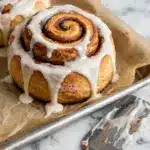
This homemade cinnamon rolls recipe yields irresistibly soft and fluffy rolls, packed with a sweet cinnamon-sugar filling and topped with a creamy vanilla cream cheese icing. Using a stand mixer for the dough and a classic baking method, these cinnamon rolls are better than Cinnabon, perfect for a cozy breakfast or dessert treat.
Ingredients
Dough
- 1/4 cup (60ml) warm water, 110 - 120 degrees F
- 1 Tbsp active dry yeast
- 3/4 cup (180ml) buttermilk, at room temperature
- 2 large eggs, at room temperature
- 1/2 cup (100g) + 1/2 tsp granulated sugar, divided
- 1 tsp salt
- 1/2 tsp vanilla extract
- 6 Tbsp (85g) unsalted butter, diced into 1 Tbsp pieces and melted
- 3 1/2 - 4 cups (17.5 oz - 20 oz) bread flour (King Arthur recommended)
Filling
- 6 Tbsp (85g) unsalted butter, well softened
- 1 cup (210g) packed light brown sugar
- 2 Tbsp (13g) Saigon cinnamon
Frosting
- 1/4 cup (56g) unsalted butter, softened
- 3 oz. cream cheese, softened
- 1/2 tsp vanilla extract
- 1 1/2 cups (190g) powdered sugar
Instructions
- Proof yeast: Pour warm water into the bowl of an electric stand mixer, add yeast and 1/2 tsp sugar, whisk well, and let sit 5-10 minutes until foamy to proof the yeast. If it doesn’t foam, the yeast may be inactive or water too hot.
- Mix wet ingredients: Add buttermilk, eggs, 1/2 cup granulated sugar, salt, vanilla, and melted butter to the yeast mixture. Use the whisk attachment to blend until combined.
- Add flour and mix: Pour in 2 1/2 cups of bread flour and mix until combined. Switch to the dough hook, add 1 cup more flour, and knead until incorporated.
- Knead dough: Continue kneading on low speed for 5-6 minutes, adding extra flour as needed to form a soft, moist dough that doesn’t stick to the bowl sides but sticks slightly to the bottom. Final flour amount should be about 3 3/4 cups (18.75 oz), adjusting for humidity.
- First rise: Transfer dough to an oiled bowl, cover with plastic wrap, and let rise in a warm spot until doubled in size, approximately 1 1/2 hours.
- Prepare baking pan: Butter a 15x10-inch rimmed jelly roll pan, line with parchment paper, and butter the parchment as well.
- Roll out dough: Punch down the risen dough, lightly flour the work surface, and roll dough into a 20x18-inch rectangle, dusting the top lightly with flour to prevent sticking.
- Apply filling: Spread softened butter evenly over the dough surface using your hands. Whisk together brown sugar and cinnamon in a bowl, then sprinkle it evenly over the butter, leaving a 1/2-inch border around edges.
- Form rolls: Starting at an 18-inch side, tightly roll the dough into a cylinder. Pinch the seam closed, brushing a little egg white underneath if needed to seal.
- Cut rolls: Using a sharp large knife, cut the roll into 12 equal portions about 1 1/2-inches wide.
- Arrange and cover: Place rolls spaced evenly on the prepared pan. Cover loosely with plastic wrap, ensuring it encloses the rolls to prevent drying out. For overnight rising, chill at this point (see notes).
- Second rise: Let rolls rise again in a warm spot until doubled, about 1 1/2 hours. Near the last 20 minutes, preheat oven to 375°F.
- Bake rolls: Bake rolls in the preheated oven for 18-22 minutes until centers are no longer doughy (internal temp ~185°F). If browning too fast, tent with foil during the last 5 minutes.
- Make frosting: While baking, using a hand mixer, whip softened butter and cream cheese until smooth. Add vanilla and powdered sugar, and beat until light and fluffy.
- Frost and serve: Spread the frosting over warm rolls right after baking. Serve rolls warm. Store leftovers in an airtight container once cool, reheating individually in microwave for about 15 seconds to regain softness.
Notes
- Ensure water is between 110-120°F for proofing yeast; hotter water kills yeast.
- Use room temperature eggs and buttermilk for even mixing and better dough texture.
- Measure flour with the scoop and level method for accuracy.
- Parchment paper keeps rolls from sticking and makes removal easy.
- For overnight rise, cover rolls tightly after cutting and refrigerate; bake next day without second rise at room temp.
- Use a rimmed jelly roll pan (15x10 inches) for proper roll size and shape, not a cookie sheet.
- If dough is sticky, add flour sparingly to avoid tough rolls.